
• Skip to main content
  • Skip to secondary menu
  • Skip to primary sidebar
  • Skip to footer
Geographical

Geographical

Official magazine of the Royal Geographical Society (with IBG)

  • Geographical Home
  • News
  • Features
  • Opinion
    • Climatewatch
    • Front Lines
  • Podcast
  • Travel
    • Discovering Britain
    • Passport
  • Culture
    • Book reviews
  • Quizzes
    • Crosswords
  • Choose Geography
    • University directory
    • Masters courses
    • Course guides
      • Climate change
      • Environmental science
      • Human geography
      • Physical geography
    • University pages
      • Aberystwyth University
      • Brunel University
      • Cardiff University
      • University of Chester
      • Edge Hill University
      • The University of Edinburgh
      • Newcastle University
      • Nottingham Trent University
      • Oxford Brookes University
      • The University of Plymouth
      • Queen Mary University of London
    • Geography careers
      • Charity/non-profit
      • Education & research
      • Environment
      • Finance & consulting
      • Government and Local Government
    • Applications and advice
  • Magazine
    • Issue previews
    • Subscribe
    • Manage My Subscription
    • Special Editions
    • Geographical Archive
    • Advertise with us
  • Subscribe
    • Direct Debit Changes

The world’s largest penguin colony is collapsing

8 October 2026
3 minutes

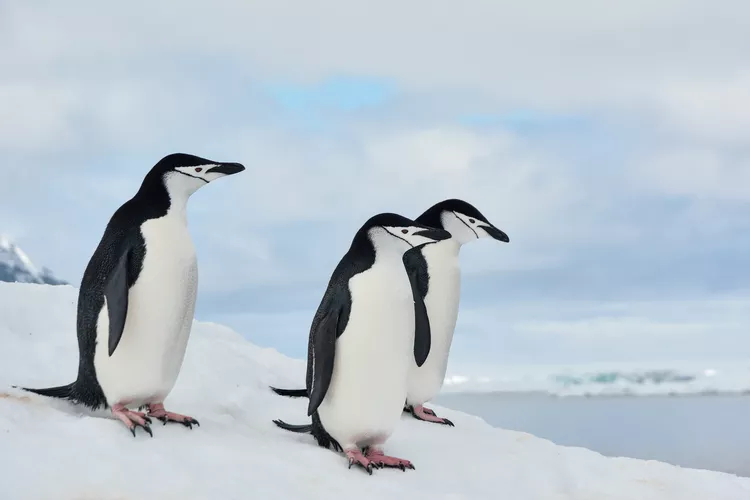
Group of Chinstrap Penguins in Antarctica with clouds and sea in the background.
Chinstrap penguins in Antarctica. Image: Ivan Hoermann/Shutterstock

Almost one-quarter of the world’s largest penguin colony population has been lost due to ‘climate-driven changes’


By Victoria Heath

A study by researchers from the British Antarctic Survey (BAS) found that a remote volcanic island near Antarctica, formerly home to the world’s largest penguin colony, has experienced massive population declines in chinstrap penguins.

More than half a million chinstrap penguins have been lost from the Antarctic island of Zavodovski in the South Sandwich Islands, representing more than one-quarter of the island’s penguins. The penguin population there is made up mostly of chinstrap and macaroni penguins.

‘This is a worrying decline for chinstrap penguins, which have specialist diets and specific ocean temperature preferences,’ said Professor Norman Ratcliffe, a penguin ecologist at BAS.

‘Our tracking data show they prefer to forage in cooler waters to the northwest of the island, where they would expect to find Antarctic krill – the prey that make up the bulk of their diet. The problem is that, as waters warm, the krill have moved southwards into the Weddell Sea. Sea-ice cover to the south and a lack of suitable islands for nesting prevent chinstraps from following the food.’


Check out our related reads…

  • Why tourism needs a conscience
  • The icy world of penguin colonies
  • The people saving South Africa’s last penguins
  • 90% of emperor penguin colonies could be wiped out by end of the century
  • Penguin poop seen from space reveals stark reality for future of iconic polar species

The new study, published on 7 October, found that Zavodovski Island now has the highest rate of chinstrap population decline out of anywhere in the world. Researchers attribute this steady loss to climate-driven changes in the Southern Ocean that disrupt penguins’ food supply.

To reach Zavodovski Island, located more than 2,000 kilometres from the nearest permanent human settlement, the BAS research team sailed for 15 days to the volcanic island, which is around twice the size of Gibraltar.

While camping there, they used drone surveys, aerial photography and tracking devices fitted to penguins to monitor them and understand the population. By comparing aerial surveys with satellite records, the team found a 63 per cent decline in occupied chinstrap nests from 2011 to 2025.
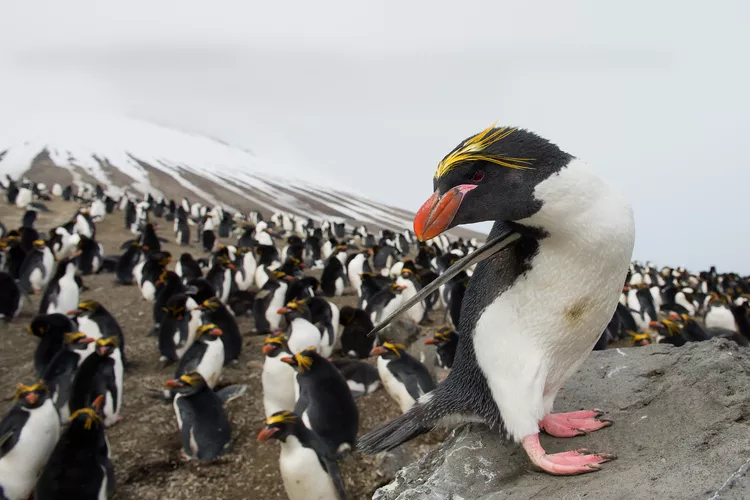
Macaroni penguins in South Sandwich Islands
Macaroni penguin populations increased during the studied timeframe, due to their ability to switch to alternative food sources when krill is depleted. Image: Shutterstock

The South Sandwich Islands are home to 30 per cent of the world’s chinstrap population, so declines in their population – coupled with declines seen elsewhere in Antarctica – could tip chinstrap penguins into the IUCN’s ‘Endangered’ category.

While the chinstrap population declined, the macaroni penguin population increased by 28 per cent from 2011 to 2016. Unlike chinstraps, macaroni penguins can switch to alternative prey when krill becomes less abundant, so their populations are less affected.

Researchers remain concerned that such large changes to the chinstrap and macaroni populations could disrupt marine food webs across the region.

‘Our study is another example of a warming climate impacting even the most remote parts of our planet. The South Sandwich Islands are far from any humans, home to almost a third of the world’s chinstrap penguins – but not even they can escape the impacts of climate change,’ said BAS researcher Peter Fretwell.
Themes Wildlife Marine wildlife

Protected by Copyscape

Primary Sidebar

SUBSCRIBE

GEOGRAPHICAL WEEKLY LOGO FREE - Sign up to get context, clarity and perspective in a noisy world, every Friday

Popular Now

Hand in ballot box

Brazil’s presidential election heads to runoff in late October

California coast

Kelvin waves: the ocean phenomenon raising sea levels on the US West…

Chinook salmon in water

Why Alaska’s Chinook salmon collapse threatens Yukon River communities

Barcelona, Spain - October 31st 2022 -

Barcelona’s new ‘Netflix-style’ algorithm hoped to combat overtourism

Wind turbines in field

Ministry of Defence objects to at least four wind farms

Footer

  • Facebook
  • Instagram
  • LinkedIn
  • Reddit
  • TikTok
  • Twitter
  • YouTube

Geographical print magazine cover

Published in the UK since 1935, Geographical is the official magazine of the Royal Geographical Society (with IBG).

Informative, authoritative and educational, this site’s content covers a wide range of subject areas, including geography, culture, wildlife and exploration, illustrated with superb photography.

Click Here for SUBSCRIPTION details

Want to access Geographical on your tablet or smartphone? Press the Apple, Android or PC/Mac image below to download the app for your device

Footer Apple Footer Android Footer Mac-PC

More from Geographical

  • Subscriptions
  • Get our Newsletter
  • About Us
  • Contact Us
  • Advertise with us
  • Privacy policy
  • Terms & Conditions

Copyright © 2026 · Site by Syon Media