
Religion, geography and regional rivalries have shaped the Houthis’ rise. Understanding that combination helps explain why a struggle for power in Yemen has consequences far beyond its borders

By
Fivers plus Twelvers plus Yemen, divided by Sunni, equals one of the most complex civil wars in the world. It’s a conflict rooted in history, religion and geography. It’s also connected to the sharp intake of breath as you watch the petrol station’s fuel pump dials turning at a worrying speed.
Which brings us to the Houthis, who are Fivers, and not to be confused with their fellow Shia Twelvers. To explain, we start in the year 632 CE. The death of the Prophet Mohammed led to the great schism in Islam.
Some followers argued that leadership is based on the Prophet’s bloodline, and that he had chosen his cousin, Ali, to be the caliph. They were Shiat Ali – ‘Partisans of Ali’, or Shia. Others insisted Mohammed hadn’t designated a successor and leaders must be chosen by consensus.
They became known as Sunnis and now comprise about 85 per cent of the global Muslim population.
Fast forward to 740 CE and the death of the Shia’s fourth imam. Which of his sons should be the fifth? Those who backed the son called Zayd became the Zaydis, also called Fivers.
Most of the rest went on to become Twelvers because they believe there have been 12 imams, the last of which is in occlusion and will reappear. They have dominated in Iran for centuries and there are small communities in Yemen.
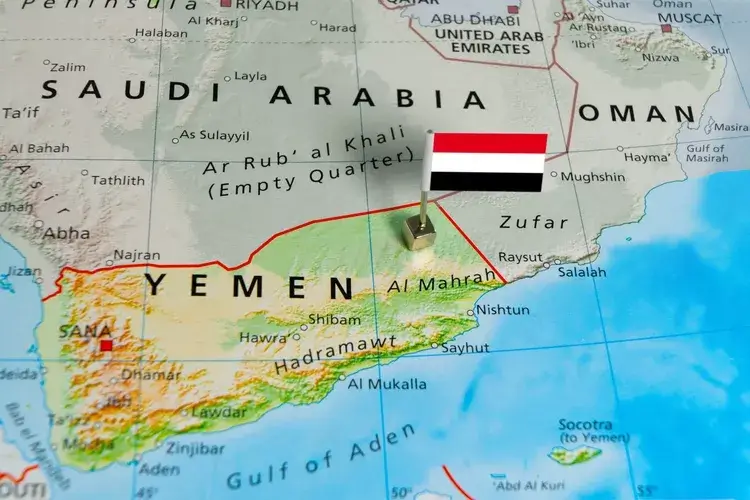
In the ninth century, the Fivers established a Zaydi state in upper Yemen and partially united the mountainous region’s tribes, while the southern coastal regions were controlled by Sunni dynasties. This millennia-long system collapsed in 1962 after a military coup in Sana’a established the Yemen Arab Republic in the north, before merging with South Yemen to become the Republic of Yemen in 1990.
The country is roughly 40 per cent Shia (mostly northern) from the rugged mountain regions, and 60 per cent Sunni (mostly southern). Historically, the sectarian divide was understated and coexistence the norm, but that began to change in the early 1990s. A Zaydi idealogue, Badr al-Din-al-Houthi, rose to prominence on an anti-American platform and formed the movement known as the Houthis. He tried to bridge the gap between Shia Fivers and Twelvers as he was sympathetic toward radical Twelver Shiism, as promoted by Ayatollah Khomeini following the 1979 Iranian Revolution. Closer ties were forged with Tehran, and weapons, training, and money have been flowing to the Houthis ever since.
Traditionally, Fivers believe that the legitimacy of rule depends on political action against corruption and injustice, and they saw this in the actions of Khomeini. The Houthi slogan ‘God is great, death to the US, death to Israel, curse the Jews, and victory for Islam,’ is borrowed from Iran.
Enjoying this article? Check out our related reads…
In the early 2000s, they fought a localised war against the government in Saada, a mountainous region bordering Saudi Arabia, during which sectarian language began to appear on both sides. For example, the Houthis named one of their units the ‘Hussein Brigades’ in a reference to a central figure in Shia belief, while some of their opponents call them ‘Rawafid’ – a derogatory term for Shia. In 2011, as the state began to disintegrate in the wake of the Arab uprisings, they swept down from the mountains and advanced on the capital, Sanaa. In early 2014, to stem the tide, the government proposed a new federal system restructuring Yemen into six autonomous regions.
It was never going to fly; the Houthis were offered the two (resource poor) provinces they were strongest in, Saada and Amran, but both are landlocked. Accepting the deal would have meant being completely cut off from the Red Sea. They walked away from the table and marched on the capital, taking it late that year.
This was a nightmare for neighbouring Sunni-majority Saudi Arabia and King Salman and his son, Crown Prince Mohammed (MBS), who came to power in early 2015.
They faced a traditional enemy (from whom they had annexed three provinces in 1934), one now backed by the kingdom’s biggest rival – Iran – and with the Houthis in reach of the Bab al Mandeb strait through which Saudi oil tankers passed. In March 2015, the Saudi-led ‘Operation Decisive Storm’ began with MBS promising a quick victory. A storm fell on Yemen, but it wasn’t decisive, nor quick.
This September, the Houthis took more territory along the Red Sea coast, all the way down to the Bab al Mandeb, including the island of Perim, which sits in the middle of the strait and overlooks the shipping lanes. They say all shipping is safe, except for Saudi vessels.
Given the danger to Saudi tankers and the potential for the Iran-US war to escalate, it’s no surprise this didn’t calm the energy markets. The dials are still turning. How quickly they turn partially depends on what happens in Yemen.