
• Skip to main content
  • Skip to secondary menu
  • Skip to primary sidebar
  • Skip to footer
Geographical

Geographical

Official magazine of the Royal Geographical Society (with IBG)

  • Geographical Home
  • News
  • Features
  • Opinion
    • Climatewatch
    • Front Lines
  • Podcast
  • Travel
    • Discovering Britain
    • Passport
  • Culture
    • Book reviews
  • Quizzes
    • Crosswords
  • Choose Geography
    • University directory
    • Masters courses
    • Course guides
      • Climate change
      • Environmental science
      • Human geography
      • Physical geography
    • University pages
      • Aberystwyth University
      • Brunel University
      • Cardiff University
      • University of Chester
      • Edge Hill University
      • The University of Edinburgh
      • Newcastle University
      • Nottingham Trent University
      • Oxford Brookes University
      • The University of Plymouth
      • Queen Mary University of London
    • Geography careers
      • Charity/non-profit
      • Education & research
      • Environment
      • Finance & consulting
      • Government and Local Government
    • Applications and advice
  • Magazine
    • Issue previews
    • Subscribe
    • Manage My Subscription
    • Special Editions
    • Geographical Archive
    • Advertise with us
  • Subscribe
    • Direct Debit Changes

Thousands of people forced to flee Yemen to Djibouti as conflict escalates

26 October 2026
2 minutes

Yemen displacement
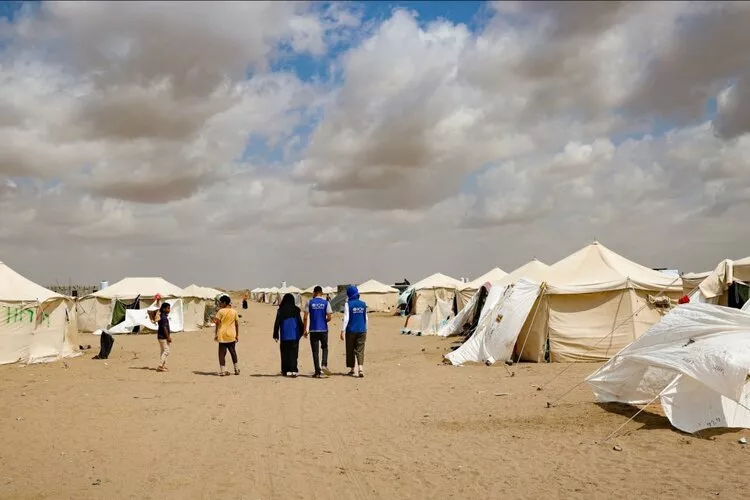
Internal displacement in Yemen has also risen sharply in recent weeks. Image: IOM

Most report fleeing worsening insecurity, with several boats reportedly coming ashore short of their destination as fuel runs out


By Victoria Heath

New data from the International Organisation for Migration (IOM) has shown how thousands of people have fled Yemen by sea to Djibouti as conflict escalates in western parts of the country.

As of 17 October, 3,836 Yemenis arrived in Djibouti – half of whom are children, including 282 under the age of five. IOM also recorded more than 1,300 migrants crossing from Yemen to Djibouti by sea as they returned toward their nations of residence.


Related reads…

  • At least 139 migrants dead after boat capsizes off coast of Djibouti
  • East Africa is fighting back against malaria – here’s how
  • Profile: Yemen
  • Yemen’s ticking time bomb: the oil storage ship FSO Safer
  • New report reveals extent of environmental damage in Gaza

Alongside this, displacement inside Yemen has continued as conflict rises. As of 23 October, more than 268,000 people had been displaced – almost all since the beginning of September.

In Aden, the number of displaced individuals has more than doubled since 7 October to more than 42,000. In Lahj, around 67,000 people are currently displaced. Many families are finding it difficult to obtain clean water, basic services and healthcare. Displacement is now occurring across ten governorates. Ta’iz is the most affected, with 114,708 displaced people.

Yemen’s humanitarian response plan is only 20 per cent funded. Video: United Nations

‘The scale and speed of this displacement is leaving families in desperate need of help, and our response is struggling to keep pace,’ said IOM Yemen Chief of Mission Abdusattor Esoev. ‘Our teams are reaching people every day, but funding is falling far short. Without urgent support, more families will go without assistance that could save their lives.’

The IOM faces a funding gap of more than $30million across the next six months, with Yemen’s humanitarian response plan only 20 per cent funded.

Across Yemen, instability and increased fighting have caused large-scale displacement in the last several years. Since 2014, the population of internally displaced people in Yemen has increased by more than tenfold. In total, more than 4.5 million people – of whom 80 per cent are women and children – have been forced to flee their homes, while 1.6 million people live in informal displacement sites.

However, life within the camps can be incredibly difficult. Access to clean water and functioning health facilities is limited, meaning illnesses and disease can spread easily. In addition, there is a high risk of fires, flooding and sandstorms that can destroy camps and the tents that comprise them.
Themes News Conflict

Protected by Copyscape

Primary Sidebar

SUBSCRIBE

GEOGRAPHICAL WEEKLY LOGO FREE - Sign up to get context, clarity and perspective in a noisy world, every Friday

Popular Now

November 2026 Geographical crossword

November 2026 Geographical crossword

An armed man looks across a dry landscape in Yemen

Profile: Yemen

Jim Morrison climbing towards the summit of Mount Everest

Skiing down Everest

Mining equipment at the Inkai uranium mine in Kazakhstan

The global nuclear power revival is fuelling a new uranium rush

European Union Blue Flags and Berlaymont Building, Headquarters of the European Commission.

EU announces new strategy for Arctic

Footer

  • Facebook
  • Instagram
  • LinkedIn
  • Reddit
  • TikTok
  • Twitter
  • YouTube

Geographical print magazine cover

Published in the UK since 1935, Geographical is the official magazine of the Royal Geographical Society (with IBG).

Informative, authoritative and educational, this site’s content covers a wide range of subject areas, including geography, culture, wildlife and exploration, illustrated with superb photography.

Click Here for SUBSCRIPTION details

Want to access Geographical on your tablet or smartphone? Press the Apple, Android or PC/Mac image below to download the app for your device

Footer Apple Footer Android Footer Mac-PC

More from Geographical

  • Subscriptions
  • Get our Newsletter
  • About Us
  • Contact Us
  • Advertise with us
  • Privacy policy
  • Terms & Conditions

Copyright © 2026 · Site by Syon Media