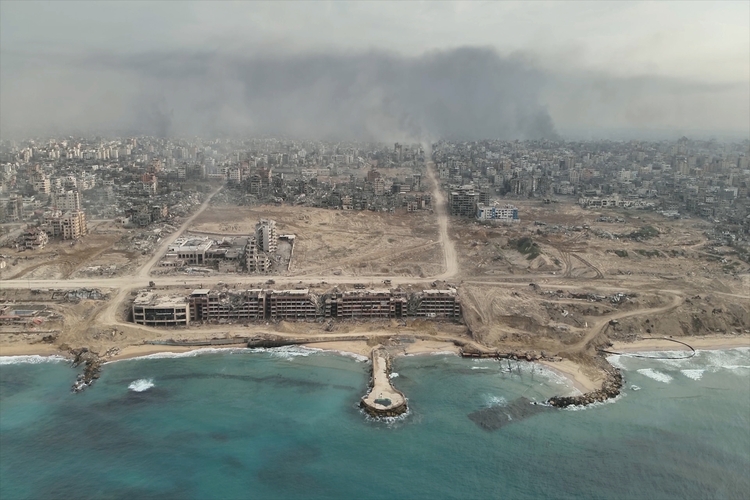
More than 80 per cent of croplands have been damaged or destroyed in Gaza since hostilities escalated in Palestine
By
A new report has detailed how years of conflict and siege in Gaza have devastated its ecosystems, polluting groundwater, collapsing infrastructure and leaving millions of people without access to basic resources.
The report, published by the Arava Institute for Environmental Studies, found that 69 per cent of Gaza’s infrastructure is damaged.
Check out our related reads…
More than 300 wells are damaged or inaccessible in the city, with desalination plants operating at just 15 to 50 per cent of their total capacity. Consequently, water availability in Gaza has plummeted to as little as 8.4 litres per person per day – far below the World Health Organisation’s emergency minimum of 15 litres.
Such a situation has meant more than a third of all Gazans purchase water from private vendors, imposing a significant financial burden and forcing a reduction in overall consumption.
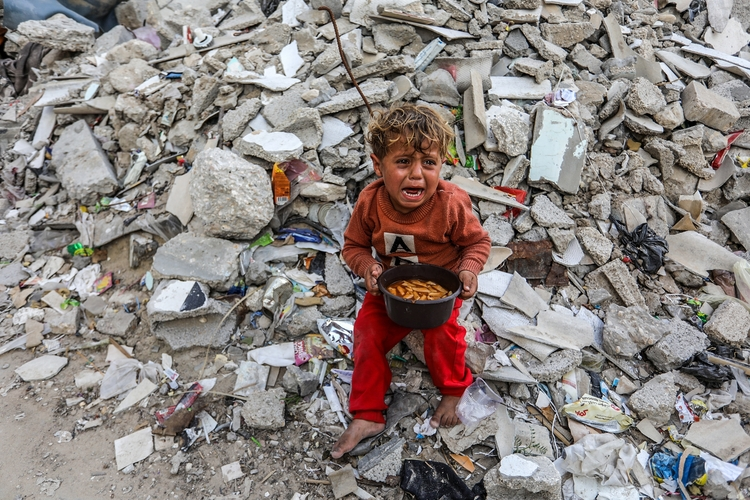
In addition to this, raw sewage is posing serious health risk to locals. Since October 2023, all wastewater treatment plants have ceased operations due to extensive damage. As such, sewage is being diverted into open lagoons or seeps into porous soil, contaminating the aquifer Gaza shares with Israel and Egypt. In turn, this creates ideal conditions for waterborne disease outbreaks.
Across the nation, more than 80 per cent of croplands have been damaged or destroyed, leaving 90 per cent of Gazans in crisis-level food insecurity. When areas are bombed, large areas of vital agricultural land are rendered unusable, scarred by unexploded ordnance and craters. As well as croplands, more than 80 per cent of Gaza’s trees have been lost.

Air pollution is also of major concern in Gaza, particularly to children and those in densely-populated temporary shelters. Open burning of solid waste, combined with the pulverisation of building materials, fills the air with particulate matter.
These tiny particles pose serious long-term risks for respiratory and cardiovascular diseases. Hazardous waste from medical facilities is also being left untreated in clinics and hospitals. Just four to six per cent is being safely disposed of, creating biohazards in already overwhelmed facilities. Pollution in the air also impairs crop health and yield.
Animals in Gaza are also reeling from the impacts of the war. Its once-documented diversity – including 29 reptile species like snakes, lizards are turtles – is now under immense pressure due to habitat degradation, along with the decimation of conservation sites and zoos.

‘Gaza’s environment is in freefall — poisoned water, ruined croplands, and a shattered power grid are pushing the territory to the brink,’ said Arava Institute’s Director of Applied Environmental Diplomacy Dr David Lehrer. ‘What we are witnessing is not just a humanitarian catastrophe but an ecological collapse that threatens the very possibility of recovery.’
To aid the recovery of Gaza, the new report calls for nature-based and decentralised solutions that empower communities. These solutions are grouped into three phases. The immediate phase is to secure unimpeded humanitarian aid access, provide emergency shelter and provide critical services such as water, sanitation and hygiene.
In the second, medium-term phase, the report advocates for investment in off-grid renewable energy and localised water treatment, as well as empowering Palestinian leadership to oversee and scale recovery efforts.
Finally, the long-term goal is to restore ecosystems, embed climate resilience into planning and create joint government mechanisms.