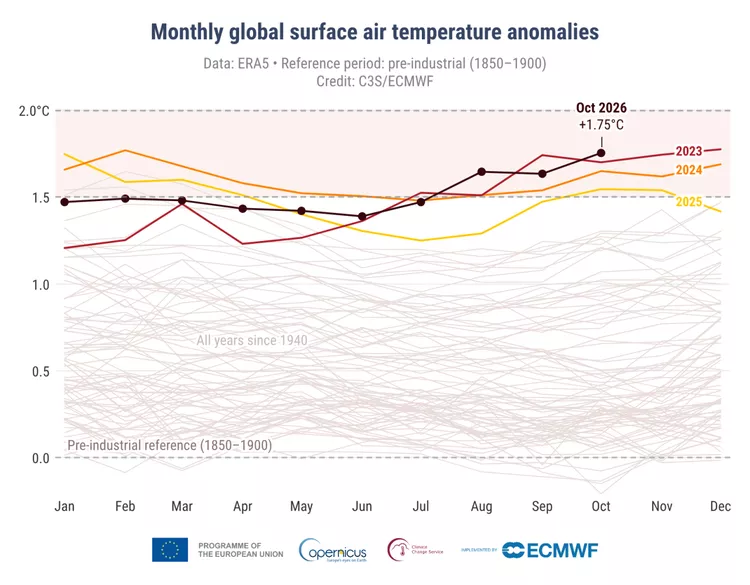
October 2026 was the warmest October on record globally, with average global surface air temperature 1.75°C above pre-industrial levels
By
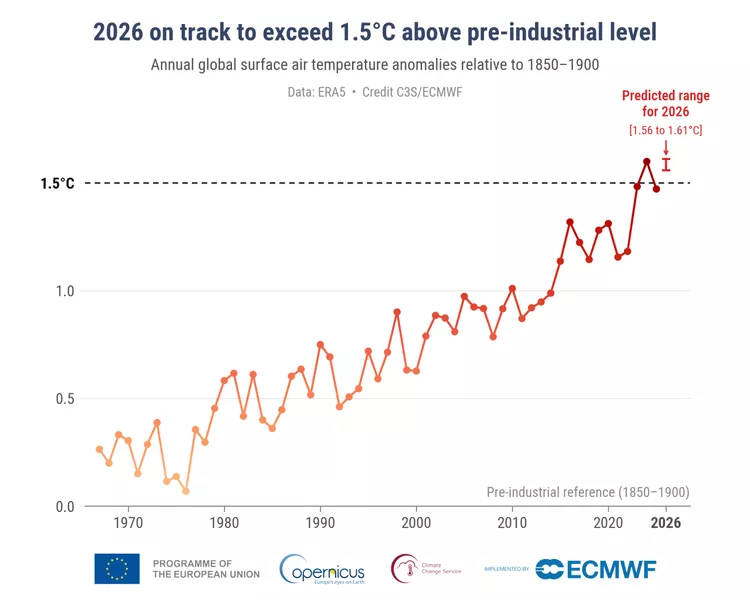
New statistical predictions from Copernicus show that 2026 is ‘virtually certain’ to exceed 1.5°C above pre-industrial levels, marking the second year to do so after 2024.
This year is most likely to be the second-warmest year on record, with around a 20 per cent chance of tying or exceeding 2024 (currently the warmest year on record). New data also show that October 2026 was the warmest October on record globally, with the average global surface air temperature 1.75°C above the pre-industrial level.
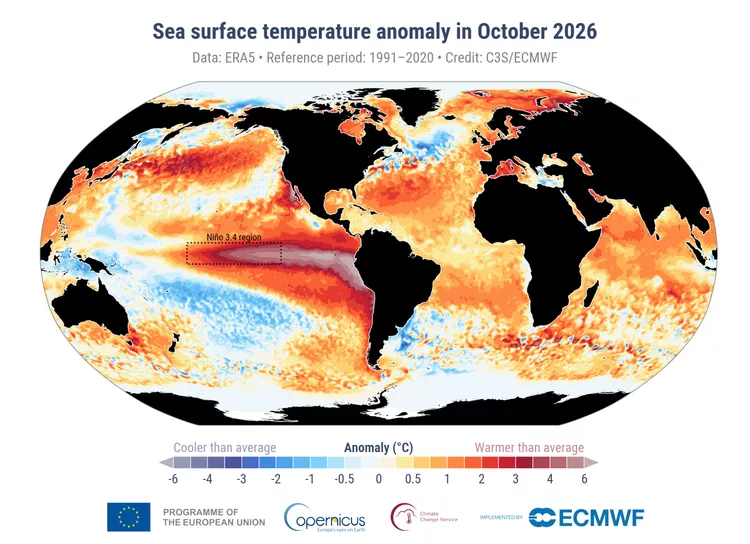
Sea surface temperature remained exceptionally high in October, with the average sea surface temperature outside the polar regions reaching 20.95°C – the highest on record for October.
Arctic and Antarctic sea ice was around nine per cent below average in October. In particular, sea ice cover was exceptionally low in the Amundsen-Bellingshausen Sea sector.
Europe also experienced its second-warmest October on record. Temperatures were mostly above average in eastern Europe and Scandinavia, while much of western and central Europe saw smaller warm anomalies.
Related reads…
Copernicus also reported exceptionally low river flows across much of central and eastern Europe, impacting the Rhine, Danube, and Vistula. In contrast, heavy rainfall and flooding impacted countries from the UK to Greece and Türkiye.
Outside Europe, drier-than-average regions included much of eastern North America and the southern USA, western Russia, parts of Siberia and central Asia, southern China, parts of South America and southern Africa. In contrast, wetter-than-average conditions in October occurred in Alaska, parts of China and Korea, Chile, southern Argentina and southeastern Brazil, as well as southernmost Africa, Madagascar, and western and central Australia.
‘October has continued the pattern of remarkable global warmth, with record global and surface ocean temperatures,’ said Samantha Burgess, strategic lead for climate at the European Centre for Medium-Range Weather Forecasts (ECMWF).
‘An exceptionally strong El Niño is adding further heat to a climate already warmed by human activities, while 2026 is on track to become the second calendar year above 1.5°C. Particularly significant is that the four-year average is also expected to exceed 1.5°C, highlighting how sustained this period of global warmth has become.’