
• Skip to main content
  • Skip to secondary menu
  • Skip to primary sidebar
  • Skip to footer
Geographical

Geographical

Official magazine of the Royal Geographical Society (with IBG)

  • Geographical Home
  • News
  • Features
  • Opinion
    • Climatewatch
    • Front Lines
  • Podcast
  • Travel
    • Discovering Britain
    • Passport
  • Culture
    • Book reviews
  • Quizzes
    • Crosswords
  • Choose Geography
    • University directory
    • Masters courses
    • Course guides
      • Climate change
      • Environmental science
      • Human geography
      • Physical geography
    • University pages
      • Aberystwyth University
      • Brunel University
      • Cardiff University
      • University of Chester
      • Edge Hill University
      • The University of Edinburgh
      • Newcastle University
      • Nottingham Trent University
      • Oxford Brookes University
      • The University of Plymouth
      • Queen Mary University of London
    • Geography careers
      • Charity/non-profit
      • Education & research
      • Environment
      • Finance & consulting
      • Government and Local Government
    • Applications and advice
  • Magazine
    • Issue previews
    • Subscribe
    • Manage My Subscription
    • Special Editions
    • Geographical Archive
    • Advertise with us
  • Subscribe
    • Direct Debit Changes

New UN report reveals dramatic emissions cuts are needed to return to 1.5°C

21 October 2026
2 minutes

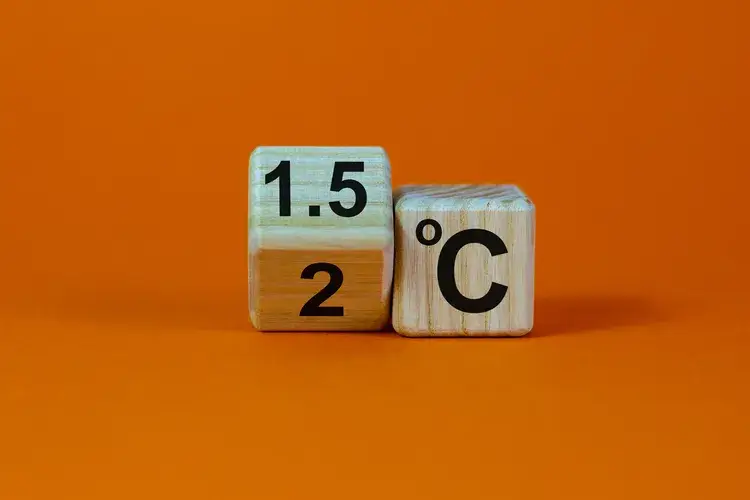
Two dice displaying 1.5 and 2C concept

Global greenhouse gas emissions must be reduced by 69 per cent by 2040 to limit warming to 1.5°C by 2100


By Victoria Heath

A UN Environment Programme report shows how urgently cuts to greenhouse gas emissions are needed to return to 1.5°C by the end of the century.

The Emissions Gap Report 2026: The Point of Return looks at a ‘lowest possible’ 1.5°C overshoot scenario, in which peak warming by around 2050 is limited to 1.7-1.8°C and temperature rise is returned to or below 1.5°C by 2100.

To reach this goal, global greenhouse gas emissions would need to follow stringent cuts: reducing by 18 per cent by 2030, 45 per cent by 2035 and 69 per cent by 2040, all relative to 2025 levels. To put this in perspective, fully implementing all Nationally Determined Contributions (NDCs) would reduce emissions by only five to eight per cent by 2030, and 11 to 15 per cent by 2035, relative to 2025 levels.


Check out our related reads…

  • World is set to cross 1.5°C global warming threshold
  • Climatewatch: 1.5°C? It’s now impossible
  • Are greenhouses really all that ‘green’?
  • What happens when the world hits 2°C of warming?
  • Global rice paddy greenhouse gas emissions have doubled over the past six decades

‘Overshoot is not surrender. We can still keep it as small and as short as possible – and bring temperatures back below 1.5 degrees by the end of the century,’ said UN Secretary-General António Guterres.

If current policies continue, global warming could reach within this century and rise further thereafter. If all NDCs are reached and similar efforts continue, warming will be limited to 2These. These outcomes are worse than last year’s projections because of revised estimates of historical emissions and the US withdrawal from the Paris Agreement. New NDCs submitted since last year’s report have little to no impact on these projections.
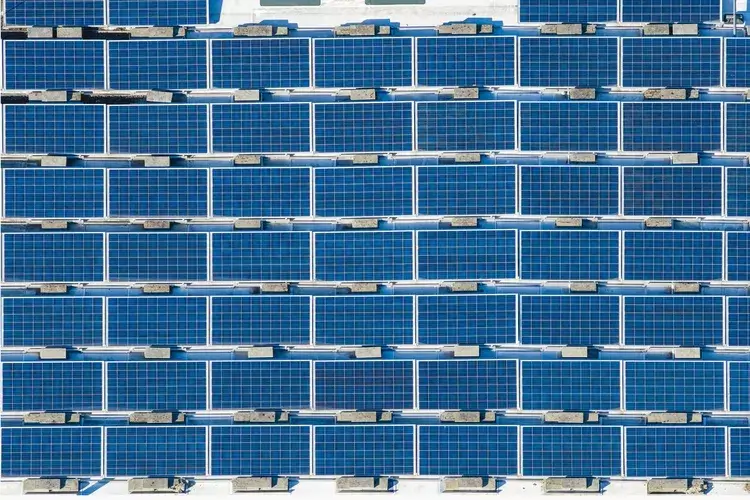
Aerial view of solar panels
Switching to cleaner energy sources, like solar, will help slash planet-polluting emissions. Image: Shutterstock

The report’s authors acknowledge that returning to or below 1.5°C is achievable, especially given growing evidence of the success of climate policies around the world, such as carbon capture and trade schemes and carbon taxes. However, these successes remain concentrated in particular sectors, countries and time periods – so getting onto a 1.5°C pathway requires extending, sustaining and replicating them.

Limiting global warming to below 1.5°C will reduce the impacts of climate change. Otherwise, extreme weather events like heatwaves, droughts, wildfires and heavy rainfall and flooding will become increasingly frequent. Beyond this, multiple climate tipping points could be breached past 1.5°C, such as the breakdown of ocean circulation systems, thawing of boreal permafrost, and collapse of tropical coral reef systems.

The world is already seeing the effects of a warming planet. In 2024 alone, disasters triggered a record 45.8 million internal displacements, 99.5 per cent of which were caused by weather-related hazards such as droughts, wildfires, storms, and floods.
Themes News

Protected by Copyscape

Primary Sidebar

SUBSCRIBE

GEOGRAPHICAL WEEKLY LOGO FREE - Sign up to get context, clarity and perspective in a noisy world, every Friday

Popular Now

China, US, Russia flags

Why Trump, Xi, and Putin can’t carve up the world like the…

Planet Earth, view from space. Our planet with world ocean and clouds on a starry sky. Earth Observation. England, France, La Manche or English Channel and sun glint. Elements of furnished by NASA.

A hole in Earth’s ozone layer is officially the largest recorded in…

Aerial view of solar panels

The future of green jobs is in our hands

flags

QUIZ: Flags of the World – Hard

Ballot paper into box US flag in background

What is the right to vote worth when the road disappears?

Footer

  • Facebook
  • Instagram
  • LinkedIn
  • Reddit
  • TikTok
  • Twitter
  • YouTube

Geographical print magazine cover

Published in the UK since 1935, Geographical is the official magazine of the Royal Geographical Society (with IBG).

Informative, authoritative and educational, this site’s content covers a wide range of subject areas, including geography, culture, wildlife and exploration, illustrated with superb photography.

Click Here for SUBSCRIPTION details

Want to access Geographical on your tablet or smartphone? Press the Apple, Android or PC/Mac image below to download the app for your device

Footer Apple Footer Android Footer Mac-PC

More from Geographical

  • Subscriptions
  • Get our Newsletter
  • About Us
  • Contact Us
  • Advertise with us
  • Privacy policy
  • Terms & Conditions

Copyright © 2026 · Site by Syon Media