New UN report suggests best-case scenario peak temperature rise is 1.8°C; others suggest more than 2°C – but scientists say we can still return from higher temperatures
By
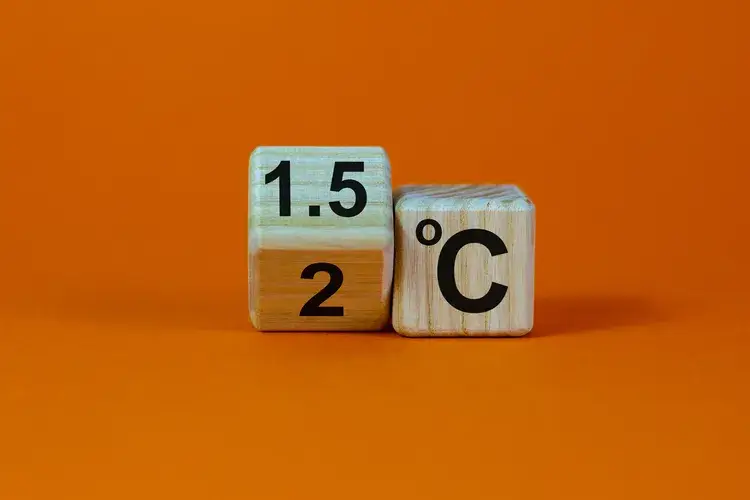
A new landmark report by the UN Environment Programme (UNEP) has revealed how global temperature rise is set to cross 1.5°C, likely within the next few years – although it is still possible to bring temperatures down and achieve goals set out in the Paris Agreement.
According to the report, the best-case scenario will see temperature rise peak at 1.8°C above pre-industrial levels, 0.3°C above the goal set out by the Paris Agreement. Most other scenarios predict higher peaks.
Related reads…
Above 1.5°C of warming, risks and impacts to the planet will only further intensify with every fraction of a degree. Scientists predict impacts such as ecosystem loss, the submersion of Small Island Developing States and low-lying coastal cities, and more intense extreme weather. In addition, severe damage to human health, food security, water supplies, nature, cities, infrastructure and economies is expected.
The likelihood of crossing crucial tipping points – such as degradation of the Amazon rainforest, disruption of the AMOC, or the destabilisation of major ice sheets – also increases with higher temperatures.
The report, Limiting Overshoot, has identified an ‘overshoot, peak and decline’ pathway as the best remaining option to mitigate the duration and strength of this overshoot, and try to return to below 1.5°C as soon as possible.
Such a pathway would involve minimising peak temperature rise through sustained cuts in greenhouse gas emissions, as well as lowering temperatures through carbon dioxide removal technologies – the process of removing carbon dioxide from the air and storing it. However, scientists stress that these technologies are needed in addition to, not instead of, sustained reductions in greenhouse gas emissions.

Further, the pathway would also involve adaptation actions to reduce vulnerability to current, as well as expected and unexpected, impacts of climate change.
‘There are no good outcomes if we remain above 1.5°C,’ said executive director of UNEP Inger Andersen.
‘Across the globe, extreme heatwaves are already proving that climate impacts will strike faster, hit harder, and last longer – costing more lives and causing deeper disruption. Now is the time we must double down on climate action. We can – and must – get on the right path. By cutting greenhouse gas emissions, strengthening resilience and adaptation, and ensuring exceedance of 1.5°C is as small and short as possible.’
Even if a return to below 1.5°C is secured, scientists stress that irreversible losses have already occurred across the planet. Communities may be forced to relocate or change livelihoods, and societies will need to adapt and mitigate in a warming world.
‘This summer’s scorching heat, raging wildfires and deadly floods are a warning of what lies ahead. We must make the overshoot above 1.5 degrees as small and short as possible. That demands an overshoot of ambition,’ said UN Secretary-General Antőnio Guterres.
The new report comes after the Met Office revealed the UK provisionally experienced its hottest summer on record this year. According to the Met Office, the season’s mean temperature was made about 130 times more likely by human-induced climate change.
Across Europe, heatwaves and wildfires also impacted many countries – again, meteorological patterns were made more severe by climate change and global warming.
Elsewhere around the world, scientists are beginning to understand how devastating floods in Nepal may be linked to climate change and global warming. Already, global warming has led to increased melting of the Himalayas’ icefields, glaciers, snowpacks and permafrost. Scientists say that when glaciers thin and retreat, they can collapse as well as fill up glacial lakes, which eventually burst and cause floods.