
• Skip to main content
  • Skip to secondary menu
  • Skip to primary sidebar
  • Skip to footer
Geographical

Geographical

Official magazine of the Royal Geographical Society (with IBG)

  • Geographical Home
  • News
  • Features
  • Opinion
    • Climatewatch
    • Front Lines
  • Podcast
  • Travel
    • Discovering Britain
    • Passport
  • Culture
    • Book reviews
  • Quizzes
    • Crosswords
  • Choose Geography
    • University directory
    • Masters courses
    • Course guides
      • Climate change
      • Environmental science
      • Human geography
      • Physical geography
    • University pages
      • Aberystwyth University
      • Brunel University
      • Cardiff University
      • University of Chester
      • Edge Hill University
      • The University of Edinburgh
      • Newcastle University
      • Nottingham Trent University
      • Oxford Brookes University
      • The University of Plymouth
      • Queen Mary University of London
    • Geography careers
      • Charity/non-profit
      • Education & research
      • Environment
      • Finance & consulting
      • Government and Local Government
    • Applications and advice
  • Magazine
    • Issue previews
    • Subscribe
    • Manage My Subscription
    • Special Editions
    • Geographical Archive
    • Advertise with us
  • Subscribe
    • Direct Debit Changes

Peruvian government blocks proposal to protect uncontacted Indigenous people’s territory

11 November 2026
3 minutes

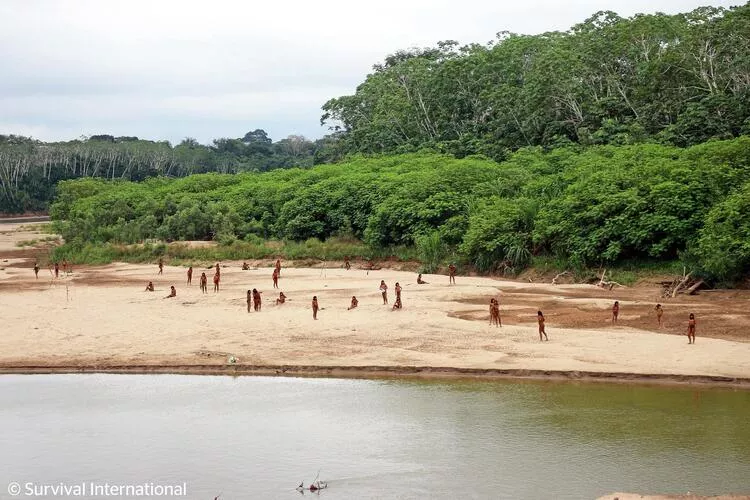
Images released by Survival in 2024 showed dozens of Mashco Piro people dangerously close to logging concessions

Mascho Piro are thought to be the largest group of uncontacted Indigenous people in the world, numbering around 750 people


By Victoria Heath

The Peruvian government has blocked a proposal to protect the forest territory of what is thought to be the largest group of uncontacted Indigenous people in the world, Survival International has revealed. This is the third time the commission in charge of the protection of uncontacted Indigenous peoples’ land has refused to reserve land belonging to uncontacted Indigenous peoples.

Such a decision will endanger the Mashco Piro – an Indigenous group of around 750 people – and their Madre de Dios territory, allowing invasions by outsiders and extractive industries such as loggers to take root, threatening the Indigenous people’s access to food and medicines.

The Peruvian government moved against the advice of Indigenous organisations.

‘This decision undermines the protection of Indigenous peoples living in isolation, particularly the Mashco Piro people, whose survival depends on the effective defence of their ancestral territories… the life and survival of uncontacted Indigenous peoples must be prioritised over economic interest,’ said the Native Federation of the Madre de Dios River and its Tributaries (FENAMAD).
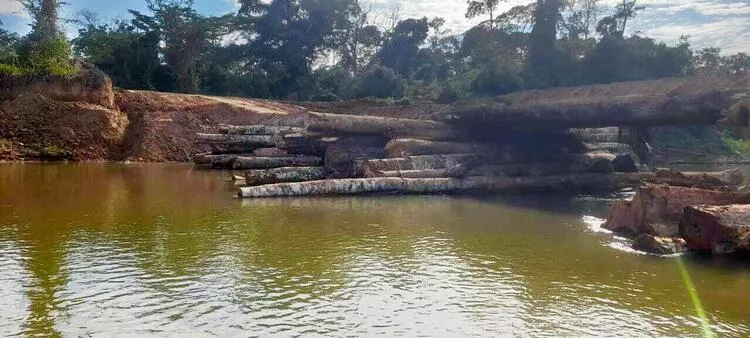
An illegal bridge being built by Maderera Canales Tahuamanu (MCT) on August 18, 2025 in Mashco Piro territory to carry bulldozers farther into the forest.
Maderera Canales Tahuamanu (MCT) built an illegal bridge on 18 August 2025 in Mashco Piro territory to carry bulldozers farther into the forest. Image: Survival International

Invasions of uncontacted peoples’ territories are often fatal, as individuals have little immunity to common diseases.

‘This is an appalling and disastrous decision that effectively puts a For Sale sign over the Mashco Piro’s territory. The Fujimori government has shown where its priorities lie – with big business and the exploitation of Indigenous territories, even where it may well cost Indigenous people’s lives,’ said executive director of Survival International Caroline Pearce.

‘We will fight this decision alongside the Indigenous organisations in Peru who are defending their uncontacted relatives.’


Related reads…

  • Uncontacted tribes around the world – is it best to leave them alone?
  • Uncontacted Indigenous group under threat from nickel mining
  • Viral video of uncontacted Indonesian tribe threatened by bulldozers sheds light on dark side of EV industry
  • UN urges India to suspend controversial mega-project on Great Nicobar Island
  • The desert that fed the world

Part of the Mashco Piro’s forest has been protected since 2002. However, large sections remained unprotected and were later sold by the government as logging concessions.

In 2024, more than 50 Mashco Piro people were photographed near the Yine village of Monte Salvado, just miles from several logging concessions. The Yine people, who are not uncontacted and live alongside Mashco Piro territory, speak a language related to Mashco Piro and have reported that the Mashco Piro ‘angrily denounced the presence of loggers on their land’.

Several logging companies hold timber concessions within Mashco Piro territory. In particular, the company Canales Tahuamanu has built more than 200 kilometres of roads for logging trucks to extract timber. Despite operating there, it was certified by the Forest Stewardship Council (FSC) for sustainable and ethical operations, a certification permanently withdrawn in 2025.

This year, a report prepared by Peruvian and Brazilian Indigenous organisations alongside Earth Insight found that mining and timber concessions, road projects and illicit activities were overlapping with an Amazonian area home to the largest concentration of Indigenous peoples in isolation and initial contact.
Themes News Deforestation Forests

Protected by Copyscape

Primary Sidebar

SUBSCRIBE

GEOGRAPHICAL WEEKLY LOGO FREE - Sign up to get context, clarity and perspective in a noisy world, every Friday
GIVE A GIFT

Give a year of Geographical - order a gift subscription

Popular Now

December 2026 Geographical crossword

December 2026 Geographical crossword

Stock Photo ID: 2698280741 Warsaw, Poland - November 3, 2025: Close-up view of a smartphone screen displaying an interface with the text Ask ChatGPT, highlighting modern technology usage.

AI models are easy to pressure into giving false climate information, report…

Jakarta - June 19,2026: The 2026 United Nations Climate Change Conference or Conference of the Parties of the UNFCCC, more commonly known as COP31 TURKIYE, ANTALYA logo

COP31 draft agreement drops all explicit mentions of fossil fuels

beautiful iridescent clouds in the afternoon

Phenomena: Cloud iridescence – why some clouds appear rainbow-coloured

Migration patterns across Latin America and the Caribbean are changing, with people taking new routes, moving in different directions and deciding where to settle.

Darién crossings drop 90 per cent as new migration routes appear

Footer

  • Facebook
  • Instagram
  • LinkedIn
  • Reddit
  • TikTok
  • Twitter
  • YouTube

Geographical print magazine cover

Published in the UK since 1935, Geographical is the official magazine of the Royal Geographical Society (with IBG).

Informative, authoritative and educational, this site’s content covers a wide range of subject areas, including geography, culture, wildlife and exploration, illustrated with superb photography.

Click Here for SUBSCRIPTION details

Want to access Geographical on your tablet or smartphone? Press the Apple, Android or PC/Mac image below to download the app for your device

Footer Apple Footer Android Footer Mac-PC

More from Geographical

  • Subscriptions
  • Get our Newsletter
  • About Us
  • Contact Us
  • Advertise with us
  • Privacy policy
  • Terms & Conditions

Copyright © 2026 · Site by Syon Media