The Hongana Manyawa – an uncontacted tribe from Indonesia – are under threat of being wiped out for electric car batteries
By
The Indonesian government has now handed more than half of an uncontacted Indigenous tribe’s ancestral territory to mining and logging concessions, new research by Survival has revealed.
The Hongana Manyawa – which means ‘People of the Forest’ in their own language – are one of the last nomadic hunter-gatherer peoples of Indonesia. Around 500 of them reject contact with outsiders, but are being threatened with the destruction of their ancestral lands on Halmahera, the largest island in Indonesia’s remote Maluku province.
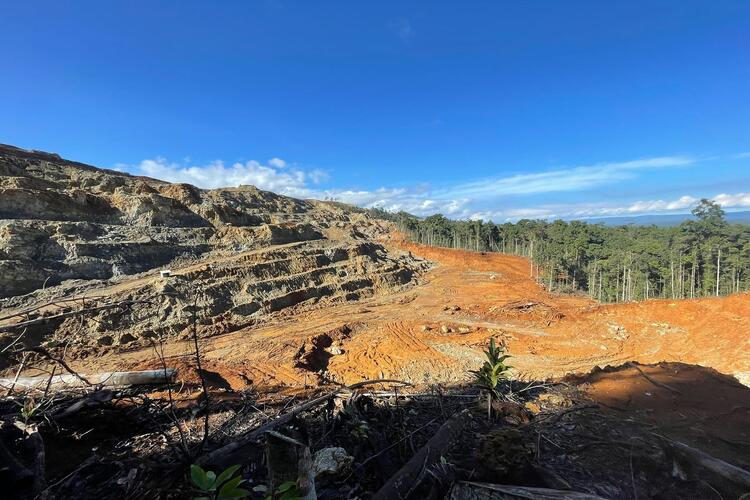
Mining roads are being carved deep into the rainforest, tearing land that has sustained the Hongana Manyawa for generations. As well as this, rivers are being dammed, diverted and transformed to serve the mine.
The vast mining scheme on Halmahera is part of Indonesia’s plan to become a major producer of electric car batteries, with the government wanting to attract international car companies such as Tesla and Ford to buy nickel – a key component of electric batteries.
Enjoying this article? Check out our related reads…
Thousands of years of history, ancient rainforest and some of the world’s richest biodiversity are being obliterated for the mine that is expected to last just thirty years.
The mining is illegal under international law, as uncontacted tribes cannot give their consent to the exploitation of their land – a requirement for all developments on Indigenous territories. Despite this, Weda Bay Nickel (WBN) – a joint venture partly owned by French mining company Eramet – has a huge mining concession of the territory of the Hongana Manyawa.
One Hongana Manyawa woman said: ‘They are poisoning our water and making us feel like we are being slowly killed.’
‘I do not give consent for them to take it… tell them that we do not want to give away our forest,’ another said.
‘It’s appalling that electric car companies would sell customers a promise of ‘ethical consumption’, while their supply chains destroy an uncontacted tribe. There is nothing ‘climate-friendly’ about laying waste to the Hongana Manyawa’s rainforest, and nothing ‘sustainable’ about causing the deaths of Indigenous people who are living self-sufficiently,’ said Survival’s director Caroline Pearce.
‘Tesla and other electric car companies have an opportunity to live up to their customers’ expectations and to avert a horrific – and illegal – assault on human rights by pledging that none of the minerals they buy ever comes from the lands of uncontacted Indigenous people in Halmahera. Failing to do so would be a statement that the lives of the uncontacted Hongana Manyawa are expendable,’ Pearce continued.