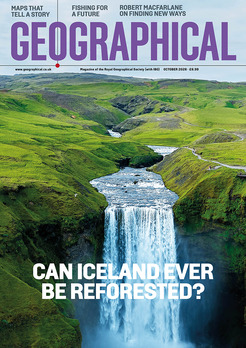
In the July issue of Geographical, head to Russia, Mexico, New York and more
In our July 2026 cover story, venture through ruins, battlefields and legends of the Aegean with Bryony Cottam to follow Homer’s footsteps. Stuart Butler traces the 4,800-kilometre journey that millions of monarch butterflies take to Mexico, and we also run a special report on how the AMOC – a vast ocean circulation system – is slowing down and the steps that can be taken to change its future.
Charlie Walker recounts his experience in a Russian cell after being accused of espionage and photographing restricted military sites, while Jules Stewart covers New York’s new coastal defences set to transform the city’s parks, promenades, ferry terminals and public spaces.
Tristan Kennedy looks at how to enjoy open-water swimming as heatwaves become more frequent, while Alastair Bonnett considers how the debris of our disposable culture – particularly space junk – is changing the world. Rory Walsh visits the curious last legacy of Isambard Kingdom Brunel.
Our columnists bring an array of topics to the forefront to help you stay on top of the world: Tim Marshall looks at how blackouts, shortages and economic collapse pose an immediate threat to Cuba, while Marco Magrini considers how forever chemicals impact the world. Andrew Brooks zooms in on York and how its ghost tours, witchcraft, and themed attractions have turned its history into a spectacle.
Our digital edition is out now, too, giving you access to all the stories in our latest issue, plus our full archive dating back to 1935, with hundreds of magazines to explore. Digital access is available through the Geographical app, and you can now enable notifications to be alerted the moment the latest issue is live. And if you want to enjoy our beautifully designed and produced print magazine, we can post the next edition to you anywhere in the world. Join us and stay on top of the world.
The prisoner of Yakutia
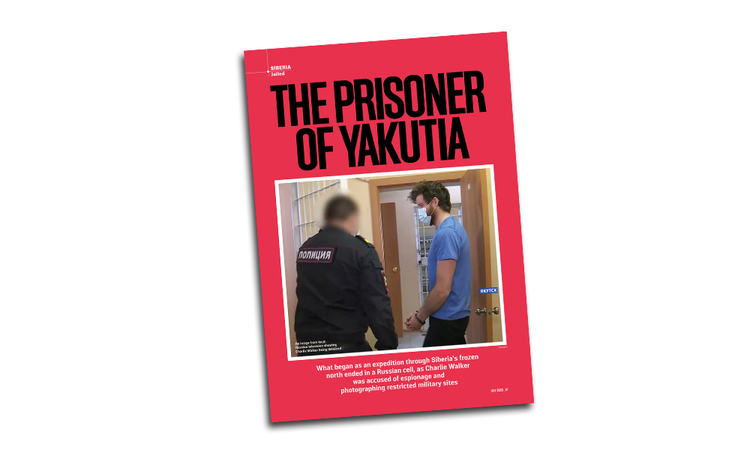
What began as an epic winter trek across one of the most unforgiving landscapes on Earth ended behind bars in a Russian detention centre.
Explorer Charlie Walker travelled to Yakutia, deep in eastern Siberia, to spend two months crossing frozen rivers and Arctic wilderness in temperatures that regularly dropped below –50C. His goal was to meet Indigenous communities living at the edge of human endurance and understand how they navigate life in a region where winter dominates for most of the year.
Instead, he found himself caught in a moment of global upheaval.
Arriving just days before Russia launched its full-scale invasion of Ukraine, Walker chose to remain in the country while most foreigners fled. As he trekked north through vast forests, abandoned settlements and isolated villages, he encountered a nation grappling with war, propaganda and growing mistrust. Conversations with local people revealed a complex picture of support, fear and silence in a society where dissent carried increasing risks.
Then, after nearly 1,000km on foot, his expedition took a dramatic turn. Arrested in the Arctic port of Tiksi and accused of carrying out journalistic activities on a tourist visa, Walker was convicted, detained and left uncertain whether he would ever leave Russia.
In this gripping first-person account, Walker recounts his journey through a landscape of extraordinary beauty and brutal cold, before offering a rare insight into life inside Putin’s Russia during one of the most consequential moments in recent history.
Flight risk
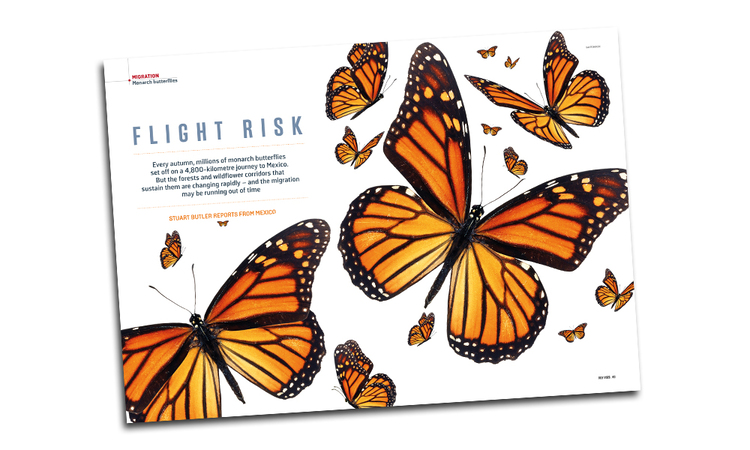
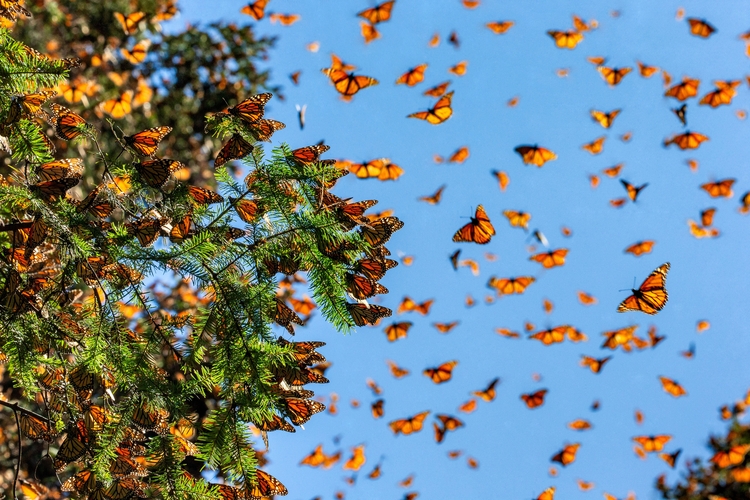
Each autumn, one of nature’s most remarkable migrations begins. Millions of monarch butterflies leave the fields and meadows of North America and set out on an extraordinary journey of up to 4,800km to a handful of mountain forests in central Mexico. There, draped across oyamel fir trees in vast orange-and-black clusters, they wait out the winter before beginning the long journey north once more.
For scientists, the migration remains one of the natural world’s greatest mysteries. No single butterfly completes the full round trip. Instead, multiple generations take up the baton, somehow navigating a route they have never travelled before. It is a phenomenon that has captivated researchers and inspired conservationists for decades.
Yet this iconic migration is now under threat.
In the forests of Mexico, climate change is pushing the butterflies ever higher up the mountains in search of suitable conditions. Across the United States and Canada, the widespread use of herbicides, pesticides and intensive farming practices has dramatically reduced the milkweed plants that monarch caterpillars depend upon for survival. The result has been a steep decline in monarch numbers over the past two decades.
Travelling to Mexico, Stuart Butler witnesses the spectacle firsthand and speaks to leading monarch experts about the uncertain future facing one of the world’s most celebrated insects.
On New York’s waterfront
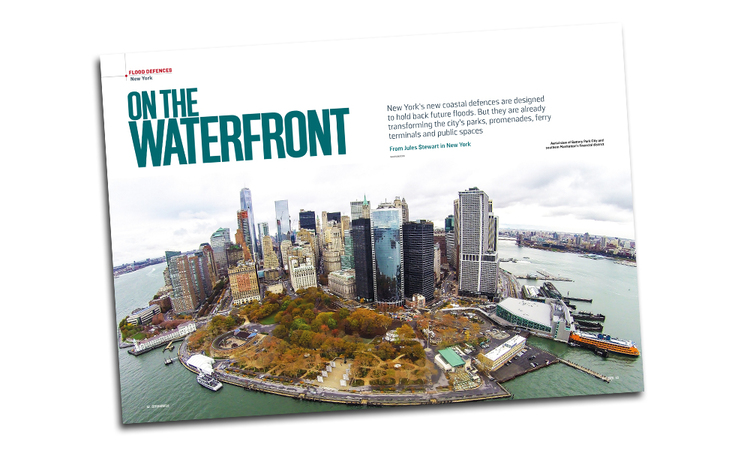
When Hurricane Sandy struck New York in 2012, it exposed the vulnerability of one of the world’s great coastal cities. Flooded tunnels, devastated neighbourhoods and widespread power outages transformed the way the city thinks about climate risk. More than a decade later, rising seas, stronger storms and intensifying heatwaves continue to challenge New York’s future.
Today, a vast network of flood barriers, raised waterfronts, restored wetlands and climate-resilient public spaces is being planned or built across the city. From Lower Manhattan to Staten Island, engineers, planners and communities are grappling with a difficult question: how do you protect a city of islands without fundamentally changing its character?
In Homer’s footsteps
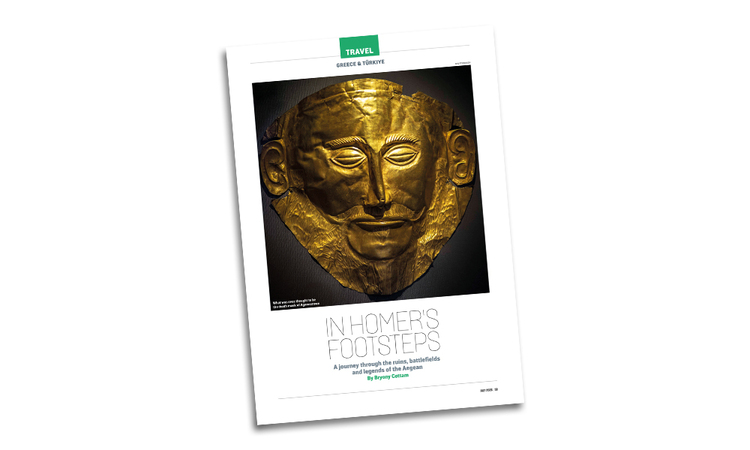
For nearly 3,000 years, the story of the Trojan War has inspired explorers, archaeologists and storytellers. From Homer’s epic poems to Christopher Nolan’s latest cinematic adaptation of The Odyssey, the legends of Troy continue to shape how we understand the ancient world.
This new Travelsphere and Royal Geographical Society itinerary follows the trail of myth and history from Istanbul to Athens, linking some of the eastern Mediterranean’s most remarkable archaeological sites. Along the way, travellers explore the ruins of Troy, where Heinrich Schliemann’s controversial excavations proved that the legendary city was more than mere fiction, before continuing through Gallipoli, Ephesus, Delphi and Mycenae.
But this is more than a journey through ancient history. The route also uncovers stories preserved within the Royal Geographical Society’s archives, from military geographers and explorers who witnessed pivotal moments in the First World War to scholars whose discoveries reshaped our understanding of the classical world.
Blending archaeology, geography and storytelling, this fascinating tour reveals how myth, history and exploration continue to intersect across landscapes that have captivated travellers for millennia. From the walls of Troy to the Acropolis of Athens, it offers a unique opportunity to walk in the footsteps of heroes, historians and explorers alike.
Closed cities

Hidden from maps, protected by checkpoints and often known only by coded names, the Soviet Union’s closed cities were among the Cold War’s most unusual urban experiments. Built around nuclear research, weapons production and military infrastructure, these settlements operated in near-total secrecy, with access tightly controlled and, in some cases, residents unable to openly discuss where they lived.
From the isolated Arctic city of Norilsk to Ozersk, the heart of the Soviet nuclear programme, these communities reveal how geography can be shaped by politics, security and strategic ambition. While some offered better housing and services than ordinary Soviet towns, they also carried hidden costs, including environmental contamination and strict limits on personal freedom.
The great slowing
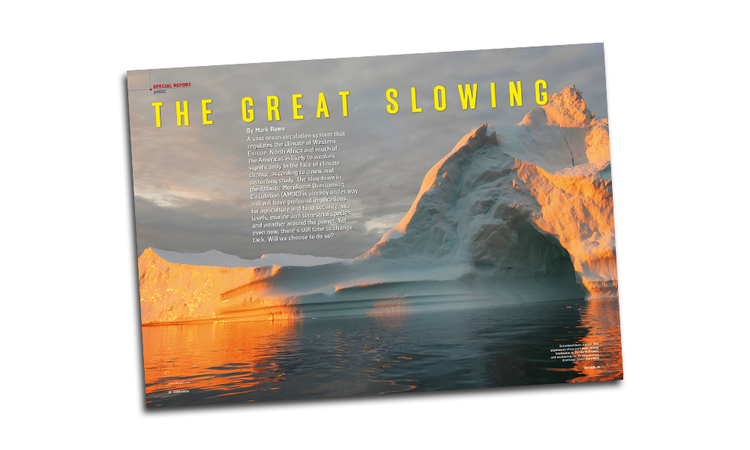
Far beneath the surface of the Atlantic Ocean, a colossal current system is constantly at work, moving heat, carbon and nutrients around the planet. It is one of Earth’s great climate regulators, helping to keep western Europe relatively mild and influencing weather patterns across continents.
But scientists are becoming increasingly concerned that this vast ocean conveyor belt – known as the Atlantic Meridional Overturning Circulation (AMOC) – is losing strength.
New research suggests the slowdown could be far more severe than previously believed, with profound consequences for life around the globe. Colder European winters, rising sea levels along North American coastlines, shifting rainfall patterns in Africa, disrupted fisheries, and a reduced ability for the oceans to absorb carbon are all among the potential impacts.
The changes would not happen overnight, nor would they resemble the dramatic scenarios portrayed in disaster films. Yet researchers warn that a steadily weakening AMOC could reshape the climate systems humanity has relied on for thousands of years.
In this special report, we explore the latest science behind one of the world’s most important ocean currents, examine why confidence in its decline is growing, and ask what a slower Atlantic might mean for the future of our interconnected planet.