Trump has projected US strikes have caused $2trillion in damage to Iran alone. Beyond this figure lies even more global fallout
By
Earlier this week at the G7 summit in Évian, France, President Donald Trump claimed that US strikes on Iran have caused around $2trillion in damage. It’s a figure certainly difficult to comprehend: if two trillion US dollar bills were laid end to end, they would stretch for around 312 million kilometres (194 million miles) – the equivalent of going to the moon and back more than 400 times.
Related reads…
$2trillion is a sum of money large enough to halt worldwide poverty for 12 years; educate every child in Africa for a decade; vaccinate every child globally eight times over or give $243.60 to every single person comprising Earth’s 8.2-billion-strong population. It could also rebuild Gaza 28 times and provide clean water to everyone on Earth for 40 years.
A little more than one per cent of $2trillion could entirely solve homelessness in the US and UK, while just 18.6 per cent of $2trillion could end world hunger.
But beyond Trump’s monetary estimate of the damage to Iran, there lies a more globalised fallout from the impact of the war. The conflict has disrupted energy markets, damaged infrastructure across the Gulf and threatened food production worldwide – impacts whose additional costs could push the overall price of the war well beyond $2trillion.
Here we look at the impacts that the Iran war has had and the costs, both financial and humanitarian, that they have entailed.
The Iranian fallout
Foremost, Iran appears to have suffered the greatest impact from the conflict.
Since the beginning of the war, US officials say they have hit more than 13,000 targets across Iran, killing more than 1,700 Iranian civilians – including 254 children. As well as these casualties, millions of Iranians and Arabs have been displaced from their homes across the region.
The exact infrastructural damage to Iran has been difficult to determine throughout the conflict, since the US has sought to limit certain companies’ satellite coverage of the region. But according to the BBC, several key structures have been damaged by US strikes, including at least 50 Iranian military bases, such as the headquarters of the Islamic Revolutionary Guards CORPS (IRGC). As well as this, bridges, universities and research centres, water desalination plants and power plants have been directly hit, alongside a large number of schools and civilian homes.
Oil woes
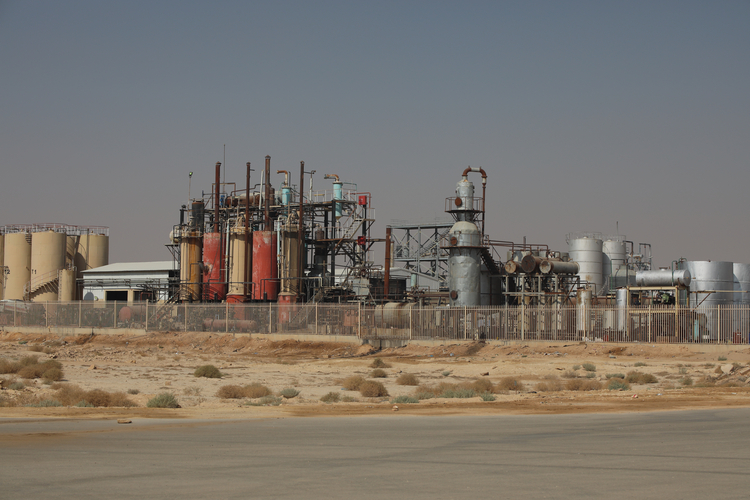
The Iran war has also been costly for the global oil sector. Iran’s success in shutting down the Strait of Hormuz and damaging oil and gas infrastructure has removed around 10 per cent of the world’s oil supply from the market. According to the head of the International Energy Agency, this has caused a global energy crisis ‘more serious than the ones in 1973, 1979 and 2022 together’.
Although the US has long prided itself on being ‘energy independent’ – a net energy exporter since 2019 – it has still seen dramatic price increases in petrol, with prices surging by 39 per cent at their peak. In the UK, drivers have also noticed prices at the pump increasing compared to before the war.
That cost is one that consumers worldwide will likely have to bear for the foreseeable future. The Islamic Republic is currently charging a $2million ‘transit fee’ for ships passing through the Strait of Hormuz, a move that will drive global energy prices up. And even after supplies are fully restored, economists predict that prices are unlikely to return to prewar levels.
The cost of American defence
In April 2026, the Pentagon said the US had spent around $25billion on its war on Iran, but Democratic leaders and some economists believe that number to be an underestimate. They suggest the cost to the US economy could be anywhere between $630billion and $1trillion.
In the war, the US has used a significant proportion of difficult-to-replace munitions, such as Tomahawk missiles and Patriot interceptors, against Iran. The US fired more of these Patriot interceptors – priced at $4million each – in the first four days of the Iran war than it supplied to Ukraine across the past four years.
Rising inflation and dwindling economic growth

This month, the World Bank set its worldwide economic growth forecast at 2.5 per cent, the lowest since the COVID-19 pandemic.
Due to the Iran war, slowing economic growth and rising inflation have hit Europe, while Middle Eastern countries are experiencing significant dips in their GDPs, expanding just 1.3 per cent this year – down from 4.5 per cent in 2025.
Even if the Strait of Hormuz shipping channel fully opened next month, the World Bank expects global inflation will rise to four per cent in 2026, up from 3.3 per cent in 2025.
Because of the multiple crises coming out of the conflict, the World Bank will supply up to $100billion across the next 15 months for countries worst affected by the ripple effects of the war.
Lost crop harvests
Another cost of the Iran war is that of lost crop harvests. The Strait of Hormuz has historically been a vital route for the global fertiliser trade – in 2024, up to 30 per cent of the world’s fertilisers passed through the strait to export markets around the world.
But rising costs and sharply reduced supplies of fertiliser products are already impacting countries that import heavily from the Gulf region. In particular, African countries are vulnerable as they rely on imported fertilisers, but the effects are as far-reaching as the UK, where costs to farmers will rise by up to 70 per cent. In the US, 70 per cent of farmers say they are now unable to afford all the fertiliser they need.
The fertiliser shortage will not show up in food prices immediately, instead working on a six-to-nine-month lag. After the most recent planting season across South Asia and East Africa, food distribution prices may likely rise, causing further knock-on costs to businesses and consumers as well as the initial price jumps to fertilisers.
A changed Gulf
The Gulf is a region left reeling from the impacts of the Iran war for several reasons.
After US-Israeli strikes assassinated former Supreme Leader Ali Khamenei, Tehran responded by firing missiles and drones at US military facilities and embassies in the Gulf region.
Iranian strikes caused damage to US military camps in Kuwait, as well as military bases like al-Dhafra airbase and Al Ruwais military base in the UAE, Prince Sultan air base in Saudi Arabia and Muwaffaq Salti air base in Jordan.

A report by the New York Times estimated that repairs to a US Navy headquarters in Bahrain could cost $200million alone.
As well as infrastructural damage, Gulf states have also faced reputational impacts from the war. A UN assessment found that a shift in perception about the safety of Gulf states – which have prided themselves as luxurious and safe destinations – could continue well after the cessation of the Iranian conflict.
Along with tourists, many foreign workers – who comprise a significant foundation of the Gulf economies – have fled the region in the wake of the war. Reportedly, tens of thousands were thought to have left, with many of these workers in construction, domestic work and the service sector – jobs that many citizens would otherwise avoid due to the nature of the work as well as wage levels. This could impact Gulf economies and cost them economic success in the coming months and years.
Trade routes under pressure, and prices driving higher
It isn’t just the price of oil that is impacted by the Strait of Hormuz’s closure. For example, the shipping of sulphur – a critical energy material – is currently at a standstill, and prices of it are rising as a result. Nearly half of all global seaborne sulphur trade passes through Hormuz, but delays in its shipment are causing industrial slowdowns in Indonesia and the copper belt of Africa. In the last year alone, the price of sulphur has quadrupled, threatening to eventually raise prices for all types of products that use the material.
In addition, methanol – a key chemical used in resins, coatings and plastics – is also transported largely via the Strait of Hormuz. Slowing down this transport is impacting China in particular, the world’s largest methanol buyer. As of June 2026, methanol reached its highest price in four and a half years.
Monoethylene glycol (MEG) – used for polyester fibres, packaging and textiles – is also a significant export for the Gulf, with around 6.5 million tonnes shipped in 2025 alone. Delays are causing shortages in China, with Asian buyers now turning to suppliers in the US. Such a shift could drive the prices of MEG higher.