
From a training base in Tijuana, Iran’s players prepare for a tournament hosted by a country now at war with their own
By
On the outskirts of Tijuana, Mexico, in a training complex perched along the Mexican coast with the Pacific glittering beyond the fence line, a group of footballers are doing what footballers do: running drills, working set pieces, eating together, resting.
To the north, just 55 minutes by air, the stadiums of Los Angeles are preparing up for one of the largest sporting events on earth. And yet, while training continues in earnest, these players cannot be sure they will be allowed into the United States, where all their group matches are planned to take place.
The war that changed everything
On 28 February 2026, the United States and Israel launched joint military strikes on Iran, targeting what officials described as nuclear facilities and command infrastructure. Iran’s Supreme Leader, Ali Khamenei, was killed in the opening hours. Within days, Iran had responded with waves of ballistic missiles and drones striking Israeli cities, US military bases across the Gulf, and civilian infrastructure across the region. Three American service members were killed in the first 48 hours. By mid-March, hundreds of Iranian civilians were dead, millions displaced, and the Persian Gulf was partially closed to shipping.
Enjoying this article? Check out our related reads…
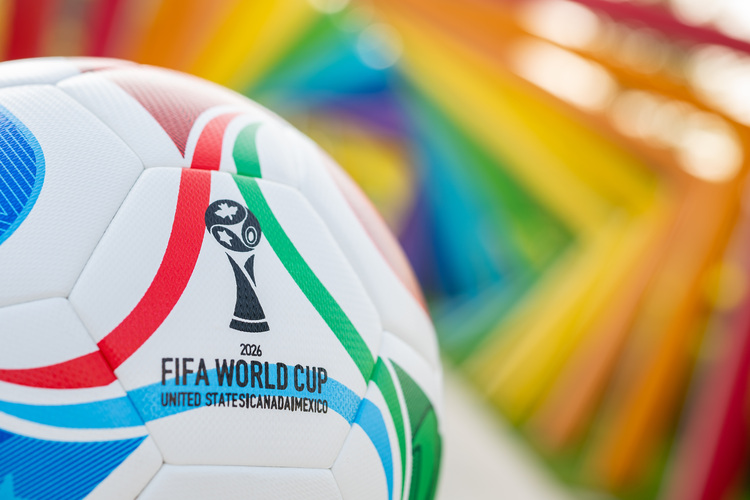
It was also, seven months before kick-off, of the World Cup, partly hosted by the United States.
Iran had been the first Asian nation to qualify for the 2026 World Cup, securing their place in March 2025 with a 2-2 draw against Uzbekistan. Their seventh World Cup, their fourth in a row. Team Melli, as they are known, had been drawn into Group G: New Zealand, Belgium, Egypt. All three group stage matches were scheduled to take place on US soil: twice at SoFi Stadium in Los Angeles, once at Lumen Field in Seattle.
The host nation was now at war with one of its guests.
A team in exile
While most nations were settling into their designated training bases in Arizona, New York or Georgia, Iran was training in Antalya, Turkey, a country Iran has long used as neutral diplomatic ground. Their warm-up friendlies against North Macedonia and Angola were cancelled without explanation by their opponents. They beat Costa Rica 5-0 in a friendly watched by FIFA president Gianni Infantino himself, a PR visit that carried more diplomatic weight than sporting significance.
By late May, FIFA had approved the relocation of Iran’s base to Tijuana, the border city that sits at one of the most heavily surveilled frontiers on earth. Their camp, just north of the Pacific coast, sits within sight of the wall that divides Mexico from California. From their hotel windows, the United States is visible. Getting there, legally and safely, is another matter entirely.
As of mid-May, not a single Iranian player had received a US entry visa. The Football Federation of the Islamic Republic of Iran (FFIRI) submitted a list of ten conditions for participation, including the right for players who had completed military service with the Islamic Revolutionary Guard Corps (IRGC), designated a terrorist organisation by Washington, to enter the country. US Secretary of State Marco Rubio indicated some staff could face entry bans entirely.
Canada revoked the visa of FFIRI president Mehdi Taj while he was mid-flight to FIFA’s congress in Vancouver, citing IRGC associations, leaving Iran the only nation not represented.
The players caught in the middle
Sardar Azmoun, 57 goals in 91 international appearances, nicknamed the ‘Iranian Messi’, will not be at this World Cup. Iran’s most recognisable footballer was expelled from the national squad after sharing a photograph on social media with Mohammed bin Rashid Al Maktoum, the ruler of Dubai, at a time when Iran was striking UAE territory. Iranian state television called it an act of disloyalty. Reports from inside Iran spoke of asset seizure orders. Azmoun, who plays his club football in the UAE, said nothing publicly. His absence from the final 26-man squad, confirmed on 1 June, is both a footballing loss and a political statement.
Meanwhile, in Melbourne, five players from Iran’s women’s national team, including captain Zahra Ghanbari, slipped away from their team hotel during the AFC Women’s Asian Cup and requested asylum from Australian authorities. They had already refused to sing the national anthem before their match against South Korea. Conservative Iranian commentators called them “traitors in wartime.” Australia granted them humanitarian visas.
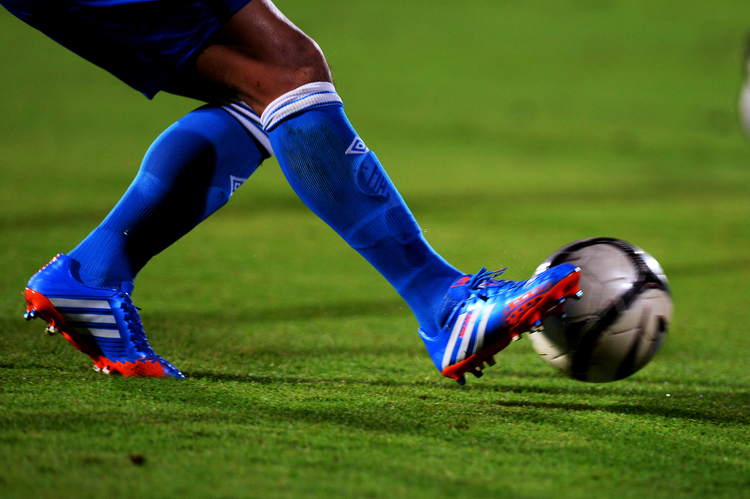
In a friendly match in Turkey, the men’s team took to the pitch wearing black armbands and carrying pink schoolbags adorned with ribbons, a tribute to children killed in the Minab school tragedy on the first day of the US-Israel strikes. Echoing the 2022 World Cup in Qatar, when they stood silent during the national anthem in solidarity with protesters following Mahsa Amini’s death.
The pitch as politics
FIFA awarded Donald Trump its inaugural ‘Peace Prize’ at the World Cup draw ceremony in Miami in December 2025, crediting him with facilitating regional ceasefires. Three months later, the US was bombing Iran. Twenty-seven British Members of Parliament signed a motion urging international sports bodies to consider sanctions against the United States. Critics noted the asymmetry sharply: Russia was banned from international competition following the invasion of Ukraine in 2022. The US, as host, faces no such sanction.
There is a match pencilled in for 3 July 2026 in Dallas, that, if Group G produces the right results, would see the United States versus Iran. No sporting fixture in recent memory would carry more political freight.
That match may never happen. Iran might not progress. The logistics might yet unravel. But even the possibility of it, the idea that players from a country at war with the host nation might face each other on the pitch, under the same FIFA banner, observed by a global television audience of hundreds of millions, says something profound about what the World Cup has become.
The tournament was sold to the world as sport’s great tent: big enough for everyone, neutral by design, a 32-day truce from politics. The 2026 edition has revealed that tent to be, in places, made of paper. The border between Mexico and California is still there. The missiles are still being fired. The visas are still being processed.
And in Tijuana, on a coastal training pitch with the Pacific at their backs and the wall at their north, Team Melli are preparing to play.