
As Iran’s supreme leader nears the end of his rule, the real battle for power begins – not between reformists and clerics, but between the mosques and the military
The Iranian Revolution of 1979 resulted in power flowing from the ‘Crown to the Turban’ – from the shah to the ayatollahs. The coming change in this decade risks another transfer: from the ‘turban to the boots’ – the ayatollahs to the military. There will be a change; the questions are how, and to what?
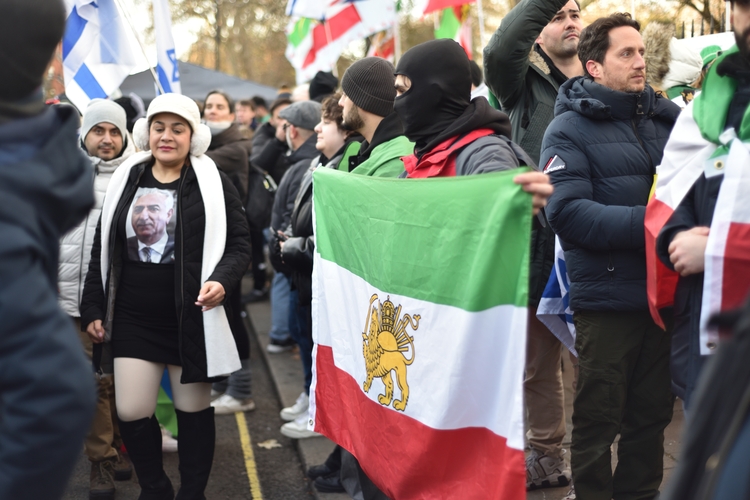
Iran’s supreme leader, Ayatollah Ali Khamenei, is 86. He holds ultimate authority over all state and religious affairs, but after 36 years in power, he’s ailing. There’s no clear successor and, as the recent, brutally repressed protests show, many Iranians see the country’s economic collapse not as government failure, but as the failure of a system long past its sell-by date.
The catalyst for the brutal street clashes was economics. Power and water supplies are frequently turned off (the country is suffering a drought), medicines are in short supply, unemployment is rising and even official figures acknowledge that inflation is at 50 per cent. Amid this, the budget for the intelligence services has risen. Demonstrators no longer call for economic reform – their target is the system that seeks to control almost every aspect of their lives.
Enjoying this article? Check out our related reads…
‘Guidance Patrol’ officers still tell women what to wear. Surveillance systems are used to track and arrest anti-government activists. Punishments for homosexual acts include the death penalty. This is also the case for blasphemy, leaving Islam and adultery.
Independent political parties and trade unions are banned. Ethnic minorities such as Kurds and Baluchis face difficulties in gaining access to education and employment, as do minorities such as Baha’is and Jews.
Subscribe to Tim Marshall’s Substack: http://bit.ly/49xa10o
Change from within appears impossible. To run for parliament, the Majlis, you must be approved by the 12-member Council of Guardians. Half are chosen by the supreme leader, who also appoints the most senior legal figures. Any laws passed by the Majlis must be approved by the council. Dissent is not tolerated and conformity is enforced by the intelligence services.
The new protests began in Tehran’s Grand Bazaar. The leading market traders, known as ‘Bazaaris’, are conservative and have long supported the regime. A strike by Bazaaris played an important role in the 1979 revolution, and the merchants chartered the plane that flew Ayatollah Khomeini back to Tehran.
Chants of ‘sacrifice Gaza for Iran’ have been heard, reflecting frustration over the government bankrolling Hamas. There have even been chants of ‘death to Khamenei’. These calls have been heard before in this decade, but the difference now is the participation of the Bazaaris. If the ayatollahs lose the bazaar, they risk losing everything.
Which brings us to the Iranian Revolutionary Guard Corps (IRGC), whose job description is in its name. The 150,000-strong IRGC will guard the revolution, but if a nationwide uprising suggests the clerics can no longer function as a government, the Guards won’t simply fade away.
Years ago, they moved into big business and among their many assets is a construction company called Khatam al-Anbia. It built parts of the Tehran metro – akin to the Royal Marines making profits from extending the Northern Line of the London Tube. Retired IRGC generals are in parliament and on the boards of major companies.
If the clerics go down, the IRGC doesn’t intend to go down with them. This is what Iranians mean when they refer to the ‘turban to the boots’. But the Guards aren’t the only ones wearing boots.
Watching closely is the Iranian army – the Artesh. Whereas the IRGC is loyal to the revolution, as an institution, the Artesh is less ideological, more secular and loyal only to the country. Many in the officer corps among the 650,000 troops resent the power and status given to the Guards. If law and order completely broke down, the Artesh would face a difficult decision: back the IRGC or attempt its own takeover of state institutions.
There is another scenario: one in which pro-democracy liberals lead a mass movement that, after limited violence, pushes the regime out of power and assumes government. It seems unlikely. In 1979, the liberals made the mistake of thinking they could cooperate with the clerics. After joining forces to overthrow the Shah, tens of thousands were then slaughtered by the Ayatollahs’ thugs.
A last scenario is that of gradual change but, as seen above, the system is designed to prevent that. The regime has shown a willingness to slaughter its people, and when you’ve gone that far – if you allow change, you risk signing your own death warrant.
At the time of writing, the demonstrators don’t have the ‘critical mass’ nor organisational ability to overwhelm repression. However, even though the religious revolutionaries don’t intend to give up their revolution, time and demographics are against them.