
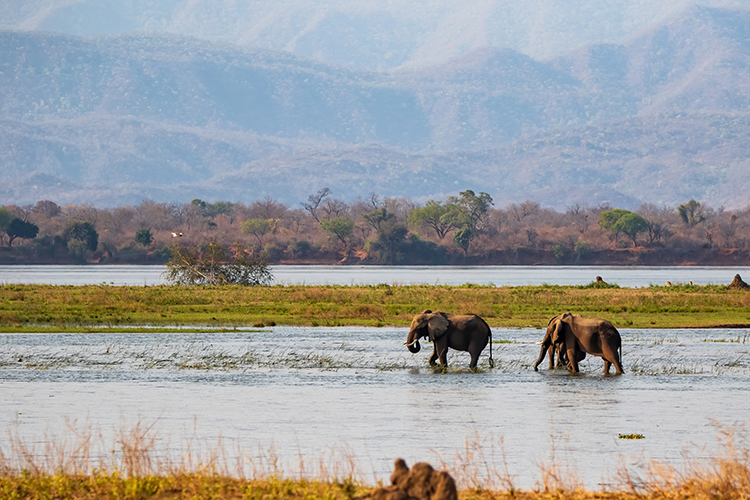
Zimbabwe to the left of her, Zambia to the right. Lorraine Kearney is stuck in the middle of the Zambezi river with hippos, crocs and tiger fish, and that slightly scary feeling in her chest that is exhilaration
Sponsored post
A mosaic of wild landscapes stitched together by mighty rivers, crashing and tumbling into the great Zambezi – the father and protector of southern Africa – as it wends its way across the continent. This is Zambia, slowly coming into its own and soon to be the worst-kept secret in African safari travel.
Wild camping to luxury lodges
It’s one of the last places where you can experience wild Africa, camping in set-ups as simple as a sleeping bag and a guide – tent optional. At the same time, high-end lodges are opening their doors.
The ultra-luxurious Chichele Presidential in South Luangwa National Park reopened in April 2025, as did Ker & Downey’s King Lewanika Lodge in the remote Liuwa Plain National Park. In August, Lolelunga Private Reserve opened north of Kafue National Park, in the Kaonde area – Zambia’s first fully fenced, private Big Five photographic safari reserve.
And people are starting to take notice of Zambia’s pull: in 2024, the country recorded 2.2 million international arrivals; by October 2025, there had already been 2 million arrivals.
From game drives to exploring on foot
Game drives are quintessential. But, you can also do Zambia the traditional (and best, in my opinion) way: on foot and by boat.
Walking safaris were pioneered in South Luangwa by legendary guide Norman Carr in the 1950s, and, today, the park still offers some of the best experiences. And so it was that I set my compass for that huge and unconquered wildness.

A South Luangwa adventure
South Luangwa lies in a strip in eastern Zambia, dissected by the Luangwa River. That river runs about 800km from its source high in the Mafinga and Lilonda hills near the borders with Malawi and Tanzania, before emptying into the Zambezi between the towns of Luangwa (Zambia) and Zumbo (Mozambique).
The wind whistled through the trees and straight across the riverbank, ruffling the fur of the wild dogs lying in the sticky mud, in various stages of sleep, from slumbering lightly to out cold. Even so, all the crack of thunder got from the alpha male was a head slightly raised, one eye barely open, before he went back to his nap.
We’d been sitting quietly for more than 40 minutes, waiting for the pack to rouse itself for the evening hunt. Every now and again, a bored pup would get up and amble over to a sibling and try to irritate them into action, as is the way with children everywhere.
At Puku Ridge the next day, I sat in the private plunge pool outside my tent and watched the world parade past on the swampy plain below: elephant, hippo, yellow baboon, zebra, kudu and plenty of those strange-looking puku, their rumps higher than their shoulders. All the better for leaping through the marshes.
A wildlife-rich Kafue experience
Kafue thrummed with life. Kafue river hippos are bigger than any I have seen anywhere. They trotted around harrumphing and guffawing with abandon, all while hospitably sharing the river and its banks with us, so long as we kept a respectable distance.
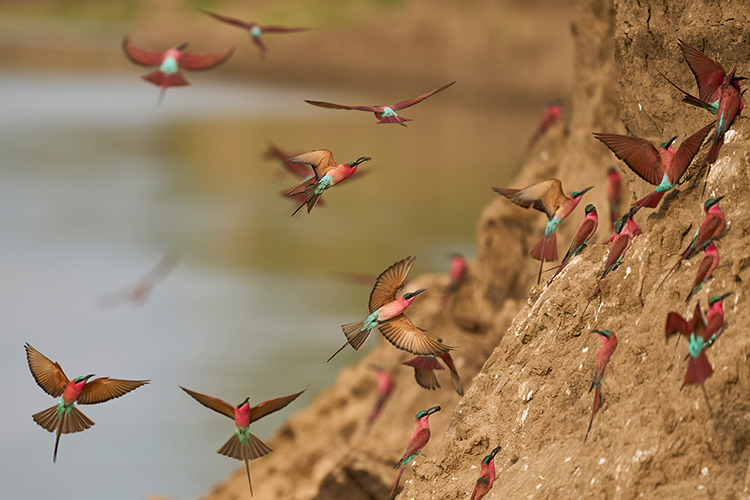
So prolific was the bird life it was hard to know where to look first – kingfishers, bee eaters, paradise flycatchers, fish eagles, vultures, starlings, herons, jacanas, hornbills, waders, storks, cranes, turacos.
On the long drive through Kafue down the spinal road to Konkamoya on the shores of Lake Itezhi-Tezhi we spied (and were spied on by) leopards lolling on their termite-mound lookout posts and under trees thick with early summer foliage.
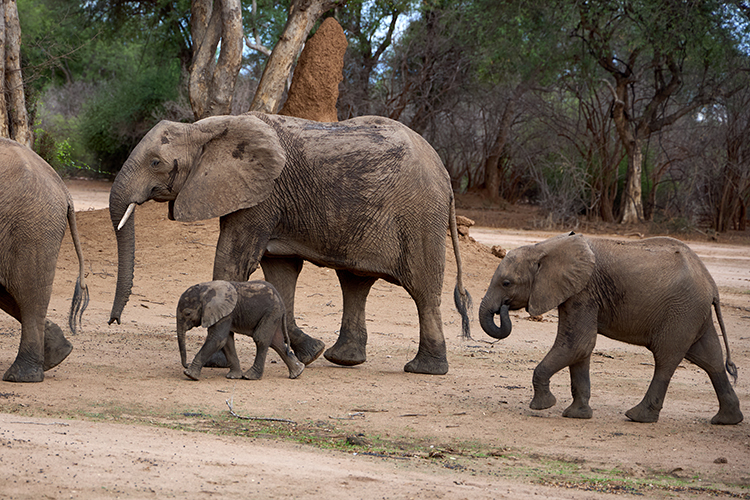
The huge, grassy plains welcomed large herds of the healthiest-looking buffalo in southern Africa, elegant impala and playful zebra. We had morning coffee under a fearless azure sky while watching a pride of fat lions studiously ignore the gazelles gambolling around them.
The land is so fecund, the game so rich, the predators are lazy, and the prey are laissez-faire.
On to the Lower Zambezi
Another toy plane took me east to Royal Zambezi Airstrip at the gate to Lower Zambezi National Park. Unfurling along the Zambezi River, between the confluence of the Kafue at Chiawa in the west and the Luangwa at Luangwa town in the east, this is one of the most beautiful regions in all of southern Africa.
Lower Zambezi is famed for its leopards, and I whiled away the time watching Mambo, the regal female near Lolebezi, guarding no fewer than four baby impala carcasses in her tree.
It was also here that I saw – for the first time – a yellow baboon predate on a tiny impala, parked under a bush by its mother while she grazed.
Freedom came at me quick-quick-slow as my guide idled the boat up the Zambezi to Royal Zambezi Lodge, elephants trumpeting our arrival from the banks and hippos popping up from the depths, the call of the fish eagles ringing in our ears.

Since 2002, Discover Africa has earned a reputation as one of the continent’s most trusted safari specialists. From our base in Cape Town, we design deeply personal journeys across southern and East Africa – not just itineraries, but stories that reflect who our travellers are and what they long to feel.
*Full disclosure: Costs in these high-end camps can be significant. As a writer, I stayed for free, hosted by Africa’s Eden, African Parks, Chiawa Safaris, Royal Zambezi Lodge and African Bush Camps, but I remain independent.


