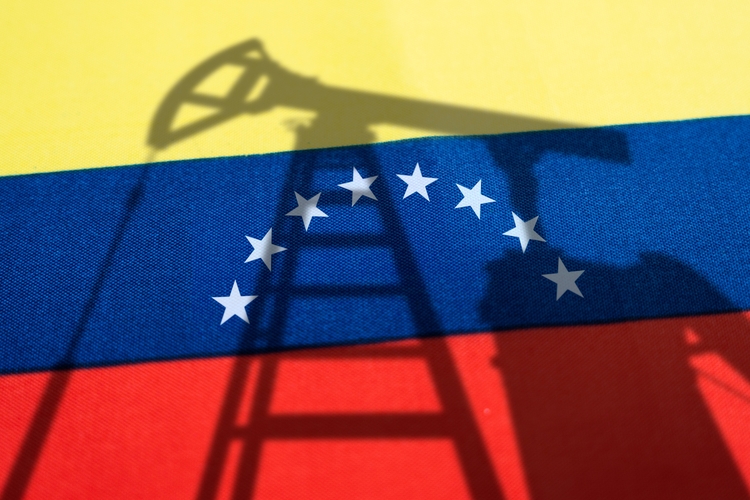
It has the world’s largest quantity of oil reserves – so why is Venezuela unable to make itself a successful petrostate?
By
Three hundred and three billion barrels. That’s the estimated number of crude oil reserves in Venezuela, placing the nation at the top of the global oil league table. It is highly dependent on oil exports for its government budgets, with the vast majority of its crude exports heading to China.
Justfive countries in the world control over half of the planet’s proven oil reserves – Venezuela comes out top, followed by Saudi Arabia (267 billion barrels), Iran (209 billion barrels), Canada (163 billion barrels) and Iraq (145 billion barrels).
However, despite its vast oil wealth, Venezuela’s production of the liquid gold remains paltry, with experts labelling the nation a ‘failed petrostate’ for several reasons. Each year, the country produces around $4 billion in oil exports, a minuscule share compared with Saudi Arabia’s $181 billion.
Starved of adequate investment, oil output has continued to decline in Venezuela, hitting its lowest level in decades. In addition, the nation has soaring debt – of at least $150 billion or higher – and suffers from hyperinflation at around 190 per cent.
In addition, Venezuelan oil is extra-heavy crude, originating mainly from the Orinoco Belt. This makes it much more expensive to extract and refine, meaning it sells at a discount. According to experts, it is one of the dirtiest types of oil to burn.
Enjoying this article? Check out our related reads…
So, what happened in Venezuela’s history that contributed to its difficulties in becoming a successful petrostate? And what does the future hold for the nation?
A pocket-book history
To understand Venezuela’s oil industry, we must first look back to 1922. It was back then that Royal Dutch Shell geologists first struck oil, blowing out the liquid gold at a rate of one hundred thousand barrels per day. In just several years, more than one hundred foreign companies were producing oil.
Annual oil production grew from just over a million barrels to 137 million throughout the 1920s. By 1929, this made Venezuela second only to the United States in total output. While the nation was experiencing a ballooning oil industry, other sectors were being pushed aside to compensate, in a move that would spell disaster in future years.

Another boom occurred in the 1970s, making Venezuela the country with the highest per capita income in Latin America. But by the 1980s, global oil prices plummeted, sending Venezuela’s economy into a huge contraction while inflation soared. At the same time, the nation accrued massive foreign debt by purchasing foreign refineries.
In 1998, the election of Hugo Chávez precipitated a long and steady decline in the country’s oil production. The president fired thousands of experienced oil workers, gutting companies of vital technical expertise.
By the mid-2000s, oil prices had plummeted even further. Oil dropped from more than $100 per barrel in 2014 to under $30 in early 2016, sending the nation into economic and political spirals.
Following the price crash, neglect, poor infrastructure, under-investment and corruption have eroded the country’s oil industry and its economy.
In addition to these domestic challenges, international sanctions and geopolitical pressures have made it difficult for the Venezuelan oil industry. In particular, US sanctions targeting oil exports and financial transactions have complicated Venezuelan efforts to access global markets and financing. In turn, this has reduced exports and total investment. For example, US enforcement has limited the state oil company PDVSA’s ability to sell oil globally, leading to situations in which storage tanks are filled with unsold petrol as tankers won’t risk sanctions-related repercussions.
The future for Venezuela
So, what lies in store for Venezuela’s oil industry?
In recent days, President Trump has promised that ‘very large’ US oil companies could spend billions of dollars to fix what he coins ‘badly broken infrastructure’. As of yet, statements from potential companies have remained non-committal.
If the plan were to go through, under the new regime, US companies could partner with the Venezuelan state oil company PDVSA, developing and producing crude oil in exchange for a share of the profits.
The US is also poised to deal with the dense, sticky and heavy oil that Venezuela produces. Along the US’s Gulf coast lie oil refineries first built to process crude imported from Latin America before the boom in lighter US shale oil emerged earlier in the century. According to experts at Energy Aspects, US refineries could readily receive an extra one million barrels a day from Venezuela, helping the US to reduce its reliance on more expensive crude oil imports from Canada.
Despite Trump’s eyes set keenly on an oil future for Venezuela, analysts anticipate that the global shift already underway from fossil fuels to cleaner energy will force countries such as Venezuela to diversify their economies away from oil and gas anyway.
Evidence already suggests that Venezuela is doing exactly that – it is one of almost 200 nations and territories to sign the binding treaty of the Paris Agreement.
In addition, Venezuela’s ‘dirtier’ oil – which is worse for the planet when burned compared to other lighter crudes – may be unattractive for potential investors.
Analysts don’t shy away from how difficult it would be for Venezuela to diversify. Given the scale of its economic and political collapse across the last decade, it will certainly be no small feat. The country would likely need to revitalise its oil sector before developing other important industries, a move that would take enormous investment and funding that the country may not currently possess.
Ultimately, it remains difficult to predict what shape Venezuela’s oil industry will take in the coming years. On one hand, the nation could invest heavily to reverse its status as a failing petrostate. On the other, the steps necessary to revitalise its oil and gas industry may be too difficult to implement.