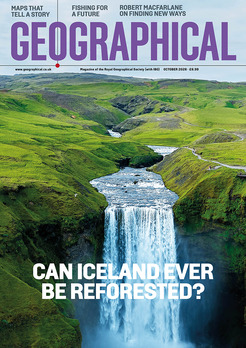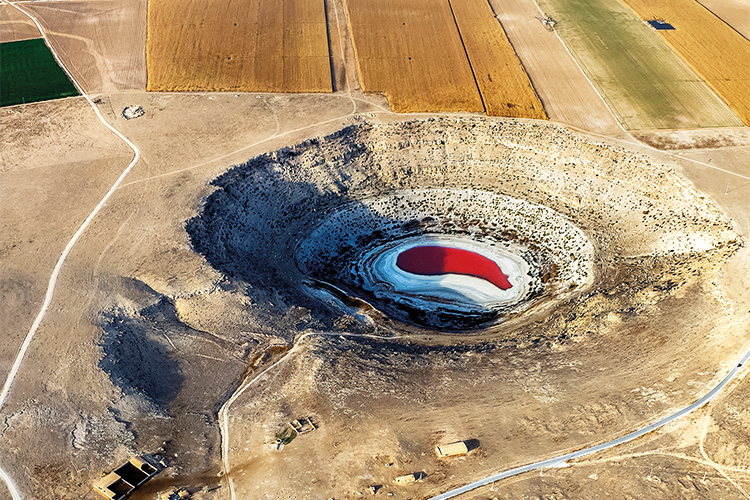
March’s edition of Geographical traverses from the billion dollar scam centre industry to trail running in China
In our March 2026 issue, our cover story looks at scamming farms where scripted romance, crypto bait and digital impersonation are industrialised – and victims worldwide are stripped of life-changing sums.
Also in this issue: head to Oxford to discover sites of Victorian vice and virtue. Jules Stewart traverses through the life and writing of travel writer Eric Newby, and how he turned failure, misadventure and self-mockery into a new kind of narrative, while Tristan Kennedy meets two alpine climbers summiting a virgin face in Pakistan with no fixed ropes. Leon McCarron visits China to see how trail running has drawn thousands into the mountains and reshaped outdoor culture.
Check out our recent editions…
Our columnists bring an array of topics to the forefront to help you stay on top of the world: Tim Marshall discusses the relationship between Cuba and America; Andrew Brooks reflects on nostalgia, consumption and the enduring power of physical place in a digital age, while Marco Magrini explores the quiet revolution in battery technology — and why it may determine the speed and success of global decarbonisation.
Our digital edition is out now too, giving you access to all the stories in our latest issue, as well as our full archive dating back to 1935, with hundreds of magazines to explore. Digital access is available through the Geographical app, and you can now enable notifications to be alerted the moment the latest issue is live. And if you want to enjoy our beautifully designed and produced print magazine, we can post the next edition to you anywhere in the world. Join us and stay on top of the world!
A billion dollar industry: scam farms

They look like farms, but not the sort that feed us. Scattered across Southeast Asia, these are ‘scam farms’ – purpose-built compounds where the crop is deception and the harvest is human ruin.
In the lawless borderlands of Myanmar, and across pockets of Cambodia and Laos, thousands of workers can be packed into a single centre, overseen by a murky blend of organised crime, money launderers and armed groups. Inside, persuasion is industrialised: scripted romances, cryptocurrency bait and digital impersonations designed to prise life-changing sums from strangers an ocean away.
The damage isn’t contained by geography. Middle-class victims in China, North America and Western Europe are among the prime targets, and the losses are staggering – estimated at up to US$37billion a year in East and Southeast Asia alone. What once slipped under the radar has swollen into something authorities can no longer ignore, a global security threat in plain sight, thriving wherever governance is weak and greed can be scaled.
The cost of war in Syria
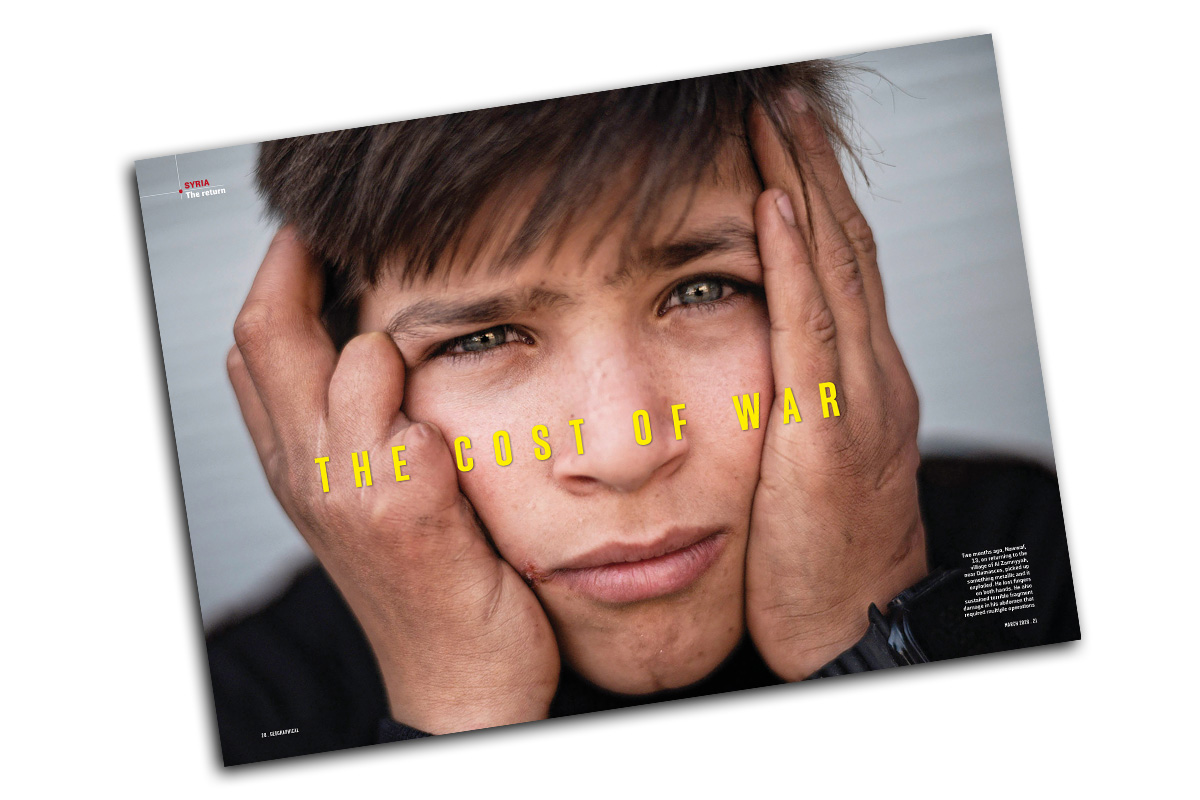
More than a decade after war tore Syria apart, the long road home has begun – hesitant, fractured and shadowed by danger. Since 2011, more than six million Syrians have fled abroad and millions more have been displaced within their own country, creating one of the largest upheavals of people in recent history. A year after the fall of Bashar al-Assad’s regime in December 2024, some families are edging back. Around a million refugees have returned from overseas, joined by more than a million who had been uprooted inside Syria. Yet for millions more, return remains impossible. They watch from Turkey, Lebanon, Germany and beyond, weighing hope against fear.
Those who do come back find streets choked with rubble and towns only half alive. Electricity flickers unreliably, water runs dry, roads are cratered and schools struggle to reopen their doors. Reconstruction exists more in promise than in practice. Beneath the surface lies an even deadlier inheritance. Landmines, cluster munitions and unexploded shells contaminate fields, gardens and playgrounds, turning ordinary routines into lethal gambles. In the year following the regime’s fall, more than 1,600 people were reported killed or injured by explosive remnants of war, at least 590 of them fatally; children accounted for more than a third of casualties. Many incidents, particularly in rural areas, go unrecorded.
In villages such as Bashquoi in northern Aleppo, families rebuild stone by stone while mined ground sits just metres from classrooms. Farmers speak of land too dangerous to till; grandparents recall husbands killed fetching water; former soldiers attempting to clear ordnance lose limbs in the process. In Yarmouk camp and in shattered districts of Homs, daily life is shaped as much by what lies underground as by what stands above it. Aid teams sweep hillsides with metal detectors and mark contaminated earth, but clearance is painstaking and under-resourced.
Communities show remarkable resilience, reopening schools with dozens rather than hundreds of pupils, celebrating in Damascus squares on the anniversary of political change. Yet resilience is not recovery. Across vast swathes of Syria, the question lingers beneath every footstep – is the ground safe? The war, for many, has not ended. It has simply been buried.
China on the run

On the edge of the Tibetan Plateau, where Sichuan’s forests rise towards the ice-fluted slopes of Gongga, Leon McCarron stood on a start line that would have been unthinkable here 15 years ago. In 2010, when he walked 5,000 kilometres across the length of China, travelling on foot for pleasure seemed baffling to many; drivers slowed to offer lifts, puzzled that anyone would choose to walk. Even in 2019, as he and colleagues tried to stitch together a 100-kilometre hiking trail in rural Hunan, villagers laughed at the idea of jogging through the mountains. Outdoor adventure felt novel, even faintly absurd.
Yet at the Kailas FUGA Gongga Extreme Glacier Challenge Race, beneath a 7,509-metre peak revered in Buddhism and feared by climbers, trail running has become both spectacle and serious business. More than 500 trail races took place across China in 2025, part of a wider outdoor boom that reportedly draws hundreds of millions into hiking, cycling and mountain sport. The surge has not been seamless – halted by the pandemic and reshaped by tragedy in 2021 – but tighter regulation and rising standards have transformed the scene. What once seemed eccentric now signals a broader shift, as high-speed rail delivers runners from megacities to remote valleys and mountain paths are reimagined not as routes of necessity, but of choice.
The right man in Havana

Look at a map and Cuba’s importance leaps out. The island sits astride the sea lanes that funnel more than half of US trade in and out of the Gulf ports of Texas and Louisiana. Tankers and container ships squeeze through the Florida Straits – just 145 kilometres from Havana to Miami – and the Yucatán Channel beyond. These are narrow maritime arteries carrying the lifeblood of the American economy. If they were ever blocked or militarised, the shock would be immediate and profound. Geography, more than ideology, explains Washington’s enduring fixation with who rules in Havana.
It was geography that lay behind the Spanish–American War, the Bay of Pigs invasion and the near-catastrophe of the Cuban Missile Crisis. Ever since Fidel Castro toppled a US-backed regime in 1959 and aligned with Moscow, the United States has sought to claw back influence. Now, events in Venezuela may be doing what decades of sanctions could not.
For years, subsidised Venezuelan oil kept Cuba afloat, exchanged for doctors and security advisers. With Caracas in turmoil and shipments drying up under US pressure, Cuba’s fragile economy is faltering. Blackouts roll across cities, petrol queues stretch for blocks and food shortages bite harder. More than a million people have left in five years. President Miguel Díaz-Canel blames American sanctions; critics cite sclerotic central planning and repression.
As the crisis deepens, Washington senses an opening. If Havana wobbles, the United States will move swiftly – not out of sentiment, but to secure the strategic backyard that guards its Gulf coast for generations to come.
Mapping the island
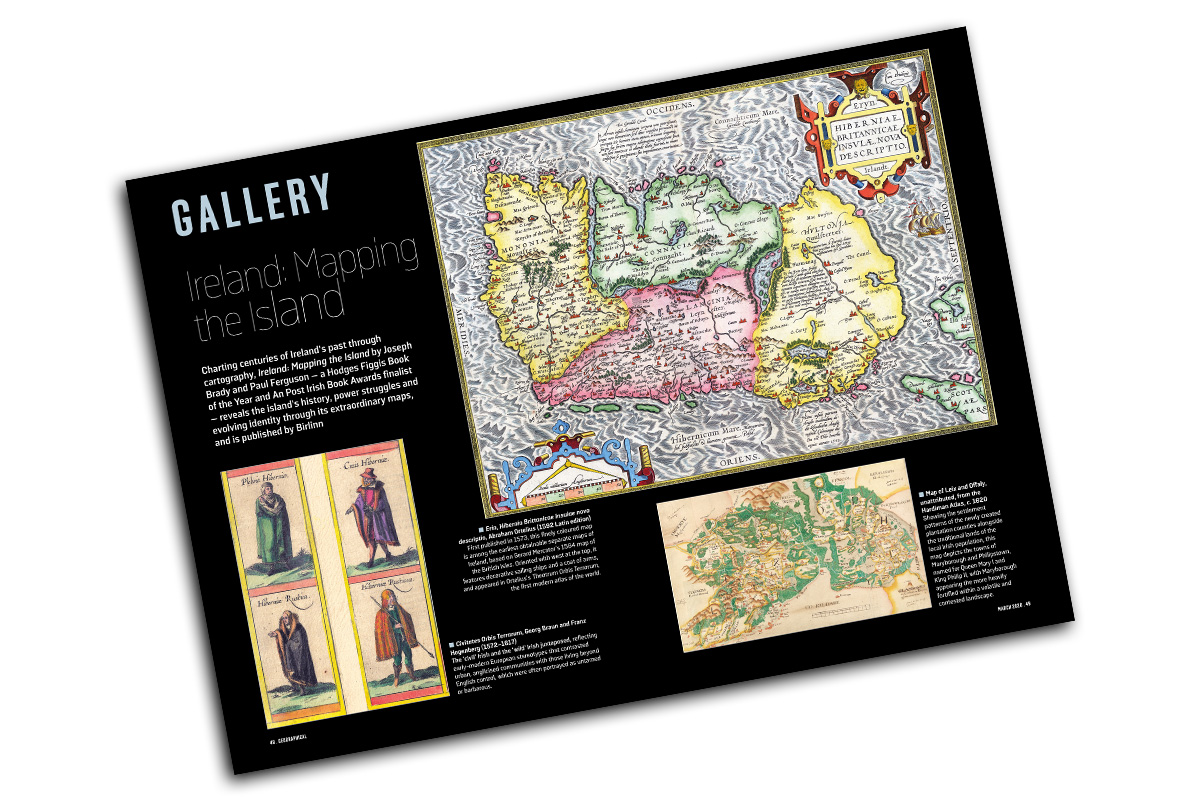
Charting centuries of conquest, colonisation and contested identity, Ireland: Mapping the Island by Joseph Brady and Paul Ferguson reveals how cartography has shaped – and been shaped by – the island’s turbulent past. From Ortelius’s ornate 16th-century atlas, rich with ships and heraldry, to plantation maps of Leix and Offaly that inscribed English power onto Gaelic landscapes, each image tells a political story. Later propaganda maps of partition and unity expose rival visions of the nation, while tourism posters and Ordnance Survey sheets reflect cultural reinvention. Published by Birlinn, this award-nominated volume shows that maps of Ireland have never been neutral.
Better World winners

At a time when headlines feel relentlessly heavy, the Geographical Better World Awards offer something rare – stories that lift rather than weigh down Chosen by readers, this year’s winners focus not on grand political gestures, but on human care in the midst of crisis.
Individual winner Illia Todchuck, a Ukrainian filmmaker now based in Belfast, asked people a disarmingly simple question: what would make the world better? The answers – kindness, empathy, small everyday acts – reveal how hope often survives in the quietest ways.
In the Group category, Edna Fernandes’ charity Beyond Conflict turns its lens towards the hidden toll of war: trauma, grief and fractured mental health. Working with communities affected by conflict, the project supports psychological recovery and creates space for healing, showing that rebuilding lives means tending to minds.
Together, the films show that even amid upheaval and uncertainty, it is care for one another that quietly holds communities together.