Some of Britain’s hedgerows are older than the Pyramids. From Dartmoor’s Bronze Age ‘reaves’ to our modern-day field boundaries, they still shape wildlife, farming and the countryside today
By
The dog walker looked confused. ‘The reaves? I’m sorry. I’ve no idea what they are.’ He spoke with the kind of Devon accent that indicated a lifetime spent out on the hills of Dartmoor. ‘But, if it’s the Bronze Age settlement you’re looking for, then it’s up there on the top of that there hill,’ he said, pointing towards the summit of a boggy hillside swept in cold drizzle.
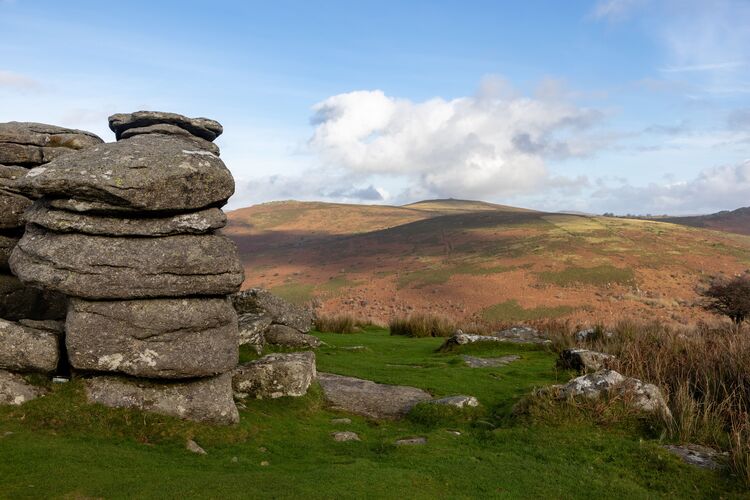
Following the direction in which he had pointed, I started trudging up the slope, my boots squelching in the ever-present Dartmoor mud. As I walked, I realised that the heathery trail I was following was running between two barely discernible ridges of grass, out of which poked the occasional grey granite rock. At first, I assumed this was just the natural lay of the land, but as I looked more closely, I realised that the whole hillside was covered in almost perfectly straight ridges, which fanned out from the Bronze Age stone circles crowning the hilltop. This, I realised, was no natural feature of the landscape. What I was looking at were the reaves. Built by Bronze Age hands, they are all that’s left of some of the world’s oldest hedges.
Enjoying this article? Check out our related reads…
A few days after my winter walk on Dartmoor, I’m talking on the phone to Megan Gimbers. A self-confessed ‘hedge geek’, Megan, who works as the key habitats officer at the People’s Trust for Endangered Species, tells me that the 4,500-year-old reaves of Dartmoor aren’t even the oldest hedges in the UK. In a few places in northwest Cornwall, there are hedges that are more than 5,000 years old. ‘And,’ Megan says, with a sense of wonder in her voice, ‘what makes them really special is that they’re still in use as hedges today, which might make them the world’s oldest man-made structures still used for their original purpose.’
Megan goes on to explain that although Cornwall might have older examples of hedges, an ancient Devon hedge is generally better for wildlife. ‘Old Cornish hedges tend to be built with a lot of stone so that they can withstand the strong Cornish winds, while the hedges found in South Devon are more organic. This is what makes a Devon hedge a very biodiverse habitat.’
Growing up in Devon with a naturalist mother and a father with a passion for traditional crafts, it was perhaps inevitable that hedges would become an integral part of Megan’s life. Today, she spends her days sharing her passion for hedges with farmers, politicians and the general public. ‘Britain’s hedgerows are often taken for granted. There are more than 700,000 kilometres of hedgerows in Britain. Devon alone has 53,000 kilometres of hedgerow, and at least 75 per cent of them are more than 600 years old. We’re so used to seeing hedgerows that we hardly notice them, but they are like little life rafts of biological diversity that can be used to revitalise our countryside. A healthy, ancient Devon hedge is one of the most important wildlife habitats that we have in Britain.’
Although initially established simply to mark the boundaries of a plot of land, hedgerows are the Swiss Army knife of nature, with their tangled branches bringing wildlife, farmers and humanity in general a multitude of benefits.
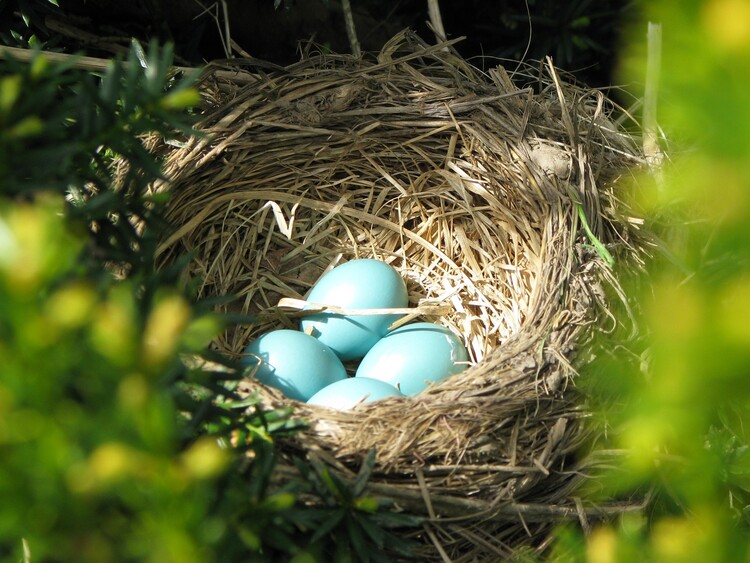
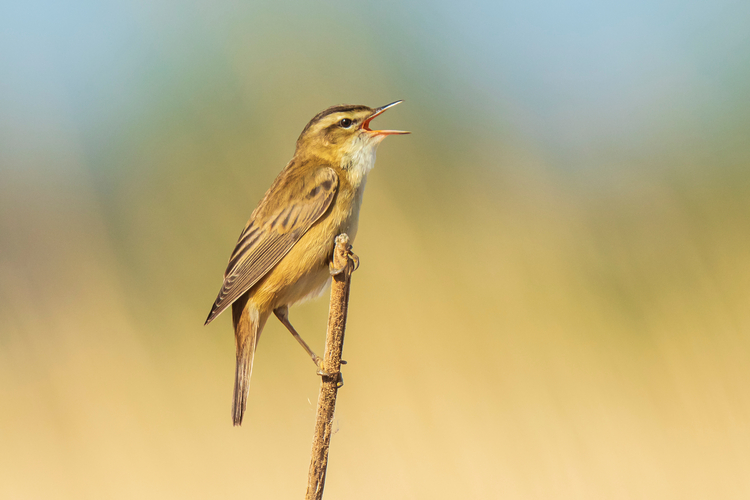
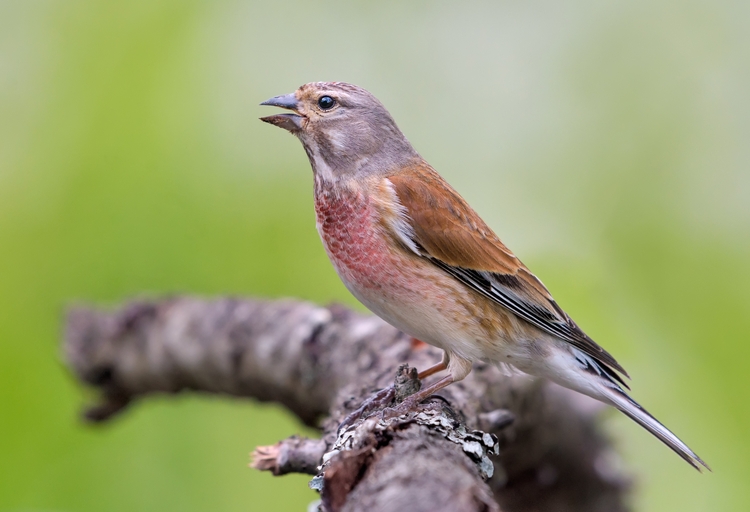
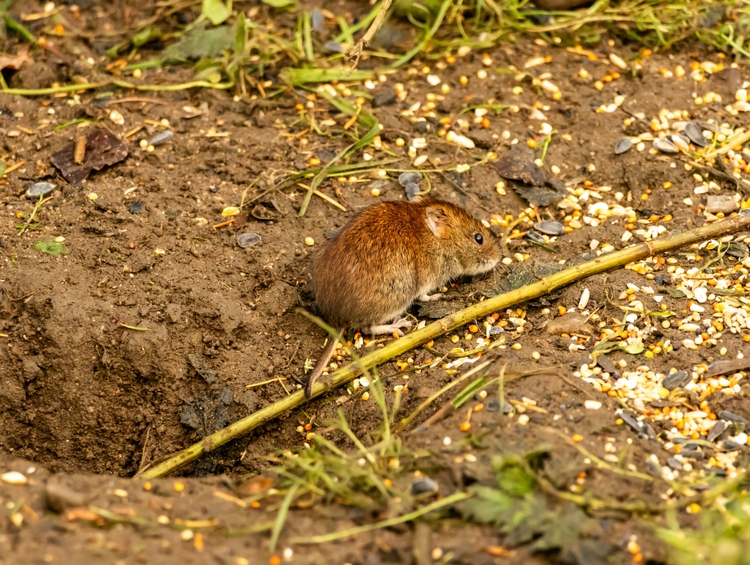
From dormice to butterflies, bats to spiders, dunnocks to hedgehogs, a good-quality hedge can be both a home and a larder to hundreds, perhaps even thousands, of species of plant and animal. Just how biodiverse a hedge can be is still something of an unknown. When renowned hedge expert Robert Wolton (author of the acclaimed book Hedges) conducted a survey of all the species he could find on an 85-metre-long stretch of hedge on his Devon farm, the result was an astonishing 2,070 different species of plant and animal.
You might assume that such a high tally includes barely visible microscopic life, but, as Wolton explained, that wasn’t the case. ‘All of [these species] were big enough to be seen with the naked eye. Even then, it’s not the final tally. Hundreds of species of parasitic wasp remain to be identified, and I’m sure there are many more beetles and fungi to be discovered. My guess is that the true total is nearer to 3,000. In just one hedge. My hedge, 85 metres long, has one sixth of all the flies, moths and caddisflies recorded in the British Isles. How many more species may whole hedge networks contain?’
As well as being a home to wildlife, hedges also act as the natural world’s highways. By criss-crossing the landscape, hedges link together islands of forest and connect populations of animals that would otherwise be isolated and vulnerable from one another.
Farmers also benefit from healthy ancient hedges. Key among these benefits is that hedges provide shade and shelter for livestock. On a hot summer day, sheep, cows and other livestock can often be seen taking a siesta in the shade cast by a hedge. It has been observed that dairy cattle with access to this shade tend to produce higher milk yields than those without. It’s not all about sun protection, though. On windy and wet days, hedges act as natural windbreaks and umbrellas, which can have a big impact on survival rates for newborn lambs by reducing the risk of hypothermia. It’s even thought that hedges can improve livestock biosecurity. Studies have shown that cattle on farms with few hedgerows and large fields are more susceptible to bovine tuberculosis than those on farms with more hedgerows and smaller fields.
It’s not just livestock that enjoys a bit of love from hedges. Even crops benefit from a little hedginess. The shelter provided by hedges keeps the soil a little warmer and, in summer, the shade helps to prevent it from drying out. Together, these actions can extend the growing season. But there’s more to it than just an improved microclimate. Crops also benefit from hedges because where there are hedges, there are larger populations of invertebrates. Some, such as spiders, predatory beetles, hoverflies and parasitic wasps, feast on crop-destroying pests, while others provide pollination services, without which there wouldn’t be any of the cereals, fruit or vegetables that we consume.
Biologically diverse ancient hedgerows can help humanity in other ways as well, not least through carbon storage. Studies have shown that a healthy, kilometre-long hedge can sequester 600–800 kilograms of carbon in the plants that make up the hedge and the soils beneath it. This is 32 per cent more than open cropland soils could manage.
It’s clear, then, that without its iconic hedges Britain would be an environmentally poorer place. Like Megan, I too grew up in Devon. But, unlike Megan, I rather took hedges for granted. Sure, I had a hazy idea that they were important to wildlife, but that was about as far as my knowledge went. It wasn’t until I started talking to Megan and other hedge champions that I began to realise that hedges are actually a thing of wonder. In this nature-depleted nation, they are one of the most important and biodiverse habitats we have. They provide food-security services, and some of them are older than the Pyramids of Giza. Surely then, I naively assumed, hedges are cherished and treasured things that are under no threat of disappearing. How wrong I was.
Taking a bite of homemade cake, Jeremy Weiss peers out at the rain lashing against the windowpane of his turf-roofed cottage. Nestled cosily into a fold of hills outside the Devon village of Dartington, this was exactly the kind of house I expected a man like Jeremy, who describes himself as a hedge layer and rural craftsman, to live in. ‘Growing up in the Devon countryside, hedges were all around, and we would often forage for food in and around them,’ he tells me. ‘Later, I developed an interest in their traditional management, and as I began to understand the ancient origins of hedges and their incredible value to wildlife, they fascinated me more and more.’
Wiping cake crumbs from the side of his mouth, Jeremy sighs. ‘But even among ecologists, there is a poor understanding of the value of hedges,’ he says. ‘We talk about saving woodlands and meadows, but hedgerows – a good, ancient Devon hedgerow – are a very diverse habitat. Saving hedges should be as important as saving woodlands and meadows. Maybe more so.’
For much of history, Britain’s hedgerows were well maintained and under little threat. But things changed dramatically with the end of the Second World War and the arrival of industrial-scale agriculture. A concerted, government-led effort to ensure that Britain could produce all the food it required meant that, by using newly developed heavy machinery alongside chemical pesticides and fertilisers, hundreds of kilometres of hedgerows were razed to increase field size and, as the theory at the time went, agricultural output. At the time, the government actually paid farmers to remove hedgerows.
A 1950 survey by the Forestry Commission showed that the UK had more than a million kilometres of hedgerows, but by 2007, that figure had dropped to just 477,000 kilometres, representing a 52 per cent loss. As well as the simple clearance of hedgerows, other threats during this period included stubble burning and, in the 1970s, the arrival of Dutch elm disease, which did a good job of wiping out one of the most iconic hedgerow tree species. Fortunately, since the 1997 introduction of the Hedgerow Regulations Act, it has been much harder to remove a hedge, especially an ancient hedgerow (although, with council permission, they can still be removed for development or agricultural reasons).
However, the regulations put in place since the turn of the century don’t mean that hedgerows are safe. Jeremy explains the problem to me. ‘While there are much stricter rules in place today about removing hedges, the problem now is one of maintenance. People don’t look after their hedgerows properly any more. Most people don’t even know how to. Many hedges are either not cut enough or cut too much. If you don’t cut them enough, the hedge turns into a line of trees, most of which end up dying because they’re growing too close together. But cut a hedgerow too often and too much, and the plants can’t always flower. If you keep trimming a hedge to the same height for years on end, then the hedge will lose much of its biodiversity. It’s a delicate balance to maintain. The secret is in laying a hedge.’
The rain is starting to ease off and Jeremy suggests that it would be easier to show me hedge laying in action rather than simply explaining it. Putting down our cups of tea and slipping on some wellies, Jeremy and I step outside and walk briskly across a field to a hedgerow that he had been busy laying. My first thought on seeing a partially laid hedge is one of surprise. It looks as if it has been obliterated. What, just days earlier, must have been a lush, high, green, typical Devon hedge now looks to my unknowing eyes like a vegetarian massacre. Cut branches and ripped-out plants are strewn across the ground, and the hedge has been reduced to just a metre or so in height.
Seeing my shocked look, Jeremy smiles and reassures me. ‘Don’t worry, it’s supposed to look like this.’ He points to a small sapling with deep cuts almost through the base of its trunk. ‘We never cut right through the trunk, but just enough so that we can then lay the tree flat against the base of the hedge. The plant is still alive, but now that it’s flat like this, branches will grow up all along the trunk, which will then thicken up the hedge. Making the hedge thicker and denser allows more variety of plants to grow and keeps the hedge healthy.’ Jeremy explains that without performing the vital task of hedge laying, most of our hedges would quickly deteriorate.
To maintain its health, a hedge needs to be laid around once in every human generation, but it’s time-consuming and skilled work, and today, few people know how to do it properly. Megan takes up the story. ‘We desperately need more hedge layers. After the war, people left the countryside for urban areas, and the number of people involved in agricultural work declined dramatically. This meant that the craft of hedge laying quickly started to die out. And today we are paying for that. There are around half a million kilometres of hedgerow in the UK, and at least half of them are in urgent need of laying. An experienced hedge layer can probably lay about 25 metres of hedgerow in a day, so the task ahead of us is huge. But unless we lay those hedges, they will simply turn into a line of trees.’
With a lack of hedge layers, rescuing and preserving Britain’s ancient hedgerows might seem like an impossible mission, yet Megan is surprisingly upbeat about the future. ‘I spend a lot of time with farmers explaining the importance of hedges,’ she says. ‘Most are very open to what I have to say and are keen to learn new skills. After just a little training, many farmers are turning to laying hedges themselves. This enthusiasm makes me feel 100 per cent positive that Britain’s hedgerows can survive well into the future.’
As she makes this statement, I think back to the man and his Labrador on Dartmoor who had just taken their morning walk across the remains of hedgerows built when the Pyramids were a twinkle in a pharaoh’s eye, and I wonder if the work of hedge layers such as Jeremy will still define the landscapes of Britain in another five millennia.
Become a hedge layer
The government has promised to create or restore 72,000 kilometres of hedgerows by 2050, but to do so, more hedge layers are needed. While it isn’t a very well-paid career, it is, according to Megan Gimbers, ‘one that would appeal to those who don’t want to spend their life cramped up in an office cubicle.’ Many local conservation groups offer day and weekend courses in hedge laying, which allow you to get a taste for it and see whether it’s something you would like to pursue. To do it as a career, though, you need on-the-job training. The best way to do this is to contact the National Hedge Laying Society (hedgelaying.org.uk) to find out who is taking on apprentices.