Amid the Iran War, how are America’s relationships with other nations faring?
By
Back in February, the United States launched strikes against Iran. Since then, what has ensued has been the triggering of a conflict whose consequences are reshaping alliances across the globe.
As the conflict enters its second month, its geography has expanded far beyond Iran’s borders. Western nations – such as Spain and the UK – have weighed in their responses, while Gulf nations are also recalibrating alliances. In short, we are living in turbulent times – times where America’s relationships with other countries are shifting in ways not seen for generations.
Enjoying this article? Check out our related reads…
The US’s shaky status in NATO
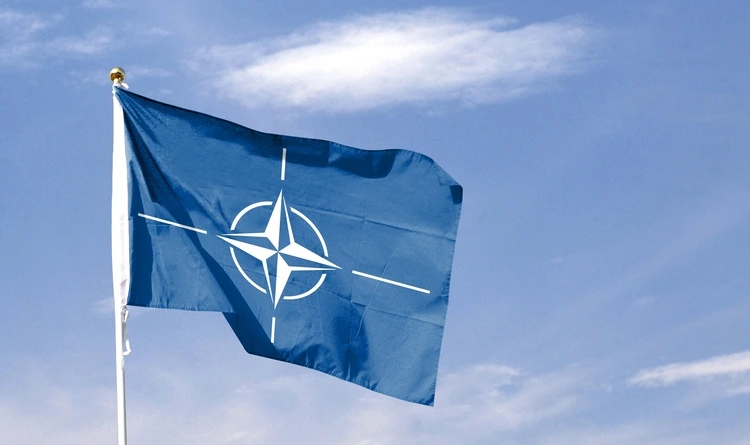
Perhaps the clearest illustration of these shifting dynamics can be found in NATO, the military alliance that has long underpinned Western security. Once seen as the bedrock of Western unity, today it faces a far more uncertain role. That’s because the war in Iran is exposing divisions among member nations as they differ in their responses to the conflict.
In a distinct departure from the collective unity that NATO has traditionally embodied, many European allies are actively and openly refusing to support the US’s operations in Iran. In particular, Spain has denied the US access to military bases and airspace, calling the war ‘profoundly illegal and unjust’. Even after Trump threatened to ‘cut off all relations’ with Spain, Spanish Prime Minister Pedro Sánchez stayed loyal to his stance. Other nations have also expressed their contempt for the war, including Italy, which has refused logistical support including landing rights to America.
In addition, one of the US’s historically supportive allies – the UK – has taken a ‘carefully balanced posture’ to the war, combining criticism of the Iranian regime with calls for de-escalation. While Prime Minister Keir Starmer has reiterated Britain did not participate in any strikes itself, the government has since reaffirmed that US forces can use its base in the Chagos Islands to defend regional allies and provide security for Israel.
Seemingly disappointed by the mixed response to the conflict, Trump has criticised NATO allies for failing a ‘loyalty test’ and even called the alliance a ‘paper tiger’. This week, he has even suggested in an interview that he would leave the organisation entirely. If that decision went ahead, the US would be the first ever nation to rescind its membership.
But importantly, the US did launch strikes on Iran with little to no consultation with its transatlantic allies – a direct strain on alliance trust in the first instance.
Beginning the war itself was an unpopular decision from the US – in a poll leading up to the 28 February US-Israeli attacks, just five per cent of academics supported launching a war. According to expert in international relations from the University of Cambridge, Dr Evaleila Pesaran, ‘many would have interpreted this as an illegal war.’
And, as shown, it proves to be an increasingly contentious decision among NATO allies too, highlighting how unity can no longer be assumed. All in all, such tensions show how the US may be fracturing the very alliances that have long underpinned its global influence. Ultimately, war is revealing a growing disconnect between Washington and its traditional partners, prompting concern over these relationships in the long-term.
Eradicating the neutrality of Gulf states
Prior to the Iran war, Gulf states – such as Saudi Arabia, UAE and Qatar – were treading a careful balancing act between Iran and the US. Now, that stance is no longer viable. Iranian strikes have hit US bases and infrastructure across the Gulf, even in states not directly fighting.
According to Carnegie, every Gulf state has been targeted or directly threatened by Iranian missiles and drones. Critical infrastructure – oil facilities, airports, shipping lanes – have been repeatedly targeted. As highlighted in the Strait of Hormuz, the region’s role as a global energy hub means the war is being fought through vital chokepoints, disruption to which has sizeable impacts on Gulf economies and those around the world.
Such threats and strikes have exposed what analysts coin the ‘limits of neutrality’ – Gulf states are now inadvertently part of the conflict.

Consequently, Iran’s attacks on these areas have forced Gulf governments to lean more heavily on US military protection, pushing them into a collective security alignment with Washington.
But there remains a paradox: dependence on the US is rising, perhaps, but confidence is faltering. The war has highlighted the risks of relying heavily on the US as a security guarantor. After all, these states are absorbing direct retaliation from Iran because of US actions – ultimately, they have limited control over escalation yet face severe consequences. This is prompting debate about whether US alignment delivers sufficient returns.
Because of this paradox, analysts are expecting a post-war shift toward diversifying partnerships with nations. The new goal of Gulf states may be to increase autonomy and reduce reliance on any single power. Already, this is happening – policymakers have been diversifying their partnerships on their own terms, according to The Washington Institute for Near East Policy.
It may be that in a post-Iran war world, Gulf states could increasingly position themselves as ‘connectors’ between global powers, rather than firmly aligning with one bloc. This may include balancing US security ties, Chinese economic partnerships and regional diplomacy simultaneously.
Hardening rivalry with Russia and China
The war in Iran is not creating new US rivalries with China and Russia. These tensions were already present, but it is exacerbating them in different ways.
With China, the effect of the war is an intensification of competition over diplomacy, influence and sanctions. Rather than the US military approach, Beijing has backed ceasefire diplomacy, joining a five-part peace initiative centred on ending hostilities and reopening the Strait of Hormuz. Such a move matters as it lets China present itself as the advocate of de-escalation, while the US becomes closely aligned with the promotion of the war, sharpening the political contrast between the two.
As well as this, the war is also turning China into a bigger sanctions and energy problem for Washington. The Wall Street Journal reported that vessels seized by the US had carried millions of barrels of Iranian, Venezuelan and Russian crude to Chinese ports, highlighting China’s role as a major market for oil shipped through networks that evade sanctions.
As for Russia, the war is driving its relationship with the US toward outright geopolitical confrontation. Russia has condemned the US strikes on Iran, calling them ‘unprovoked act[s] of armed aggression. Reporting also suggests European intelligence agencies believe Moscow is preparing to supply explosive drones to Tehran. Unlike other nations, Russia is not just criticising the US from the sidelines; it is, according to intelligence, becoming more materially useful to an opposition that the US is fighting.
Russia is, at the same time, benefiting from the war economically, sharply contrasting with US interests. The war has sent oil prices higher and delivered Russia a windfall. Even without direct involvement, the war is aiding Russia by boosting its energy revenues.
In addition, the war could be said to be a distraction to Washington from Ukraine, diverting attention and resources from the nation. Prominent Russian politician Alexei Chepa expressed hope that the US will become preoccupied with the conflict in Iran and ‘forget’ about Ukraine, assessing that the new conflict will likely delay a peace deal in Ukraine.
Already, US Secretary of State Marco Rubio has acknowledged that US weapons could be redirected from Ukraine if needed.
A change in relations, all-round
Clearly, the US’s relationships with other countries – some of which are its allies – are shifting due to the Iran war. For nations such as the UK, which has long been a loyal backer of the US, the conflict has exposed the limits of such loyalty, forcing London to balance military cooperation with caution. In the case of Gulf states, the question remains whether they will deviate from relying on the US as a security guarantor, amid the very tangible consequences they are now facing from the war.
Tensions already established between the US, China and Russia have certainly intensified as a result of the conflict.
Ultimately, the picture of global relations is far more fragmented than before. Aligning with Washington is no longer automatic, and the US must grapple with increasingly fractured and shifting relationships in the months ahead.