
• Skip to main content
  • Skip to secondary menu
  • Skip to primary sidebar
  • Skip to footer
Geographical

Geographical

Official magazine of the Royal Geographical Society (with IBG)

  • Home
  • Briefing
  • Science & Environment
  • Climate
    • Climatewatch
  • Wildlife
  • Culture
  • Geopolitics
    • Geopolitical hotspots
  • Study Geography
    • University directory
    • Masters courses
    • Course guides
      • Climate change
      • Environmental science
      • Human geography
      • Physical geography
    • University pages
      • Aberystwyth University
      • Brunel University
      • Cardiff University
      • University of Chester
      • Edge Hill University
      • The University of Edinburgh
      • Newcastle University
      • Nottingham Trent University
      • Oxford Brookes University
      • The University of Plymouth
      • Queen Mary University of London
    • Geography careers
      • Charity/non-profit
      • Education & research
      • Environment
      • Finance & consulting
      • Government and Local Government
    • Applications and advice
  • Quizzes
  • Magazine
    • Issue previews
    • Subscribe
    • Manage My Subscription
    • Special Editions
    • Podcasts
    • Geographical Archive
    • Book reviews
    • Crosswords
    • Advertise with us
  • Subscribe
    • Direct Debit Changes

Indigenous protest in Amazon forces Brazil to revoke waterway decree

24 February 2026
3 minutes

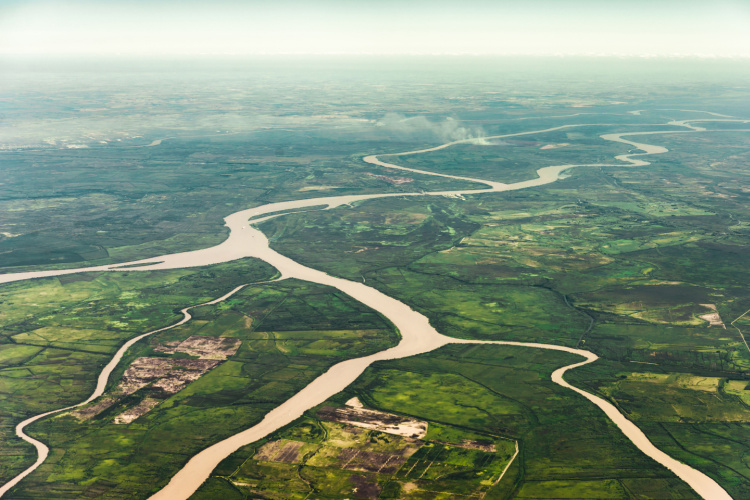
The Amazon rainforest. Image: Shutterstock

Brazilian government has U-turned on decree that could have harmed rivers and waterways vital for Indigenous communities


By Victoria Heath

The Brazilian government has announced it will revoke a decree signed by President Lula da Silva that would have expanded Amazonian waterways in a federal privatisation programme, following 33 days of protests by thousands of Indigenous people.

The decree was part of an infrastructure project called the Tapajós waterway, which was intended to attract investment and improve logistics efficiency in Brazil’s so-called Northern Arc export routes.

The project would have made rivers navigable year-round for large barges carrying soy, corn and other grains from Brazil’s agricultural states in the Cerrado and the Amazon to ports on the Atlantic coast. The nation is currently the world’s top exporter of soy and maize.


Enjoying this article? Check out our related reads…

  • High Court judge overturns planning permission for UK coal mine
  • Better World 2024: Isolation to Inclusion
  • Country profile: Brazil
  • Geo explainer: The Guadalupe River
  • Brazil: key facts about the world’s fifth-largest country

Across the weekend, operations at Cargill’s Santarem river port terminal in Brazil were suspended after Indigenous protestors occupied the facility. In a statement, Cargill – a US-based multinational and major shipper of soy and corn in Brazil – said operations were suspended due to an ‘ongoing dispute between government authorities and Indigenous communities.’

‘Indigenous people have been demonstrating for more than 30 days, questioning the decree and pointing out the effects it could have on their communities,’ said head of the secretariat of Brazil’s presidency Guilherme Boulos.

Protestors have argued the decree would open up Amazonian rivers like the Tapajós to dredging, which could impact water quality and the fishing they rely on to survive – posing threats to the 14 Indigenous territories and hundreds of riverine communities living along the the river. Local communities also say the 250 kilometre infrastructure project would increase dangerous river traffic for locals for whom the river is a lifeline. Already, waves caused by barges have made river navigation unsafe for smaller boats used by residents for daily activities like fishing.

How important is the Amazon?

Spanning 670 million hectares across nine countries, the Amazon is the world’s largest tropical rainforest and home to more species of plants and animals than anywhere else on the planet.

It boasts some of the most extensive levels of biodiversity on the globe, and 75 per cent of its plant species are endemic to the Amazon. Its trees collectively form one of the largest carbon stores in the world, holding between 90–140 billion metric tons of carbon.

The Amazon is the world’s most biodiverse rainforest. Image: Shutterstock

However, despite the vital nature of the Amazon, it has faced extensive deforestation in recent years – from 1978 to 2017, more than 750,000 sq km of the rainforest was destroyed. With 64 per cent of the Amazon falling within its borders, Brazil takes the number one spot for its involvement in deforestation, contributing the most toward the rainforest’s destruction between 2001–2012 out of any other country.

The biggest reason for this destruction is in the name of cattle ranching, as forests are cleared to make way for cattle, whose produce of beef makes up one-quarter of the cattle products across the world.
Themes Briefing

Protected by Copyscape

Primary Sidebar

OUR UK DIRECT DEBITS ARE CHANGING
SPRING SALE

Geographical subscriptions

GEOGRAPHICAL WEEKLY LOGOFREE - Sign up to get global stories, told well, straight to your inbox every Friday

Popular Now

QUIZ: Country Shapes – Hard

QUIZ: Country Shapes – Hard

QUIZ: Capital Cities – Asia

QUIZ: Capital Cities – Asia

Night sky stargazing

Where is the best place to stargaze in Europe?

The Atlantic puffin (Fratercula arctica) is part of the auk family

In search of puffins

Migratory freshwater fish in global decline as UN-backed report warns of river…

Migratory freshwater fish in global decline as UN-backed report warns of river…

Footer

  • Facebook
  • Instagram
  • LinkedIn
  • Reddit
  • TikTok
  • Twitter
  • YouTube

Geographical print magazine cover

Published in the UK since 1935, Geographical is the official magazine of the Royal Geographical Society (with IBG).

Informative, authoritative and educational, this site’s content covers a wide range of subject areas, including geography, culture, wildlife and exploration, illustrated with superb photography.

Click Here for SUBSCRIPTION details

Want to access Geographical on your tablet or smartphone? Press the Apple, Android or PC/Mac image below to download the app for your device

Footer Apple Footer Android Footer Mac-PC

More from Geographical

  • Subscriptions
  • Get our Newsletter
  • About Us
  • Contact Us
  • Advertise with us
  • Privacy policy
  • Terms & Conditions

Copyright © 2026 · Site by Syon Media