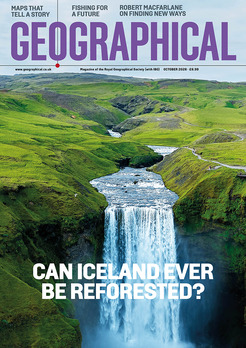
A voyage across the North Atlantic follows the noisy, precarious world of seabirds – and the growing pressures they face at sea and on land
By
In Iceland, there’s a word that’s commonly used to describe a loud, boisterous group of people: fuglabjarg. Literally, the word means ‘bird cliff’, the rocky precipices where hundreds of thousands of seabirds – gannets, razorbills, guillemots and gulls – return each spring to nest and breed. As the birds jostle for space, the cacophony of calls, squawks and shrieks makes these cliffs one of the noisiest places in the natural world.
Stepping off the SH Diana at Portrush, Northern Ireland, it wasn’t long before I encountered my first fuglabjarg. I had boarded the ship – part of the Swan Hellenic expedition fleet – in Dublin the previous afternoon. Over the next six days, we would chart a course north and west, threading through a succession of archipelagos – from the Inner Hebrides to Orkney and Shetland, and finally the Faroe Islands – before reaching Iceland’s east coast.
Enjoying this article? Check out our related reads…
Roughly half of all tourists to Portrush cite one specific attraction as their main reason for visiting: the Giant’s Causeway. But by driving there, or travelling by coach tour, they miss the Causeway Coast Way, a 13-kilometre coastal path that’s widely considered one of the most scenic stretches of coastline in Northern Ireland. Walking here, you see the pale limestone of Whiterocks give way to the dark, stepped basalt cliffs that eventually form the famous hexagonal columns of the Giant’s Causeway – all while looking out across the pink sea thrift carpeting the cliff edge to the vast, grey expanse of the North Atlantic.
Colonies of northern fulmars swoop and dive along the rock face, using the powerful updrafts to glide effortlessly between their precarious nesting ledges. Below, I spy the bright orange bill of an oystercatcher probing the rocks at the base of the cliffs.
But while puffins – the species I most hoped to encounter – are summer visitors to Northern Ireland, they are rarely seen from the mainland. As we set sail from Portrush, we pass Rathlin Island – home to an enormous seabird colony – but even from the deck we’re too far away to pick out individual birds. Though the UK has pockets of puffins along its coastline, I suspect my best chance of seeing them in any great number will be in Iceland.
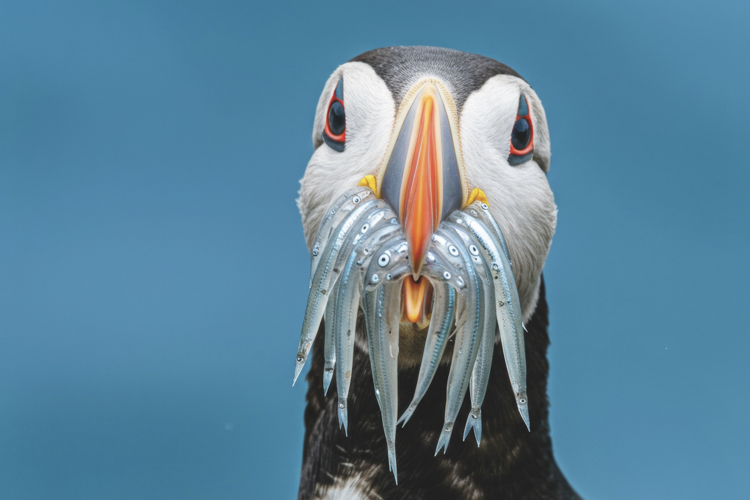
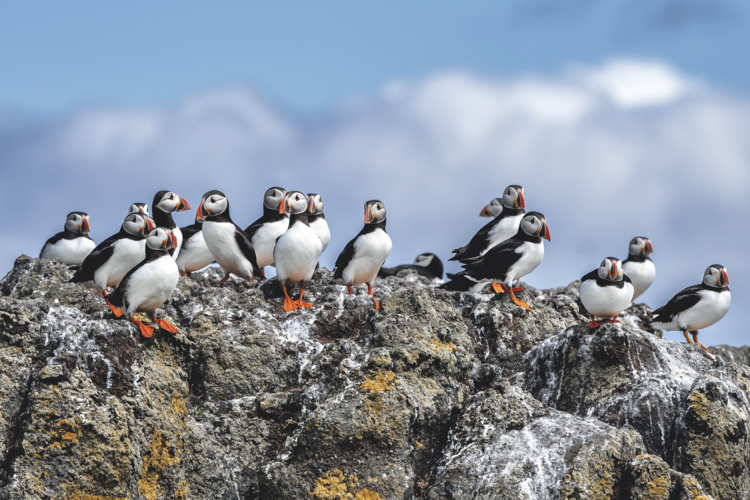
Despite being one of the nation’s most adored and photogenic residents, puffins are a species in deep trouble. Globally, they’re classified as Vulnerable, but in the UK, they’ve been placed on the Red List – the highest level of conservation concern – following decades of severe population decline. Numbers at key sites have plummeted, with some colonies in the Shetland Islands reporting a 50–70 per cent decline over the last two decades as food sources dwindle. Conservationists warn that, without intervention, the national population could decline by as much as 90 per cent by 2050.
This crisis has come into sharp focus over the last few months, with reports of puffins washing ashore in vast numbers. Since mid-January, more than 20,000 dead seabirds have been swept up along the beaches of France alone – the result of a relentless barrage of storms that has made it impossible for the birds to catch their primary prey, the sand eel.
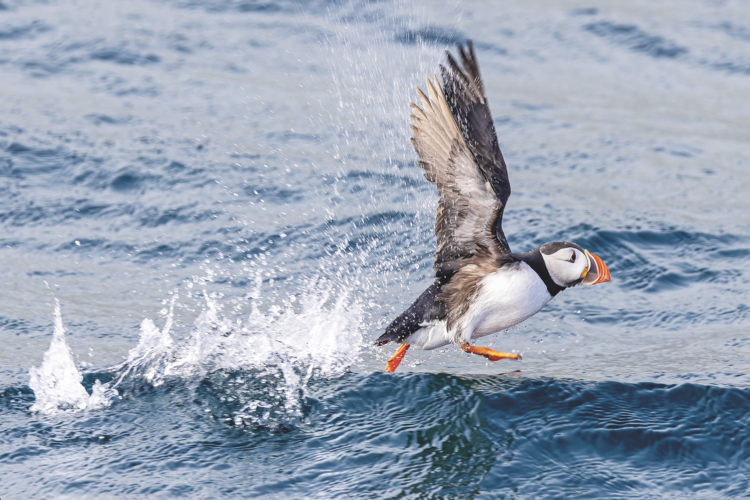
We typically think of puffins as coastal birds, but, like many species that can be spotted on the cliffs in the summer months, they actually spend most of their time at sea. In fact, once the breeding season ends, puffins undergo a total lifestyle shift, heading far out into the open Atlantic Ocean – often travelling as far as Greenland or even the Mediterranean – where they spend roughly eight months without ever touching land. During this time, they lead solitary lives, bobbing on the waves and diving for food.
It’s five days into the journey before I finally see a puffin, peering at me from its earthy burrow at Sumburgh Head – the windswept and craggy southern tip of the Shetland mainland. These islands are closer to Norway than to London, and puffin colonies aren’t the only thing the Shetlands have in common with their Scandinavian neighbours.
Until 1469, the archipelago was under Norwegian rule, and the centuries of Norse governance left a mark that 500 years of Scottish history hasn’t erased. You can see it in the place names – Sumburgh and Lerwick are rooted in Old Norse – and in the harbour buildings, where the sturdy grey stone of the lodberries (waterfront storehouses) sits alongside long, red- and blue-painted warehouses that would look more at home along a Norwegian fjord than in a typical British port.
As the SH Diana reaches the open ocean, I join the crew on deck. The team is composed of seasoned expedition leaders and wildlife experts – often including marine biologists or ornithologists – who lead a series of citizen-science initiatives. Guests can contribute to global data by documenting whale sightings, monitoring cloud formations for NASA, or logging seabird sightings to help track populations across the North Atlantic. I note down nine guillemots, two gannets, no puffins. It’s early June – the heart of the puffin breeding season. ‘We might find puffins out this far if there’s no food closer to land,’ one of the wildlife experts tells me.
Later, the ship is joined by a group of northern fulmars, which glide effortlessly alongside us for miles. Masters of a technique called ‘dynamic soaring’, in which they move their bodies in a constant figure of eight to ride the shifting air currents, these birds actually expend more energy while sitting on their nests or floating on the water than when they are in flight. ‘It’s their natural resting position,’ I’m told.
Boat surveys are important, I soon learn, because so many bird species spend so much of their lives at sea. Some species, such as members of the auk family, spend almost their entire lives on the open ocean, only touching land to lay their eggs. But the bulk of scientific surveys are done on land, leaving significant gaps in our understanding of their lives. Over the next eight days, we spend a few hours each afternoon on deck, our eyes constantly scanning the surface, the horizon and the air above.

Most visitors to Iceland arrive at Keflavík Airport and head to the Golden Circle, the popular 300-kilometre tourist loop just south of Reykjavík. In fact, more than 97 per cent of visitors stay within the Capital Region – or Höfuðborgarsvæðið – which consists of the capital and its six surrounding municipalities. Despite being home to roughly 64 per cent of Iceland’s population, it’s geographically tiny, making up less than one per cent of the country’s total landmass. Our first port of call would be Seyðisfjörður on Iceland’s east coast, a remote fjord not far from where I hoped to find crowds of a different species.
After an all-too-brief pause in Tórshavn – where we cram in a visit to the world’s second-longest subsea road tunnel and the world’s only ‘five-star’ prison (rated for its view) – we finally see the snow-capped cliffs of Iceland’s east coast rising on the horizon.
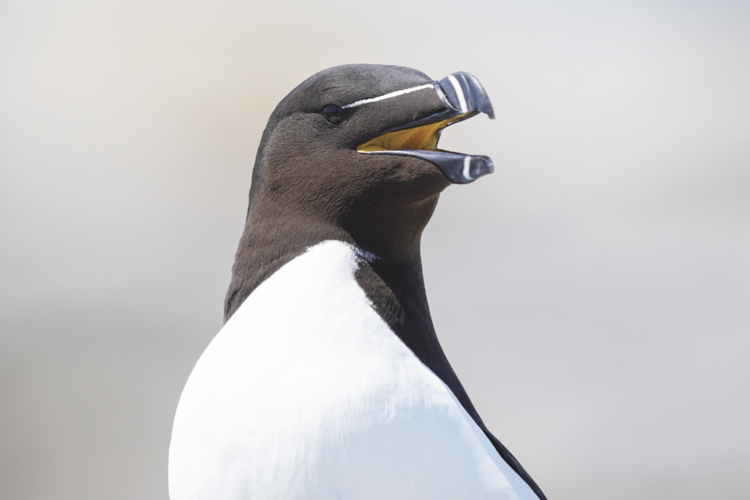
After docking at Seyðisfjörður – where we’re met by Zuhaitz Akizu, a Basque historian and director of the Technical Museum of East Iceland – we drive the bumpy 17-kilometre road to Skálanes Nature Reserve. ‘I’ll give you a disclaimer now,’ says Akizu. ‘As soon as we get out of the bus, we’ll be attacked by the Arctic terns.’ He directs us to a pile of long sticks, which we’re advised to hold above our heads. ‘Or find a sacrificial tall person. If the terns have had enough food, they can puke on you,’ he adds.
Akizu’s work in this part of the Eastfjords centres on its ancient past – specifically the excavation of turf-walled Viking homes that have stood on this coastline for more than 1,000 years. He tells us about the region’s more recent history, too, pointing out the abandoned herring factories that stand as monuments to a lost industry (the herring stocks vanished in 1964, leaving behind a brand-new factory built only a year earlier). But for me, the main draw is Skálanes itself: a sea of cornflower-blue lupins that serves as a vital sanctuary for seabirds.

Iceland hasn’t always been a magnet for travellers. In the early 1990s, the country saw just over 130,000 visitors a year, a far cry from the crowds of today. Everything changed in March 2010, when the volcano Eyjafjallajökull sputtered to life after 187 years of silence. A mammoth cloud of ash exploded into the atmosphere, closing European airspace for eight days – the largest disruption since the Second World War. With more than 100,000 flights cancelled and millions of travellers stranded, the airline industry lost around US$1.7billion.
Hoping to capitalise on this sudden international spotlight, the Icelandic government and travel organisations moved quickly.
By June, they had launched the ‘Inspired by Iceland’ campaign. Fifteen years have passed since that seismic eruption, and the tourists have flooded in. By 2024, foreign overnight visitors had reached about 2.3 million, a staggering leap from the 500,000 recorded in 2010.
While the industry has transformed the country – providing the vital funding needed to rebuild the economy after the 2008 banking collapse – it has also strained the nation’s fragile ecosystems and pushed housing prices to levels that many Icelanders now find unsustainable. Meanwhile, the remote vastness of the Eastfjords, the rugged drama of the Westfjords and the quaint fishing towns of the northern peninsulas go relatively unvisited.
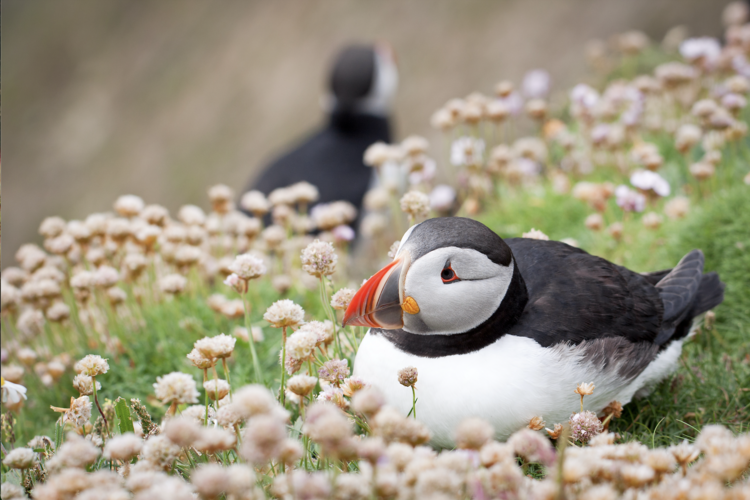
Among these little-visited fishing ports is Grímsey Island, which, some 40 kilometres from the mainland, is the only part of Iceland that crosses into the Arctic Circle. It’s a rare place where puffins vastly outnumber the people – both residents and tourists. Our guide, Dagmar Lárusdóttir, explains that the island’s tiny community of 60 is shrinking; as a result, every resident wears a number of hats. When she’s not guiding the island’s few visitors, Lárusdóttir looks after the only diesel-powered power facility. She laughs as we stop at the very first sheer cliff we come to, which is covered in round little black-and-white birds. ‘Come on,’ she calls. ‘There’s a much better spot.’
Unlike the viewing platforms further south, where tourists crowd together for a glimpse of the colony, the cliffs on Grímsey offer a quiet encounter, where the only distraction is the occasional whale breaching in the background.