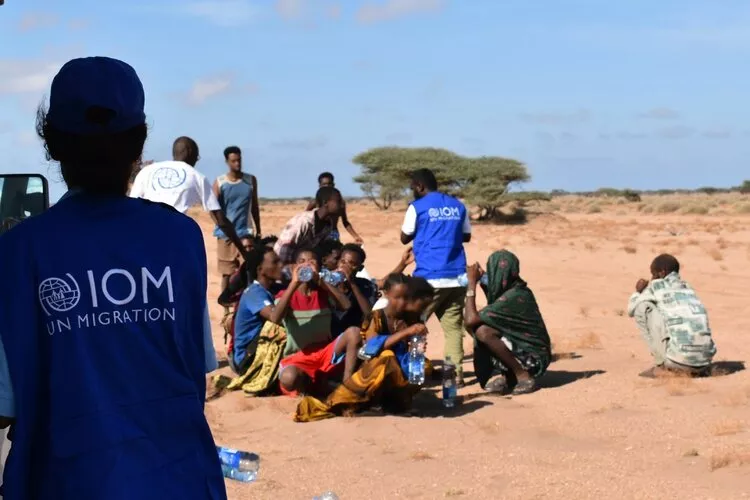
At least 15 children are among those who have died on the boat carrying 305 people from Djibouti to Yemen
By
At least 139 migrants, including 15 children, have died and more than 116 others remain missing after a boat carrying more than 300 people capsized off the coast of Djibouti, the International Organisation for Migration (IOM) has said.
The boat was travelling from Djibouti to Yemen when it capsized near Guhere during the night of 8–9 October. Djiboutian authorities are continuing their search and rescue operations, while local authorities are providing medical care and arranging burials for those who died.
Among the bodies recovered were at least 52 men, 42 women and 15 children – nine girls and six boys.
More than 80 survivors have been recorded, all of whom are Ethiopian nationals. IOM is assisting 64 survivors at its Obock Migrant Response Centre, providing support ranging from healthcare, temporary shelter, food assistance and protection services.
Enjoying this article? Check out our related reads…
According to the IOM, poverty, insecurity and the growing impacts of climate change are driving many to make the journey, even with growing instability across the Middle East.
In 2025, more than 900 migrants died or went missing along this route, according to the IOM. A shipwreck along the route in March 2026 left nine people dead and 45 missing.
‘No one gets into a boat like that unless they believe there is no other safe way,’ said IOM director general Amy Pope. ‘We cannot keep treating these deaths as normal. Safe and legal pathways save lives. I am asking governments and donors to act before the next boat goes down.’
Each year, thousands of migrants from the Horn of Africa travel through Djibouti to Yemen, hoping to reach Gulf countries for safety, stability and employment. Since 10 September this year, more than 20 arrivals into Djibouti from Ethiopia have been recorded.
‘This is a devastating loss of life. Our thoughts are with the survivors and the families who have lost loved ones or remain without news of their relatives,’ said the IOM’s chief of mission in Djibouti, Alexandre Coissac.
‘Our teams are on the ground alongside local authorities to provide emergency assistance. This tragedy is a stark reminder of the dangers faced by migrants along this migration corridor as they seek economic opportunities.’