
• Skip to main content
  • Skip to secondary menu
  • Skip to primary sidebar
  • Skip to footer
Geographical

Geographical

Official magazine of the Royal Geographical Society (with IBG)

  • Geographical Home
  • News
  • Features
  • Opinion
    • Climatewatch
    • Front Lines
  • Podcast
  • Travel
    • Discovering Britain
    • Passport
  • Culture
    • Book reviews
  • Quizzes
    • Crosswords
  • Choose Geography
    • University directory
    • Masters courses
    • Course guides
      • Climate change
      • Environmental science
      • Human geography
      • Physical geography
    • University pages
      • Aberystwyth University
      • Brunel University
      • Cardiff University
      • University of Chester
      • Edge Hill University
      • The University of Edinburgh
      • Newcastle University
      • Nottingham Trent University
      • Oxford Brookes University
      • The University of Plymouth
      • Queen Mary University of London
    • Geography careers
      • Charity/non-profit
      • Education & research
      • Environment
      • Finance & consulting
      • Government and Local Government
    • Applications and advice
  • Magazine
    • Issue previews
    • Subscribe
    • Manage My Subscription
    • Special Editions
    • Geographical Archive
    • Advertise with us
  • Subscribe
    • Direct Debit Changes

Just three per cent of the world’s glaciers account for more than half of glacier ice loss

26 October 2026
2 minutes

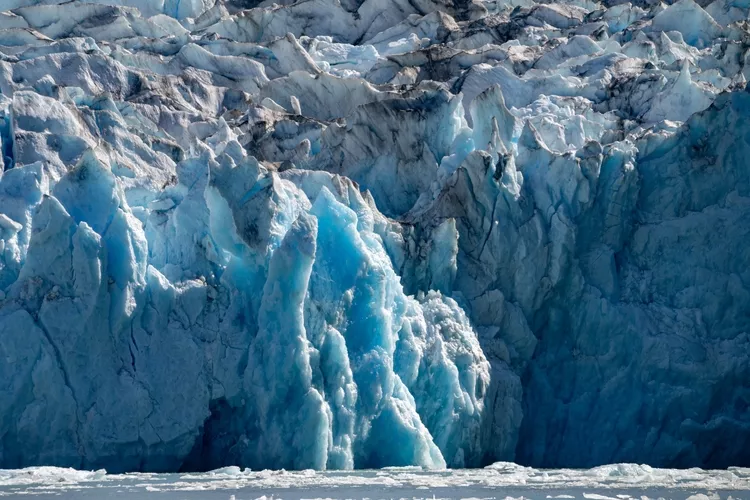
Close up of Dawes Glacier in Endicott Arm
Researchers analysed more than 216,000 glaciers worldwide in the latest study. Image: Shutterstock

Glaciers ending in lakes, oceans or ice shelves lose 134 billion tonnes of ice per year


By Victoria Heath

A study found that just three per cent of glaciers globally account for more than half of glacier ice loss worldwide.

Published in Nature Communications, researchers from the University of Birmingham and the University of Leeds found that glaciers ending in lakes lost ice around 57 per cent faster, relative to their size, than those ending on land across the same period. They also discovered how glaciers ending in lakes, oceans or ice shelves lost 134 billion tonnes of ice each year between 2000 and 2019.


Enjoying this article? Check out our related reads…

  • The top five largest individual glaciers in the world
  • Melting glaciers will trigger an avalanche of global impacts
  • Life, science and climate urgency on Antarctica’s Union Glacier
  • Phenomena: glacial surging
  • World’s largest glacier melting faster than anticipated, study finds 

After examining more than 216,000 glaciers worldwide – excluding the Greenland and Antarctic ice sheets – the team compared ice flow and ice loss across all four glacier types.
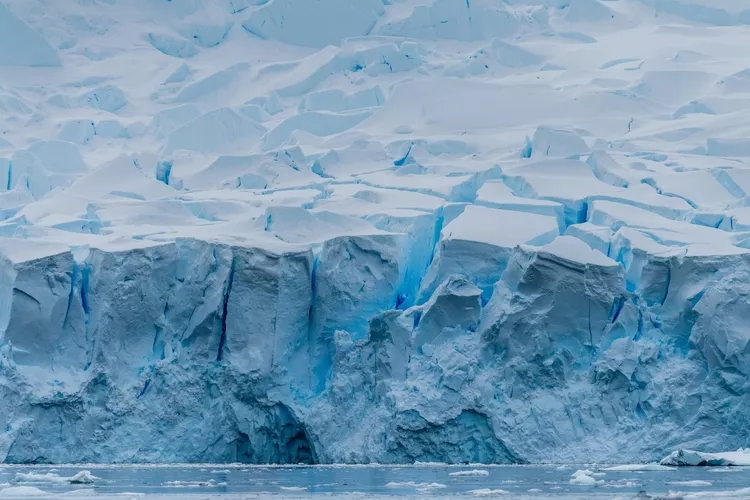
Close-up of the melting ice of a glacier wall on Danco Island, along the Antarctic Peninsula
Melting ice of a glacier wall on Danco Island, along the Antarctic Peninsula. Image: Shutterstock

 ‘Glaciers ending in lakes really stand out: they’re losing ice particularly quickly. We don’t yet know exactly why. It could be the lakes themselves, the size and shape of the glaciers, or a bit of both. Untangling that is the next big question, especially as glacier lakes are becoming more common in a warming climate,’ said Dr Joe Mallalieu, who conducted the research at the University of Birmingham.

Lakes affect glaciers in several ways, including losing large chunks of ice as they calve. In addition, lake water can melt ice below the waterline, speeding up ice loss.

Around the world, glacial ice covers 10 per cent of land area. This includes glaciers, ice caps and the ice sheets of Antarctica and Greenland.

The world’s largest glacier is the Seller Glacier on the Antarctic Peninsula, stretching more than 7,000 square kilometres (2,700 square miles). Outside of Antarctica, the largest glaciers are Malaspina-Seward Glacier in Alaska (3,363 square kilometres), followed by Wykeham Glacier South in the Canadian Arctic (3,176 square kilometres) and the Bering Glacier in Alaska (3,025 square kilometres).

Glaciers and ice caps store around 68.7 per cent of the world’s freshwater.
Themes News Glaciers

Protected by Copyscape

Primary Sidebar

SUBSCRIBE

GEOGRAPHICAL WEEKLY LOGO FREE - Sign up to get context, clarity and perspective in a noisy world, every Friday

Popular Now

November 2026 Geographical crossword

November 2026 Geographical crossword

An armed man looks across a dry landscape in Yemen

Profile: Yemen

Jim Morrison climbing towards the summit of Mount Everest

Skiing down Everest

Mining equipment at the Inkai uranium mine in Kazakhstan

The global nuclear power revival is fuelling a new uranium rush

European Union Blue Flags and Berlaymont Building, Headquarters of the European Commission.

EU announces new strategy for Arctic

Footer

  • Facebook
  • Instagram
  • LinkedIn
  • Reddit
  • TikTok
  • Twitter
  • YouTube

Geographical print magazine cover

Published in the UK since 1935, Geographical is the official magazine of the Royal Geographical Society (with IBG).

Informative, authoritative and educational, this site’s content covers a wide range of subject areas, including geography, culture, wildlife and exploration, illustrated with superb photography.

Click Here for SUBSCRIPTION details

Want to access Geographical on your tablet or smartphone? Press the Apple, Android or PC/Mac image below to download the app for your device

Footer Apple Footer Android Footer Mac-PC

More from Geographical

  • Subscriptions
  • Get our Newsletter
  • About Us
  • Contact Us
  • Advertise with us
  • Privacy policy
  • Terms & Conditions

Copyright © 2026 · Site by Syon Media