The West is turning to nuclear power once more, but experts say that without new mines, demand for uranium could exceed supply by 2040
By
In the quiet hours before dawn on 28 March 1979, a failure in the cooling system at Pennsylvania’s Three Mile Island nuclear plant set off a chain of events that would lead to the worst commercial nuclear accident in US history.
Temperatures inside one of the two reactors reached 2,650°C, causing a partial meltdown that led to nearly 15 years of clean-up operations; physical decommissioning of the damaged reactor continues today.
In September, however, the plant’s other, undamaged reactor passed its final environmental review, paving the way for its planned restart in 2027 under a new name: the Crane Clean Energy Center.
Enjoying this article? Check out our related reads…
Nuclear power is once again at the forefront of US energy policy. The government has set a target to quadruple domestic capacity from 100 to 400 gigawatts by 2050, and has fast-tracked the development of several next-generation reactors ,including small modular reactors, at sites across the country.
Behind this goal is a long-standing drive for energy independence, but it’s also increasingly being fuelled by the enormous power demands of the growing AI sector: Microsoft is backing the restart of the Crane Clean Energy Center through a 20-year power-purchase agreement. Amazon, Google and Oracle have spent billions on nuclear power deals and technologies to power their own data centres.
Meanwhile, in Europe, where dependence on imported oil and gas is driving up energy costs, some countries are also looking to start or revive domestic nuclear power generation.
Poland is building its first commercial nuclear plant on the Baltic coast, Sweden has lifted restrictions on the number and location of new nuclear reactors, and in September, the Italian parliament gave final approval to a law that will pave the way for a new generation of nuclear energy plants – nearly 40 years after the country voted to abandon nuclear power entirely.
Uranium production, too, is on the rise after years of stagnation.
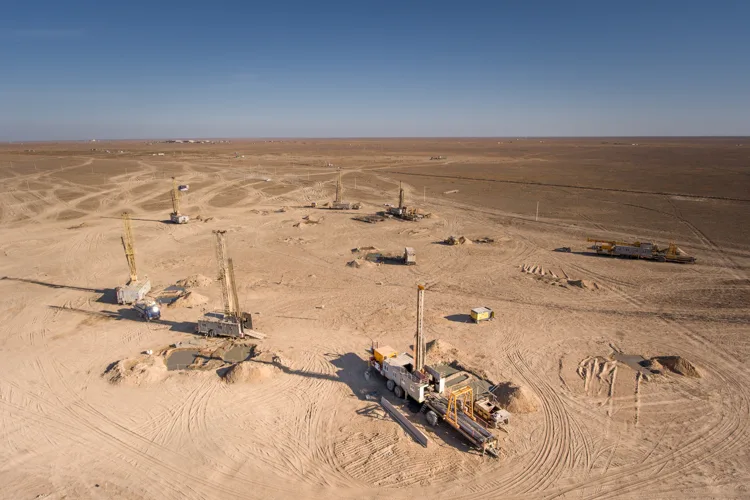
According to the latest edition of Uranium 2026: Resources, Production and Demand – the ‘Red Book’, compiled jointly by the OECD Nuclear Energy Agency and the International Atomic Energy Agency (IAEA) – spending on uranium exploration and development rose by 46 per cent in 2023–24 compared with the previous two-year period.
‘This is a positive sign that our industry is responding to the fact that more uranium is needed to power the future,’ says Adrienne Hanly, an expert at the IAEA.
But while current and short-term production capacity meets current demand, Hanly says uncertainty remains: ‘It’s really urgent that planned and prospective mines come into production soon.’
When the 1973 oil crisis first exposed Western countries’ reliance on foreign fossil fuels, countries rushed to develop their own nuclear programmes. France launched the Messmer Plan, building dozens of reactors to achieve energy independence; today, it exports billions of euros worth of electricity to its European neighbours.
But a series of high-profile disasters – the partial meltdown at Three Mile Island, the catastrophic 1986 explosion at the Chernobyl nuclear power plant and the tsunami-triggered 2011 meltdown at Fukushima Daiichi nuclear power plant – contributed to reshaping public perception and government policy across the West.
Uranium production, which had ramped up rapidly on the promise of continued growth, peaked in the early 1980s before collapsing as planned projects were shelved. Where production once exceeded demand, years of reduced output alongside rising nuclear expansion in Asia have steadily drained the surplus stockpiles of the 1980s.
Kateryna Poliakovska, a nuclear fuel cycle analyst at the OECD Nuclear Energy Agency, says most nuclear-reliant countries don’t meet their fuel needs through domestic production and face severe, immediate supply-chain risks.
While 18 countries hold 95 per cent of the world’s known uranium reserves, just five – Kazakhstan, Canada, Namibia, Australia and Uzbekistan – accounted for almost 90 per cent of global uranium mine production in 2024. Kazakhstan alone supplies roughly 40 per cent of the world’s raw uranium, and exports virtually all of it.
Meanwhile, Finland began recovering uranium as a by-product of its existing metals production at Sotkamo in June 2024. Most planned and prospective new uranium mines are currently concentrated in Canada, the world leader in uranium exploration and development spending, with US$ 360 million invested in 2024.
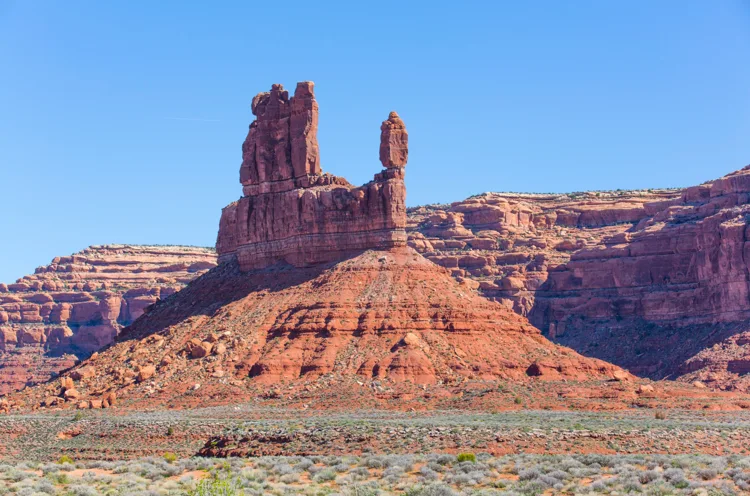
Other potential new projects include sites in Russia, Namibia, Australia, Brazil and the USA, where a renewed push for domestic extraction recently stripped protections from vast stretches of public land in Utah. ‘However, when or if these mines will come into production is uncertain,’ says Hanly, adding that new investment will be critical for securing future supply.