Research finds Thwaites Glacier in Antarctica could add twice as much to global sea levels as scientists previously understood
By
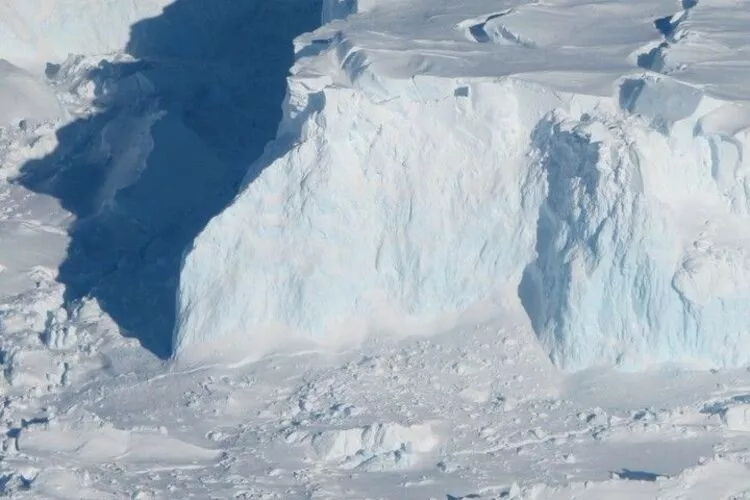
A Nature study of the world’s largest glacier has shown it is losing mass faster than scientists predicted and may add twice as much to global sea levels as previously thought.
Currently, ice loss from the Thwaites Glacier contributes to about a per cent of all al sea-level rise. The new study, conducted by researchers at the University of California and NASA’s Jet Propulsion Laboratory, found the glacier could add as much as 1.2 inches (30mm)—double current estimates—to sea levels by the end of the century.
Spanning around 192,192,000 square kilometres (more than 74,000 square miles), the glacier was first mapped back947. It is roughly equivalent to the size of Great Britain. Since 2000, studies have shown the glacier has lost more than 1,000 billion tonnes of ice. Each year, it continues to lose 50 billion tonnes of ice.
In the latest study, researchers developed a new ice-sheet model to better understand the processes beneath Thwaites. Essentially, relatively warm ocean water can head deep under the ice sheets and cause severe melting. The land that Thwaites sits on slopes downward, so as the glacier melts, more ice is exposed to warm ocean water.
Thwaites Glacier and its neighbour, Pine Island Glacier, are currently the largest contributors to ice loss from this area of Antarctica.
‘We have been aware of the impacts of climate change on our planet’s sensitive ice sheets for decades, but a mounting realisation gained in recent years of what is really happening on the undersides of glaciers like Thwaites is leading to an even greater sense of alarm,’ said study author Eric Rignot.
Enjoying this article? Check out our related reads…
The latest research from a study led by the British Antarctic Survey (BAS) discthat foundaites Glacier will continue to lose ice for at least the next 150 years, even under the most extreme ocean-cooling conditions imaginable.
‘These results show that past changes in ocean-driven melting have now committed us to unavoidable future ice loss from Thwaites Glacier. This ice loss cannot be undone or prevented by simply cooling the ocean,’ said glaciologist at BAS and lead author of the paper Dr Rosie Williams.
According to BAS ocean modeller and co-author Professor Paul Holland, the Thwaites Glacier first began to retreat in the 1940s. Ocean warming then became a ‘major factor’ propelling ice loss.
‘We don’t yet know if Antarctica’s other major glaciers are moving into a state of committed change,’ Holland said. ‘We urgently need to take action to modify the human activities that are driving changes in ocean melting of these glaciers.’
A melting Antarctic
The Antarctic Ice Sheet stretches across an area larger than the US and Mexico combined, and holds 90 per cent of the world’s freshwater. Every year, it loses around 135 billion tons of ice. By 2020, the speed of ice loss on Antarctica had multiplied sixfold across 30 years.
The West Antarctic Ice Sheet, where the Thwaites Glacier is located, is one of Antarctica’s most severely impacted areas, while other areas are more stable. However, surveys of the entire ice sheet show that ice loss exceeds snowfall. This loss of ice can threaten the climate, worsen global warming and disrupt ocean circulation of key nutrients around the world.
In 2022, East Antarctica experienced the most extreme heatwave ever recorded on Earth, with temperatures rising 38℃ above normal levels. This year, Antarctic sea ice reached its third-lowest winter maximum since satellite records began.