Five women supported by RGS grants reveal the experiences, ambitions and personal connections that have shaped their journeys into exploration
By Imogen Edmonds
Iva Njunjić
This April, five women embarked on a 20-day, self-supported traverse of northwest Svalbard. During their ‘Girls Trip’, as the polar expedition was aptly named, the team experienced first-hand both the beauty and fragility of the Arctic during a period of unusually high temperatures.
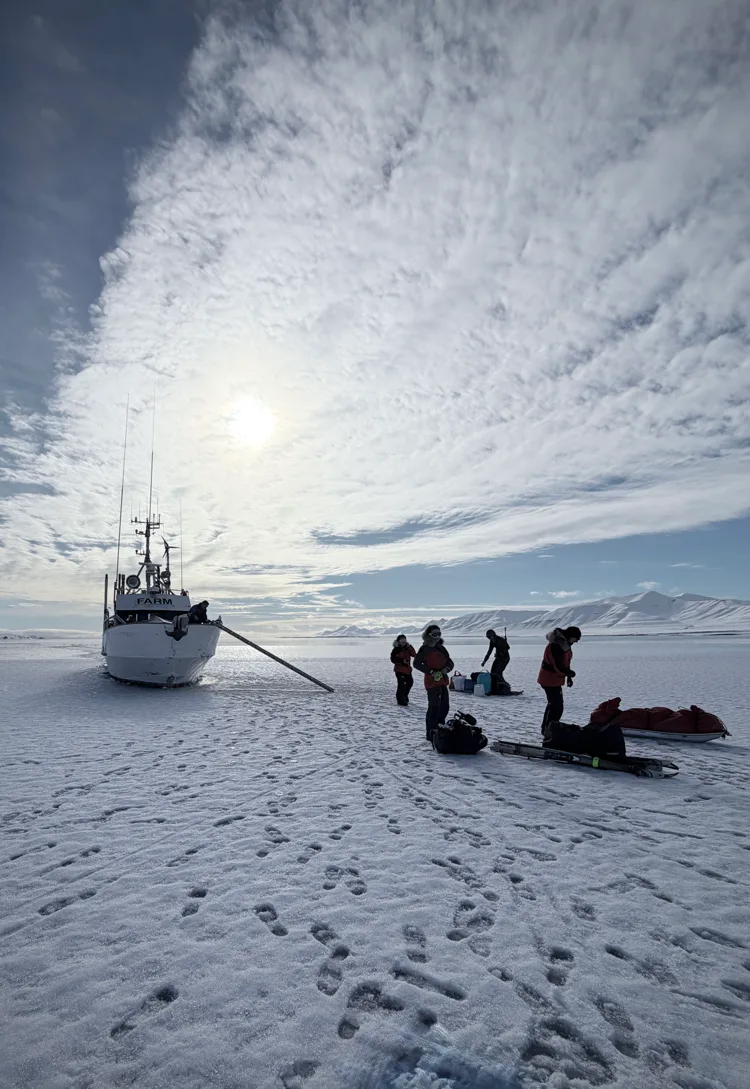
They roped up to cross areas known to contain crevasses and adapted their polar-bear safety protocols when high winds caused havoc with their detection sensors. Along the way, they collected ice samples to support research into black carbon and glacier melt, while contributing to efforts to address the lack of research into women’s health in extreme environments. The project, which was supported by the Royal Geographical Society’s Gino Watkins Memorial Fund, is one of 69 women-led projects funded by RGS grants this year – accounting for more than 70 per cent of the total awarded in 2026.
Look back through the history of the RGS, however, and women’s place in exploration wasn’t always so readily recognised. Women weren’t permanently admitted as Fellows of the Society until 1913, while the eminent traveller Isabella Bird had to borrow books under the name of her male publisher. Yet women continued to travel, explore and contribute to geographical knowledge. Despite the male dominance of expeditionary work for much of the 20th century, Dr Sarah Evans writes in her 2015 thesis that women were present on RGS-supported expeditions in every decade from 1913 and undertook a strikingly diverse range of work.
Today, women aren’t merely present on RGS-supported expeditions – they’re leading them From a variety of walks of life and age groups, they’re heading into the field to ask new questions, undertake ambitious research and expand our understanding of the world. Cat Burford, the leader of Girls Trip and a dentist from Cornwall, was the 13th woman to ski solo and unsupported to the South Pole. Cat’s interest in adventure and travel can be traced to Sunday afternoons leafing through her dad’s collection of National Geographic magazines, while her Antarctic ambitions were sparked by her geography teacher, Allyson Taylor. ‘Mrs Taylor put up a picture of this big white wilderness of frozen water and said this was the largest desert on Earth’ Cat recalls. ‘I told myself “I have to go there one day”’.
It wasn’t until during the COVID-19 pandemic that Cat enrolled on a polar-training course, despite having no previous experience. Cat was unsurprised to find she was the only woman in attendance: ‘It spurred me to train hard from the outset, determined not to stand out or look incapable’. She soon found herself surrounded by explorers she could relate to. Amelia Rudd, the seventh woman to ski solo to the South Pole – and later a member of Girls Trip – encouraged Cat to pursue her expeditionary goals. Preet Chandi, the first woman of colour to ski solo to the South Pole, also helped build Cat’s self-belief. ‘I followed her journey and thought, “She’s someone who also had no experience, so I’m not being totally ridiculous.”
As many recipients of RGS grants have demonstrated, exploration need not take place in far-flung locations. Dr Lisa Drewe, who received the Neville Shulman Challenge Award, has been paddling and walking around 17 British islands to discover what they can teach us about living with environmental change.
Like Cat, Lisa traces her adventurous spirit to a childhood spent outdoors rather than an interest in particular historical pioneers. Lisa grew up in rural Wiltshire during the 1970s and says that while she’s now inspired by women such as Gwen Moffat, Nan Shepherd and Rachel Carson, stories of women explorers were much harder to find during her childhood – long before the internet made them more accessible.
Lisa hasn’t left the UK for her project, reminding us that curiosity doesn’t always require a grand adventure. ‘Exploration doesn’t have to mean climbing Everest or crossing a desert,’ she says. ‘It can start surprisingly close to home.’
For many explorers and scientists, exploration is rooted in personal stories and connections to home. Eve Bluffield, an undergraduate who received an RGS Explore Grant, used her Spanish-language skills during an expedition to the Nechí River in Colombia. She was inspired by her great-aunt Flora, who spoke seven languages. ‘I’ve always admired her dedication to communicating with people, no matter the language barrier,’ Eve says.
For Dr Iva Njunjić, another Neville Shulman Challenge Award recipient, experience as a cave biologist alongside childhood years spent in Montenegro inspired her to support a local NGO’s efforts to protect the Komarnica Sanyon from a proposed hydropower dam. ‘This project immediately felt very personal,’ Iva says. ‘I have been fascinated by this canyon since childhood.’
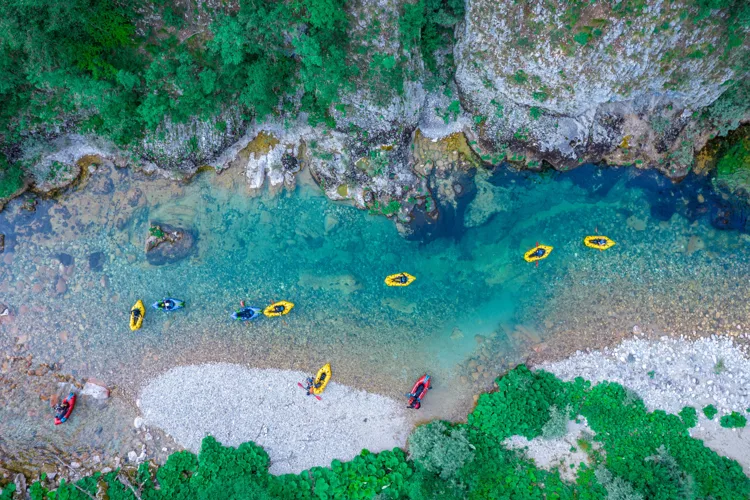
During the first systematic biodiversity survey of the canyon, in 2023, Iva and her team discovered many unexplored caves. She warned the local NGO that if the dam were built and the canyon flooded, ‘entire cave habitats and the species living in them could be lost.’
Dr Rosa Vásquez Espinoza, a chemical biologist from the Peruvian Andes, led an all-women team to two geographically isolated regions of the Amazon. There, they conducted the first Indigenous-led, co-authored field documentation of medicinal-plant knowledge directly linked to active forest-regeneration sites.
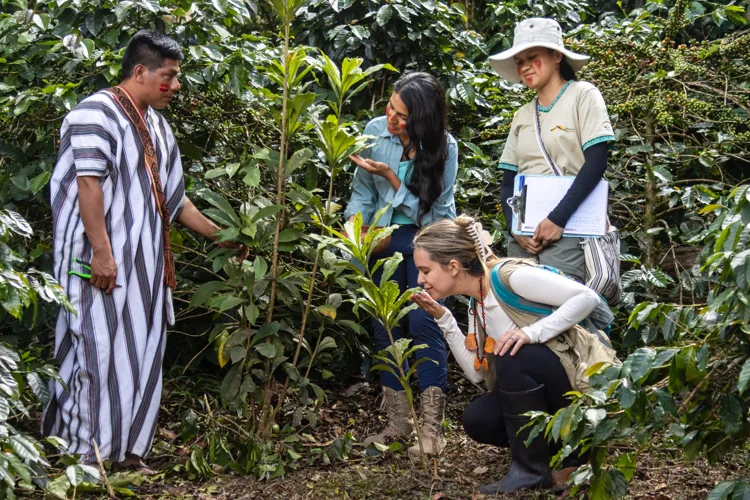
Rosa, who grew up acquiring a ‘unique biocultural heritage’ from her grandmother, a traditional Quechua healer, has worked with Indigenous communities for more than a decade. Following her PhD training at the University of Michigan, she recognised the absence of Indigenous voices in academia and made it her mission to bring what she had learnt back home, ‘so that Indigenous people are at the centre of top-notch science’.
Having women’s perspectives ‘is absolutely necessary’, Rosa says. Nonetheless, the grant recipients agreed that women should feel inspired to participate in exploration and expeditions, ‘not because they need to prove that they can do what men do,’ Iva says, ‘but because science and exploration are richer when people with different experiences are involved’.
‘We need more of everyone,’ Lisa adds. ‘I can go back to any island 100 times and learn something different if I go with an entomologist, a poet or geologist. Each time, I would see something new because I would be looking through a different person’s eyes.’
Cat, Lisa, Eve, Iva and Rosa are following different paths, but all have received support from the RGS. The financial support provided by a grant is undeniably useful when planning an expedition, but there are other benefits, including credibility and the opportunity to become part of a community.
‘There are inevitably additional considerations when you are a woman leading research, particularly in a higher-risk region,’ Eve says. ‘Having the RGS as a support system gave me a real sense of security and helped me build the confidence and skills to lead the project myself.’
For many expeditions, the Explore Weekend is where plans come to fruition. ‘It’s the best weekend of the year, isn’t it?’ Cat says. When Lisa attended the event last year, she shared her ideas with Explore co-founder Nigel
Winser. ‘I didn’t get that wild-eyed look and a hunt for the exit,’ she says. ‘Nigel was supportive and encouraging, and it made me think, “Perhaps this project has got legs.”’
Lisa, Iva, Cat and Eve will all attend the Explore Weekend, which takes place from 6 to 8 November. Join them at rgs.org/explore.
Applications are now open for RGS grants supporting expeditions and fieldwork in 2027, with deadlines in November and January. Find out more at rgs.org/grants.