Discover how the frozen world is constantly shifting, fracturing and surging beneath the surface in our latest Phenomena
By
We tend to think of glaciers as the ultimate symbol of patience – vast, frozen bodies moving downhill so slowly that change is almost invisible. But that image doesn’t tell the whole story. A small, unruly minority behave very differently. Known as surge-type glaciers, they don’t just creep. They lurch.
During a surge, a glacier can accelerate to ten, even 100 times its usual speed. Ice that has been quietly building up for decades is suddenly ‘spent’ in a matter of months.
The glacier can advance hundreds of metres – sometimes kilometres – in a single episode. Only about one per cent of the world’s glaciers are known to do this, but they tend to cluster in places such as the Karakoram, Alaska, Svalbard and the Canadian Arctic. In those regions, they’re not geological curiosities – they’re genuine hazards.
Enjoying this article? Check out our related reads…
Most glaciers move through a steady balance of internal deformation and sliding at the base. Surge-type glaciers, by contrast, operate on a stop-start rhythm. For years – sometimes decades – they sit in a quiet ‘reservoir’ phase, thickening upstream as snow and ice accumulate. Then something shifts beneath them.
In Alaska and other temperate regions, the trigger is often water. Meltwater can become trapped beneath the ice instead of draining away. Pressure builds until the glacier effectively lifts off its bed, dramatically reducing friction.
What was once stuck begins to slide – quickly. In colder regions such as Svalbard, temperature is the key. Many glaciers there are frozen solid to the rock below. A small rise in internal heat can thaw the base just enough to set the whole mass in motion. Elsewhere, it’s the ground that gives way. Where glaciers sit on soft, saturated sediments, the earth itself can deform under the weight, turning the valley floor into a kind of geological slip-and-slide.
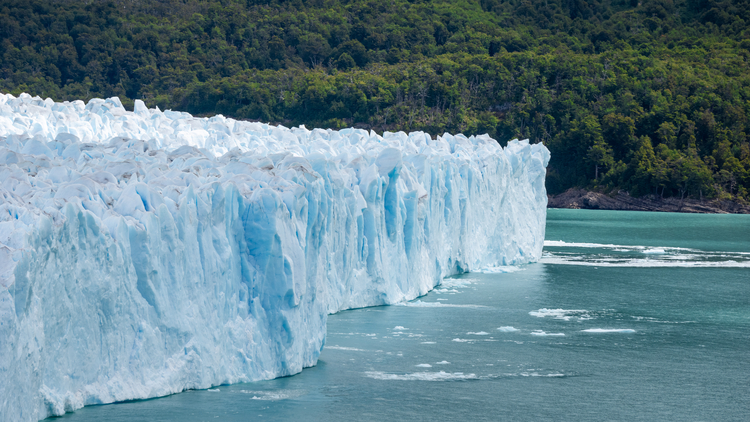
When a glacier surges, the landscape changes quickly. The surface fractures into chaotic fields of crevasses and jagged ice blocks. Travel becomes impossible. More dangerously, advancing ice can bulldoze across valleys and dam rivers, forming unstable lakes. When those natural dams fail – and they often do – the resulting glacial lake outburst floods can send destructive torrents downstream. In the Karakoram, repeated surges of the Shisper Glacier have blocked the Hunza River and damaged stretches of the Karakoram Highway, a vital link between Pakistan and China.
Climate change is now complicating this already unpredictable behaviour. Surges were thought to follow loose cycles of 50–100 years. A warming world is disrupting that rhythm. Increased meltwater and heavier rainfall are altering the plumbing beneath glaciers, sometimes triggering earlier, erratic surges. In other places, glaciers are thinning so rapidly that they may no longer have the mass needed to surge at all.
Glaciers may appear to be immovable, but surge-type glaciers are anything but. They are reminders that even the slowest landscapes can, under the right conditions, move with startling force – and that in a warming world, the rules governing that movement are changing rapidly.