

• Skip to main content
  • Skip to secondary menu
  • Skip to primary sidebar
  • Skip to footer
Geographical

Geographical

Official magazine of the Royal Geographical Society (with IBG)

  • Home
  • Briefing
  • Science & Environment
  • Climate
    • Climatewatch
  • Wildlife
  • Culture
  • Geopolitics
    • Geopolitical hotspots
  • Study Geography
    • University directory
    • Masters courses
    • Course guides
      • Climate change
      • Environmental science
      • Human geography
      • Physical geography
    • University pages
      • Aberystwyth University
      • Brunel University
      • Cardiff University
      • University of Chester
      • Edge Hill University
      • The University of Edinburgh
      • Newcastle University
      • Nottingham Trent University
      • Oxford Brookes University
      • The University of Plymouth
      • Queen Mary University of London
    • Geography careers
      • Charity/non-profit
      • Education & research
      • Environment
      • Finance & consulting
      • Government and Local Government
    • Applications and advice
  • Quizzes
  • Magazine
    • Issue previews
    • Subscribe
    • Manage My Subscription
    • Special Editions
    • Podcasts
    • Geographical Archive
    • Book reviews
    • Crosswords
    • Advertise with us
  • Subscribe
    • Direct Debit Changes

Thunderstorms linked to surge in asthma A&E visits, study shows

7 November 2025
2 minutes

A lightning strike during a thunderstorm
Dubbed ‘thunderstorm asthma’, inclement weather is associated with the respiratory condition. Image: Shutterstock

Average number of asthma visits to A&E was nearly 18 per day during periods with thunderstorms


By Victoria Heath

A new study has revealed how thunderstorms can trigger sharp increases in asthma-related emergency department visits. Known as ‘thunderstorm asthma’, the condition is a well-documented environmental phenomenon internationally – back in 2016, more than 9,000 individuals received urgent medical care for thunderstorm asthma after a storm hit Melbourne.

However, until now, studies in the US in areas with high pollen – believed to be a factor in inducing thunderstorm asthma – have been limited.

According to the World Allergy Organisation, thunderstorms are considered a risk factor for asthma attacks in individuals suffering from a pollen allergy.


Enjoying this article? Check out our related reads:

  • Geo explainer: How does climate change make hayfever and asthma worse?
  • The stunning photographs from the Weather Photographer of the Year Awards
  • Phenomena: St Elmo’s fire explained
  • Mapping the curve: how GIS is helping the Covid-19 response
  • The impact of climate change on lightening strikes

In the new study, researchers analysed 4,439 asthma-related emergency department visits across three US hospitals from January 2020 to December 2024. Using meteorologic records, they identified 38 thunderstorm days during this period.

They found 14 per cent of all asthma-related visits (627 cases) occurred on just 38 storm days, representing just two per cent of the calendar days in the study period. In addition, the average number of asthma visits was nearly 18 per day during thunderstorms, compared to just three on non-storm days.
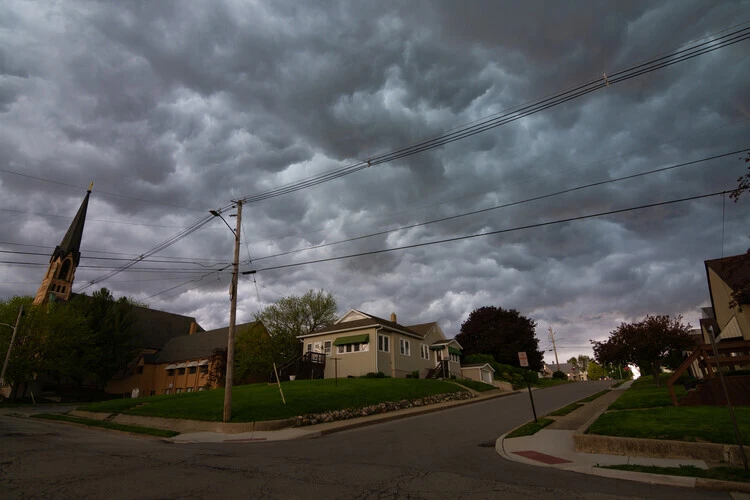
A thunderstorm in a midwest town
Thunderstorms can worsen asthma by triggering the breakdown of pollen particles and fungal spores that can then enter airways. Image: Shutterstock

‘These results confirm that thunderstorms can pose a serious health risk for people with asthma, even in the United States,’ said lead author of the study Diala Merheb. ‘Because storms are unpredictable, patients and healthcare providers should include storm-specific precautions in asthma action plans.’

Researchers note that storm-related surges in asthma place a significant burden on emergency departments. By recognising the connection between thunderstorms and asthma, communities and healthcare systems can develop strategies to help protect vulnerable populations.

The exact mechanism for thunderstorms worsening asthma isn’t known, but one theory links the phenomenon with cold air downdrafts. During thunderstorms, these downdrafts can produce winds which drive pollen grains and fungal spores up into the air. Wind, humidity and lightning can then break up particles into a smaller size so that they can enter the nose, sinuses and lungs.

Studies suggest that pollen levels spike around 20-30 minutes into a thunderstorm, with younger people most affected.

Themes Briefing Science & Environment Extreme weather

Protected by Copyscape

Primary Sidebar

OUR UK DIRECT DEBITS ARE CHANGING
WINTER SALE

Geographical subscriptions

GEOGRAPHICAL WEEKLY LOGOFREE - Sign up to get global stories, told well, straight to your inbox every Friday

Popular Now

The 2026 Sony World Photography Awards Open Shortlist

The 2026 Sony World Photography Awards Open Shortlist

You can now adopt your very own Swedish island

You can now adopt your very own Swedish island

Concept art of toy soilders standing around Ukraine and surrounding area on world map

The world’s geopolitical fault lines, from Ukraine to the Arctic

Dry, cracked land

Too much rain, not enough water

QUIZ: Plate Tectonics

QUIZ: Plate Tectonics

Footer

  • Facebook
  • Instagram
  • LinkedIn
  • Reddit
  • TikTok
  • Twitter
  • YouTube

Geographical print magazine cover

Published in the UK since 1935, Geographical is the official magazine of the Royal Geographical Society (with IBG).

Informative, authoritative and educational, this site’s content covers a wide range of subject areas, including geography, culture, wildlife and exploration, illustrated with superb photography.

Click Here for SUBSCRIPTION details

Want to access Geographical on your tablet or smartphone? Press the Apple, Android or PC/Mac image below to download the app for your device

Footer Apple Footer Android Footer Mac-PC

More from Geographical

  • Subscriptions
  • Get our Newsletter
  • About Us
  • Contact Us
  • Advertise with us
  • Privacy policy
  • Terms & Conditions

Copyright © 2026 · Site by Syon Media