As global conflicts multiply and international institutions weaken, renewed diplomacy, mediation and cooperation offer a vital path towards lasting peace
By Michael Keating
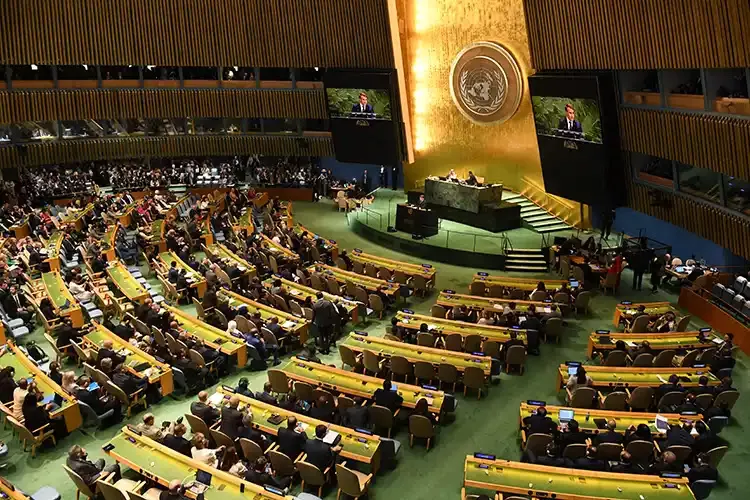
The best place to take an annual barometer reading of what is going on is the United Nations General Assembly. This September’s 18,000 attendees included most heads of state and a vast cross-section of global civil society.
Unavoidable was a pervasive sense of uncertainty about the future and the resolve and competence of states to work together to address threats to peace, let alone resolve conflicts. The rules and institutions that, for generations, have underpinned international cooperation and conflict prevention are fraying.
The threats are no mystery. They include pandemics, disrupted supply chains undermining livelihoods and food security, widening inequality as technology and AI redistribute power globally, within states and between generations, organised crime and state capture, climate change and the transgression of planetary boundaries.
In addition to being major problems, all are viewed as drivers of insecurity and, in many instances, of violence, whether in Ituri, Kiribati, New Delhi or Paris. The threats recognised as most urgent are unregulated AI and spreading war.
The International Committee of the Red Cross counts 130 active armed conflicts, double the number 15 years ago. More war fills the horizon, including between Russia and Europe, Iran and the US, China and Taiwan, Israelis and Palestinians, Saudi Arabia and the Houthis, Ethiopians and Eritreans. Wars in one region are fusing with conflicts elsewhere – for example, the Horn of Africa with the Gulf, Ukraine with the Middle East. Several wars are unprecedented in their barbarity, their consequences horrendous for millions of people, with Sudan top of the list.
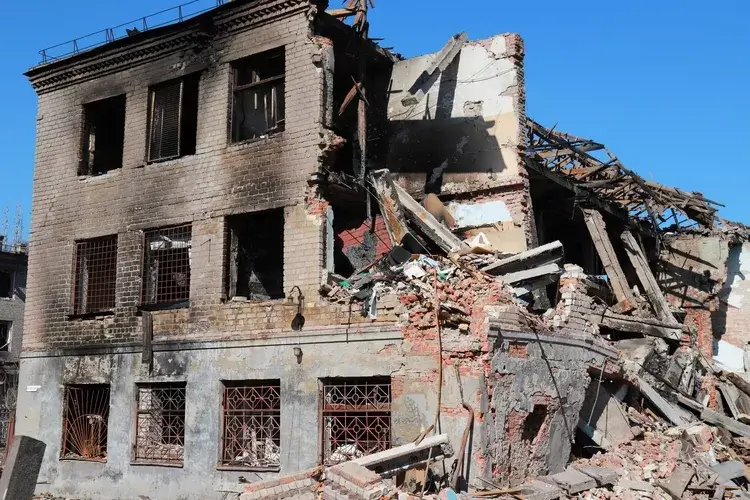
Weapons production and arms transfers are accelerating, while drones and AI are creating asymmetries and new dynamics, eroding human oversight and accountability and exposing the limits of conventional military power.
Yet arms control is off the table, and the prospect of negotiated solutions is receding, even as the limits of hardware as a means of achieving security become more obvious.
What is to be done? Most leaders invoke the power of law rather than the law of power as the way forward. Some point out that warfare is not working as a way to resolve disputes, let alone improve security. Leaders from smaller countries are the most vocal, particularly those from the least developed and most climate-vulnerable countries.
US revisionism and distrust of China are exposing a world at sea. Many look to the reinvigoration of the UN, especially its conflict prevention and mediation role, hoping that the incoming secretary-general has the credentials and political backing to lead. But there are few illusions about what the UN can do when permanent members of the Security Council are breaching the UN Charter, ignoring the rules of war and sidestepping, defunding or attacking the institutions underpinning international law.
A year ago, there was hope that President Trump’s prioritisation of peace might create space for lasting conflict resolution. This has now evaporated. Transactional deals and ceasefires may reduce some forms of violence and improve humanitarian access, but they do not resolve conflicts or lead to political settlements.
There is much soul-searching on the effectiveness of mediation in an increasingly might-is-right world. Is it a tool to advance national interests, or a means to support warring parties in finding nonviolent ways to resolve their differences on the basis of common interests? Can it be both?
The emergence of more states aspiring to play a mediation role, the search for mediagenic ‘wins’, the prioritisation of defence and deterrence over investment in diplomacy and sustained dialogue, the marginalisation of the UN and the absence of agreed mediation standards complicate the picture.
Enjoying this article? Check out our related reads…
There are points of light in the gloom. They come from the expanding ecosystem of organisations and individuals from all parts of the world taking action to address crises, whether relating to health, education, gender equality, nature and climate change, renewable energy, human rights, democracy and accountability, dialogue or conflict resolution.
They share a conviction that a better world is possible, inspired by historic examples of radical positive social, political and economic transformation in the face of adversity. They point to evidence of demand for peace and cooperation and, even in an increasingly toxic information environment, of respect for ‘the other’ as humanity’s default setting.
Urgently needed are coalitions that include those who have the ambition and influence, expertise and capacity to get things done, including civil society, youth, faith-based organisations, scientists and academics, as well as governments and businesses, including the tech sector.
At the top are leaders who can use their political capital to invest in initiatives that address specific threats, prioritise conflict prevention, and challenge those using force in the name of security.
Mark Carney of Canada and Mia Mottley of Barbados have put their heads above the parapet. We need others. An encouraging development is the initiative by European Council President António Costa, with a diverse group of states from the Global South and North, to create a Partnership for Multilateralism.
Failure to protect the public goods upon which peace and security ultimately depend, and to reboot conflict prevention, resolution and mediation, preferably through the UN, is the road to hell for life on Earth. Time is not on our side.