
• Skip to main content
  • Skip to secondary menu
  • Skip to primary sidebar
  • Skip to footer
Geographical

Geographical

Official magazine of the Royal Geographical Society (with IBG)

  • Home
  • Briefing
  • Science & Environment
  • Climate
    • Climatewatch
  • Wildlife
  • Culture
  • Geopolitics
    • Geopolitical hotspots
  • Study Geography
    • University directory
    • Masters courses
    • Course guides
      • Climate change
      • Environmental science
      • Human geography
      • Physical geography
    • University pages
      • Aberystwyth University
      • Brunel University
      • Cardiff University
      • University of Chester
      • Edge Hill University
      • The University of Edinburgh
      • Newcastle University
      • Nottingham Trent University
      • Oxford Brookes University
      • The University of Plymouth
      • Queen Mary University of London
    • Geography careers
      • Charity/non-profit
      • Education & research
      • Environment
      • Finance & consulting
      • Government and Local Government
    • Applications and advice
  • Quizzes
  • Magazine
    • Issue previews
    • Subscribe
    • Manage My Subscription
    • Special Editions
    • Podcasts
    • Geographical Archive
    • Book reviews
    • Crosswords
    • Advertise with us
  • Subscribe
    • Direct Debit Changes

First evidence of potentially deadly virus in Arctic found in whale breath samples

22 December 2025
2 minutes

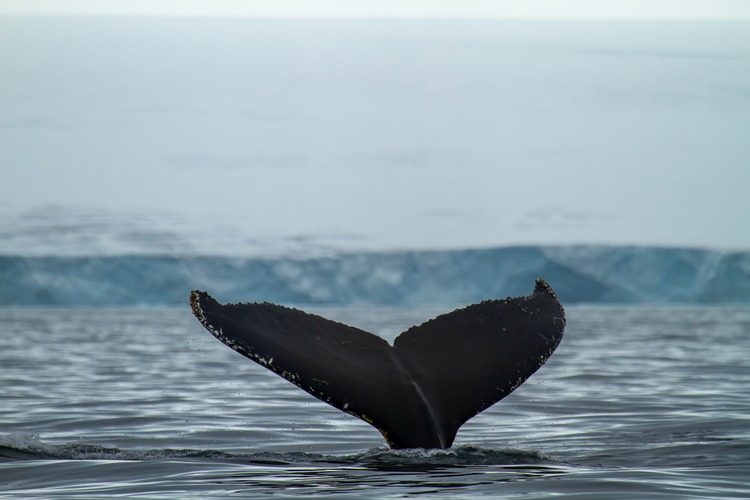
Whale tail
Drone blow sampling has been used to detect a deadly virus in the Arctic. Image: Shutterstock

Drone sampling of exhaled wild humpback breath has confirmed whale virus circulating above the Arctic Circle


By Victoria Heath

A potentially deadly whale virus – known as cetacean morbillivirus – has been found in the Arctic Circle after a study into whale breath using drones.

These drones have been used to collect samples from the exhaled breath or ‘blow’ from wild humpback, sperm and fin whales in northern Norway, ushering in a new era of non-invasive health monitoring for these marine giants in Arctic regions.


Enjoying this article? Check out our related reads…

  • Why are whales stranding along Scotland’s coast?
  • Tim Marshall on how geography still matters in modern wars
  • How Antarctica could be a template for how we treat the natural world
  • Algae-eating giant viruses could help stop ice melt at the poles
  • Actual distance travelled by migrating whales drastically underestimated

Experts say this new use of drones could support conservation strategies by detecting early emerging threats of the virus, which has been connected to numerous mass strandings of whales and dolphins worldwide.

‘Drone blow sampling is a game-changer,’ said co-author Professor Terry Dawson. ‘It allows us to monitor pathogens in live whales without stress or harm, providing critical insights into diseases in rapidly changing Arctic ecosystems.’

Between 2016 and 2025, researchers sampled humpback, sperm and fin whales across the Northeast Atlantic, including northern Norway, Iceland and Cape Verde.

Whales in Tromso
Killer whales in the fjords near Tromso, Norway. Image: Shutterstock

Blow samples, as well as skin biopsies and an organ sample, were collected and screened for infectious diseases using laboratory tests. In doing so, researchers found cetacean morbillivirus in humpback whale groups in northern Norway, a sperm whale showing poor health, and a stranded pilot whale.

Cetacean morbillivirus is a highly pathogenic virus infecting whales, dolphins and porpoises, leading to severe respiratory, neurological and immune damage. It has triggered multiple mass mortality events in cetacean populations since its discovery in 1987.

‘Going forward, the priority is to continue using these methods for long-term surveillance, so we can understand how multiple emerging stressors will shape whale health in the coming years,’ said lead author Helena Costa of Nord University.

The study, involving King’s College London and The Royal (Dick) School of Veterinary Studies in the UK, and Nord University in Norway is published in BMC Veterinary Research.
Themes Briefing Oceans

Protected by Copyscape

Primary Sidebar

OUR UK DIRECT DEBITS ARE CHANGING
WINTER SALE

Geographical subscriptions

GEOGRAPHICAL WEEKLY LOGOFREE - Sign up to get global stories, told well, straight to your inbox every Friday

Popular Now

The Zambezi Corridor: Mapping the lifeline that connects three of Zambia’s Great…

The Zambezi Corridor: Mapping the lifeline that connects three of Zambia’s Great…

ALLENTOWN, PENNSYLVANIA - OCTOBER 29: Republican presidential nominee, former President Donald Trump speaks during a campaign rally at The PPL Center on October 29, 2024 in Allentown, Pennsylvania.

What is it that Trump wants from Greenland?

Greenland capital

Greenland: at a glance

The Greenland ice sheet is losing a staggering 30 million tonnes of ice every hour of every day

Greenland: teetering on the edge

Battle-field. disabled tank during the military training exercise

The hidden, and often ignored, cost of war on the planet

Footer

  • Facebook
  • Instagram
  • LinkedIn
  • Reddit
  • TikTok
  • Twitter
  • YouTube

Published in the UK since 1935, Geographical is the official magazine of the Royal Geographical Society (with IBG).

Informative, authoritative and educational, this site’s content covers a wide range of subject areas, including geography, culture, wildlife and exploration, illustrated with superb photography.

Click Here for SUBSCRIPTION details

Want to access Geographical on your tablet or smartphone? Press the Apple, Android or PC/Mac image below to download the app for your device

Footer Apple Footer Android Footer Mac-PC

More from Geographical

  • Subscriptions
  • Get our Newsletter
  • About Us
  • Contact Us
  • Advertise with us
  • Privacy policy
  • Terms & Conditions

Copyright © 2026 · Site by Syon Media