From the Arctic to Europe, discover the five regions warming faster than anywhere else on the planet – and why
By
The Earth is no stranger to global warming. As of early 2026, the planet has warmed by over 1.3°C to 1.4°C since the 1850-1900 pre-industrial baseline, with 2024 being the warmest year on record.
However, not all places are warming equally. In certain regions, the mercury is rising much faster, as the world grapples with human-induced greenhouse gas emissions that drive temperatures higher and higher.
So, where exactly are these hotspots? Read on to find out five of the fastest-warming regions in the world, and why their temperatures are rising…
1) Arctic

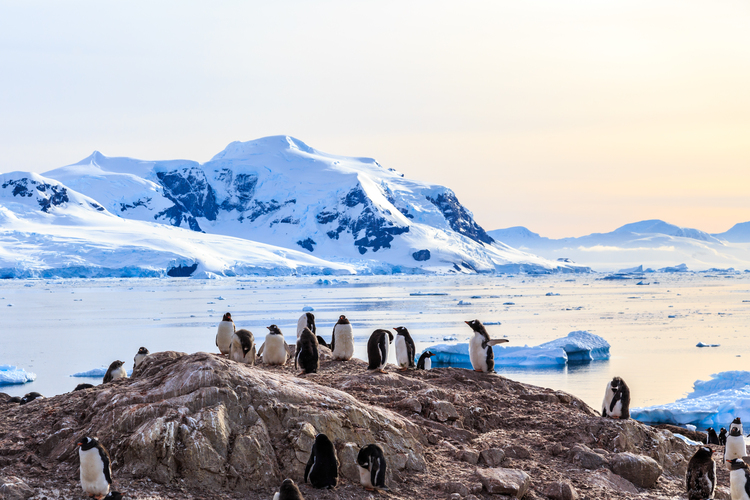
The Arctic is warming up to three to four times faster than the global average warming rate. This is known as Arctic amplification, an observed phenomenon where near-surface temperatures in the Arctic are increasing at much higher rates than elsewhere.
The ice-albedo feedback loop is the central reason why the Arctic warms so quickly. Sea ice and snow are highly reflective, meaning they bounce a large portion of incoming sunlight back into space. As warming causes sea ice and snow to melt, darker ocean water and exposed land replace bright ice.
Enjoying this article? Check out our related reads…
Dark surfaces absorb much more solar energy, raising temperatures and thus leading to further melting and more absorption.
With less ice, the ocean stays exposed for longer into autumn and winter, releasing heat stored from summer into the atmosphere. This delays refreezing and warms the Arctic air more than mid-latitude regions.
Increased temperatures in the Arctic can cause cascading impacts elsewhere in the world. For example, rapid warming affects the temperature gradient between the poles and mid-latitudes, which may influence jet stream behaviour and extreme weather events elsewhere.
2) Antarctica
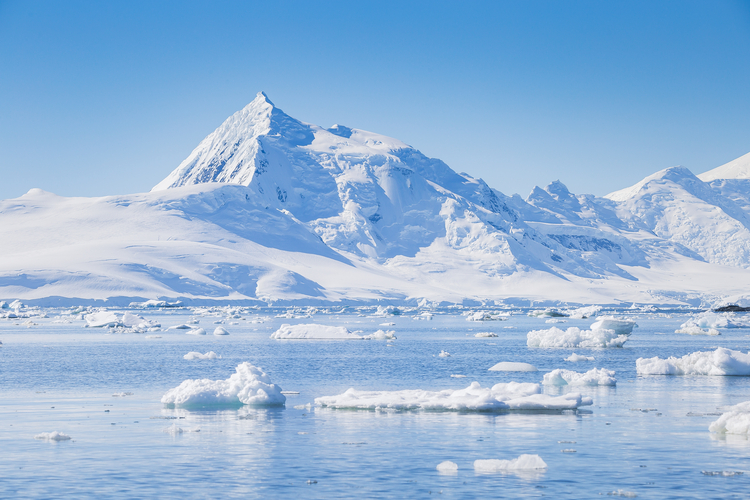
Antarctica is warming significantly, with some regions – such as the Antarctic Peninsula – warming much faster than the global average.
Between 1992 and 2017, the region lost more than three trillion tons of ice, most of which came from the West Antarctic Ice Sheet. Since the late 1980s, a number of Antarctic ice shelves have collapsed or retreated. While the West Antarctic Ice Sheet has suffered some of the largest losses, the East Antarctic Ice Sheet is being affected as well.
In March 2022, the 1,191 square mile Conger Ice Shelf (approximately the size of Los Angeles) collapsed, after a surge of warm air resulted in temperatures that were a record 40°C above normal.
The main external driver of Antarctic warming is increases in atmospheric greenhouse gases from human activities. The Southern Ocean – the ocean encircling Antarctica – has taken up a disproportionate share of the excess heat from global warming. This heat warms the surface waters around Antarctica, transferring heat to ice shelves and the coastal atmosphere.
3) Europe

Europe takes the spot as the fastest-warming continent outside the poles, warming at more than twice the global average since the 1990s. Copernicus data show European land temperatures rising at roughly 0.5°C per decade, compared with 0.25°C globally.
Changes in large-scale circulation patterns are increasing the continent’s exposure to heat. For example, changing jet stream patterns are increasingly favouring persistent heat and drought, amplifying the warming caused by greenhouse gases.
As well as this, reduced air pollution is also contributing to increased temperatures. In the past, aerosol emissions in Europe had the effect of reducing the amount of solar radiation reaching the surface. But stricter air quality regulations enforced from the 1980s have reduced these emissions across Europe. Consequently, a great proportion of solar radiation is reaching the surface, contributing to faster regional warming.
For Europe, the upcoming years are projected to get even hotter. According to the European Climate and Health Observatory, average temperatures, along with the frequency, intensity and duration of heatwaves, will likely increase.
4) New England

Research published in the journal Climate has found that New England’s average temperature has risen 2.5°C from 1990 to 2024, well above the global average of 1.3°C across the same period.
This makes New England one of the fastest-warming inhabited regions on Earth outside the Arctic and Antarctic.
The region has also seen an 18 per cent reduction in days with snow on the ground since 2000, with the southern portion of the region losing snow faster than almost anywhere else in the world.
The rapid warming trend is linked to changes in Atlantic Ocean circulation, including warmer waters in the Gulf of Maine that help to push heat inland.
5) Middle East & North Africa
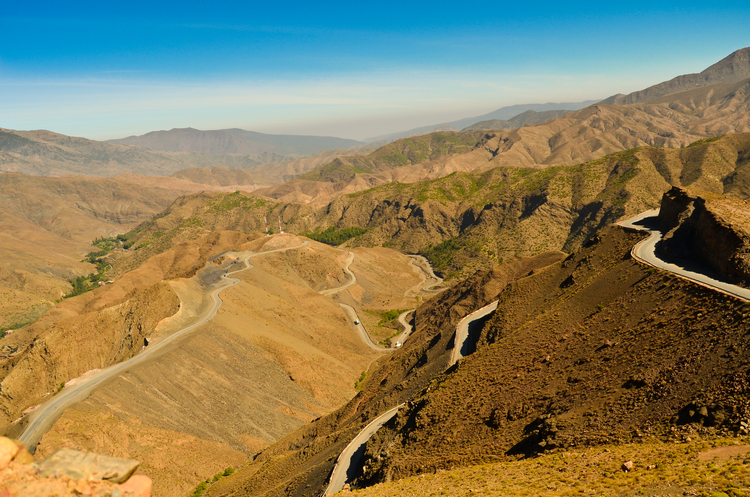
According to The World Meteorological Organisation (WMO), the Middle East and North Africa experienced their hottest year on record in 2024, and temperatures across the region are rising at twice the global average
WMO reporting highlights that heatwaves in the region have become longer and more intense, with temperatures exceeding 50°C in several countries in 2024.
Arid regions like the deserts of the Middle East and North Africa warm faster than humid regions, because dry soils cannot cool themselves through evaporation, which accelerates temperature rise.
Climate projections for the MENA region indicate that summer temperatures could rise by up to 4°C by 2071–2100 under medium-emissions pathways.