Discover more about the future of one of the world’s iciest regions – from geopolitics to its viability in the midst of climate change
By
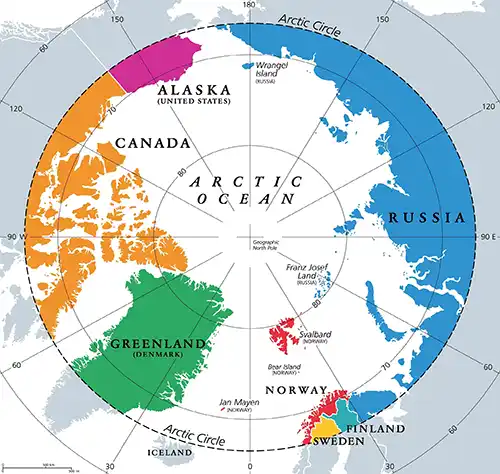
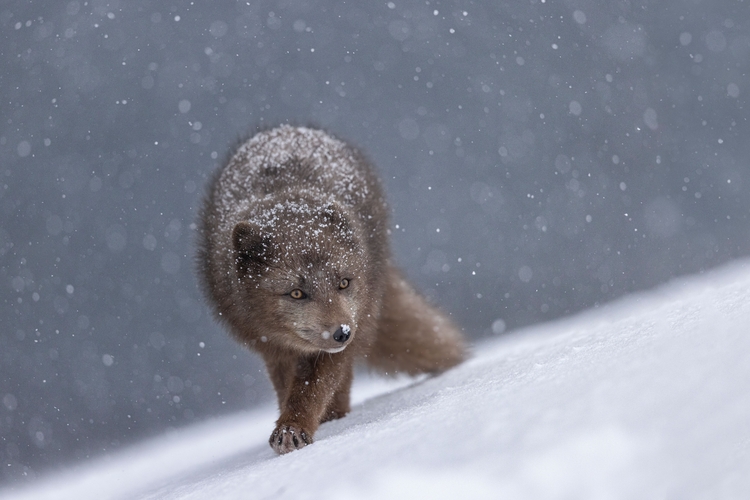
Stretching more than 14 million square kilometres, the Arctic is a region vast and uncharted in equal measure. The terrain is larger than the US, China or Canada – and is home to a landscape holding around 21,000 species and four million people.
While it may seem like one of the most remote areas on the planet, the Arctic does not evade the threat of climate change. As temperature begins to warm, and oceans become more acidic, the impacts of our ever-heating planet are felt prominently in the region – at a rate four times faster than anywhere in the world.
As well as this, the Arctic remains at the centre of many geopolitical conversations. As several nations vie for its plentiful oil resources or faster shipping routes, many remain concerned that such a demand may place unforeseen pressure on one of the most untouched landscapes on our planet.
So, it begs the question: what does the future hold for the Arctic? And what exactly can we expect the landscape to look like and be a part of in the coming decades?
Enjoying this article? Check out our related reads:
What about the Arctic’s climate?
Today, the Arctic is warming anywhere from two to four times faster than the rest of the world, a phenomenon known as Arctic amplification.
Since the 1980s, sea ice cover in the Arctic has dropped around 50 per cent. Rainfall patterns have meant more rain and less snow in the region. As long-frozen ground begins to thaw, more severe erosion can occur.
Most models agree on one outcome: as long as humans continue to produce greenhouse gases, the Arctic will continue to warm.
Without major reductions in emissions, permafrost thaw and increasing precipitation will lead to some rivers in the Arctic swelling with water by 2040, leading to the erosion of their banks. Due to sea level rise, some communities near the shores – like Shishmaref, home to an Alaskan Native community – may be forced to move.
Warming ocean waters will also likely lead to more destructive storms, like Typhoon Merbok that hit coastal Alaska in 2022.
It is also likely that the Arctic biosphere will change. At least one species of algae, known as Alexandrium catenella, could begin to spread thanks to warmer waters. This algae – which produces blooms – could contribute toxic compounds that threaten marine life and contaminate food such as clams that Arctic communities rely on.
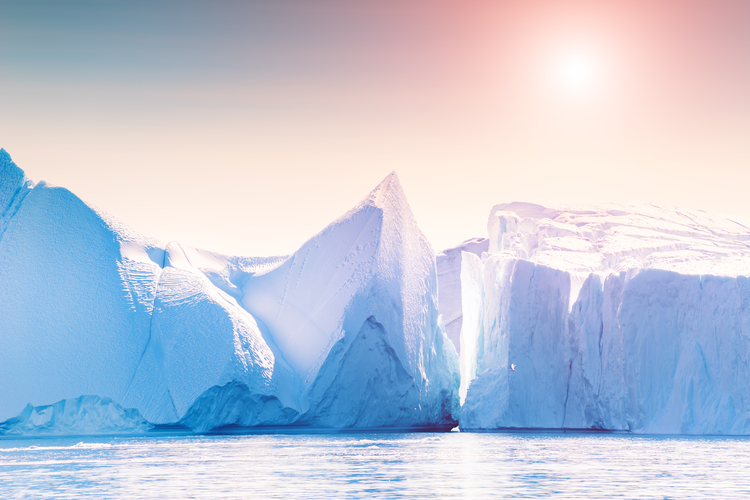
By 2060, scientists predict consistent summer sea ice will likely be a distant memory in the Arctic. Such a loss will have significant impacts on the climate. For example, without ice as a barrier, more heat could be transferred between the ocean and the atmosphere. Consequently, more moisture enters the atmosphere, leading to more powerful storms and greater rainfall.
In fact, one recent study – comprising scientists from 21 research institutes – found that the Arctic Ocean’s ice cover is predicted to drop below 1 million sq. km (an area typically considered to be ice-free) in summers before 2050, even if greenhouse gases are reduced significantly.
As well as this, the temperature gradient between the previously cold Arctic and warmer, southern latitudes will likely shrink. Scientists speculate this could create a less stable jet stream, leading to longer heatwaves, rainy periods, droughts and cold spells.
The future still offers a bleak projection. By 2100, without drastic cuts to emissions, the Arctic will be around 30 to 60 per cent wetter, with temperatures rising by 13C to 15C. At this point, winter sea ice may be in jeopardy, as it is declining in both thickness and quantity.
Climate change also poses a real threat to communities. Approximately four million people reside in the Arctic, with around two million being Russian and 500,000 being Indigenous peoples. 60 per cent of Alaskan native communities are ‘environmentally threatened’ by climate change, particularly those that still hunt for food. Thin ice and altered animal migrations mean hunters must travel farther for food.
How is geopolitics shaping the Arctic?
As climate change begins to thaw the Arctic, it will become navigable for several months each year. Some projections estimate it will become entirely navigable by 2100.
Such a scenario poses new opportunities for commercial shipping and natural resource extraction from competing countries. In total, eight countries have territory in the Arctic Circle, which begins at 66.5 °N (north of the equator): Canada, Denmark, Iceland, Finland, Norway, the Russian Federation, Sweden and the US. But three major players are vying for the Arctic and its resources: namely, China, Russia and the US.

China’s interest in the Arctic dates back to the 1980s, and it has keenly sought agreements aiming to establish the Arctic as one of its key shipping routes. This is pivotal for a country that relies so heavily upon shipping to export its manufactured goods. Using the Arctic route would reduce travel time for Chinese ships to Europe – and back – by up to 40 per cent.
If China chose to import energy from the Arctic, transportation costs could be lowered even more, alongside the benefit of shorter shipping times.
Russia is another major nation vying for the Arctic. It has the strongest military and political presence in the region, with 20 per cent of Russia’s land mass is in the Arctic Circle, including large cities. Around half of the Arctic area is the Russian coastline. As well as this clear foothold, the possibility of year-round shipping via the Arctic offers an optimistic future for Russia in terms of economic development.
Finally, the US has a significant stake in the Arctic. The US borders the Arctic via Alaska, acquired from Russia back in 1867. With the ambitions of China and Russia clear, the US has increased its interest in the region to counter strategic challenges. For example, the US’s 2020 military budget included funding for the construction of a port in Alaska in order to strengthen the US’s military presence in the Arctic.
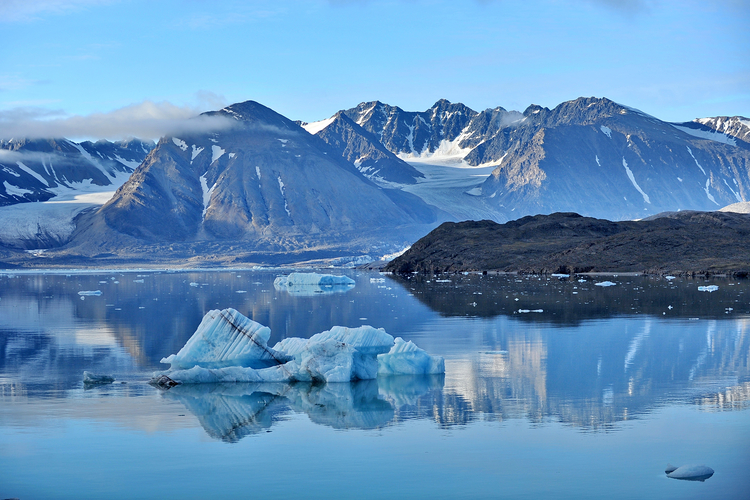
As well as interest piquing due to the opening of potential shipping routes, the Arctic also remains a region notable for its untapped oil resources. According to a 2008 estimate from the US Geological Survey, around 13 per cent – or 90 billion barrels – of the world’s undiscovered conventional oil resources lie in the Arctic.
However, accessing such resources remains a difficult task for many reasons. On Arctic lands, poor soil conditions mean sites excavating oil must need to adequately prepare themselves with appropriate equipment and structures to prevent sinking. Limited transportation access from the world’s manufacturing centres requires a larger inventory of spare parts to ensure reliability.
A much more pressing issue to the actual environment of the Arctic is its preservation in the wake of such activities. Environmental issues to consider include the protection of animal and plant species, as well as ensuring that offshore oil spills within ice floes can be appropriately managed.