New Coastal Adaptation Pilots aim to help at-risk communities in Yorkshire and East Anglia adapt to climate change-driven coastal erosion
By
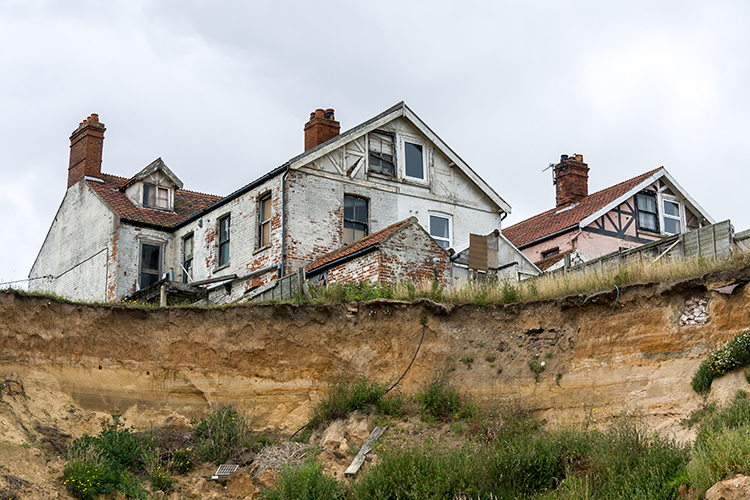
For the residents of Hemsby in Norfolk, coastal erosion isn’t a distant climate projection – it’s a present-day crisis. In the last month alone, an unprecedented series of winter storms and surges, including Storm Goretti in early January, triggered the loss of more than 10 metres of cliff in a single night, forcing the emergency demolition of 20 homes.
In an attempt to tackle the growing issue of coastal erosion, the UK Environment Agency has announced a £30million investment into ‘coastal adaptation pilots’, designed to help the nation’s most vulnerable communities prepare for a future impacted by sea level rise and increasingly frequent and intense storms. Under the new scheme, £18million of the total funding is earmarked for high-risk zones in the East Riding of Yorkshire, Norfolk, and Suffolk. These regions sit upon some of the fastest-eroding soft-rock cliffs in Europe.
Enjoying this article? Check out our related reads…
A coastal transition
The scheme marks a pivotal shift in strategy. While traditional coastal management often focuses on ‘holding the line’ with concrete sea walls, these new pilots acknowledge that in some areas, nature cannot be held back indefinitely. This includes:
- Selective property purchases: Buying out homeowners whose properties face imminent destruction.
- Long-term financing: Creating sustainable models to help residents relocate before their homes are lost to the waves.
- Community relocation: Moving vital infrastructure and community buildings further inland.
Beyond the large-scale buyouts, an additional £12million will be distributed to Regional Flood and Coastal Committees (RFCCs). These funds are intended for smaller, practical interventions. This includes testing early warning systems to alert residents to sudden erosion events – vital for areas where a single storm can claim several meters of land – and maintaining coastal tourism infrastructure to ensure local economies don’t collapse alongside the cliffs.
The pilot projects, which are scheduled to begin in April 2026, will require a local funding contribution from participating areas of 10 per cent, with officials hoping it can unlock £3m in additional investment. The Environment Agency will provide technical support to ensure that the hard-won lessons from Yorkshire and East Anglia can eventually be applied to other vulnerable regions.
‘Coastal erosion is one of the most challenging impacts of climate change, and we will always support our towns to adapt where the forces of nature make long-term defence impossible, says Floods Minister Emma Hardy. ‘This new government investment will help some of our most at-risk coastal areas take practical action now, while building the evidence we need to support coastal communities across the country in the decades ahead.’
According to the Environment Agency’s National Coastal Erosion Risk Map (NCERM), approximately 20,000 properties in England could be at risk from coastal change by the year 2105. Sea levels are projected to rise significantly, increasing the frequency of storm surges and the rate of cliff recession.