In the wake of Venezuela’s twin earthquakes, learn more about how countries come together to support the disaster-struck nation in a time of crisis.
By
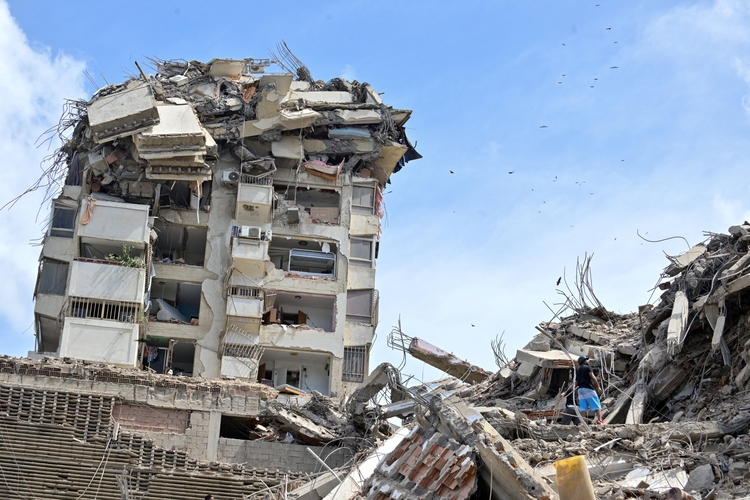
On 24 June, two earthquakes – of magnitude 7.2 and 7.5 – hit northern Venezuela. The death toll currently stands at 2,295, and more than 11,000 injured – figures only set to rise as rescue efforts continue. Around 12,000 people have also been displaced by the earthquakes.
Since the quakes, more than 214 aftershocks have been reported, and 774 buildings have been damaged or destroyed, with a state of emergency declared across the nation. Preliminary satellite assessments by the UN estimate the earthquakes caused direct physical damage of about $6.7billion – equivalent to around six per cent of Venezuela’s GDP.
Related reads…
Immediately following the earthquakes, aid from dozens of countries and organisations came to Venezuela. But what exactly can countries do to support a disaster-stricken nation? From deploying search-and-rescue teams to providing financial aid, here we look at how the world has supported Venezuela so far and which countries are particularly adept at certain types of aid…
Urban search and rescue
Following the quakes, urban search and rescue (USAR) teams from at least 27 countries worldwide – alongside 140 search dogs – were sent to Venezuela to help locate and extract possible survivors from collapsed structures. The teams with the highest number of personnel sent to the nation include Mexico (250), El Salvador (200) and Jordan (100). In particular, Jordan’s USAR team has been classified as ‘heavy’ – meaning it has the highest capability and is designed for large-scale urban disasters. Teams marked as ‘heavy’ can work for 24 hours a day and can be completely self-sufficient (food, water, accommodation) for at least 72 hours, so they do not burden the affected countries.
Other examples of ‘heavy’ USAR teams heading to Venezuela include those from Brazil, Czechia, France, Mexico, the Netherlands, Qatar, Switzerland, the UK, and the USA, highlighting the strength of these countries’ search and rescue operations.
These teams will have a range of specialised equipment to find lost or trapped people, including search cameras, listening devices and equipment to cut through masonry, metal and concrete. Some of these teams – including the UK’s – have previously worked on the ground in Türkiye and Morocco back in 2023, helping to rescue survivors from rubble.
On 27 June – three days after the initial earthquakes – US search and rescue personnel rescued a nine-month-old baby trapped underneath rubble alongside her mother. In addition, El Salvador’s personnel also successfully freed a 15-year-old and her dog trapped inside a collapsed building and rescued a woman trapped for 86 hours.
Financial aid
Another way that countries can help nations experiencing disaster is through financial aid. This can provide life-saving assistance and economic stabilisation, allowing for immediate emergency relief for food, clean water and medical care. Simultaneously, such support can also fund long-term reconstruction and actions to build future resilience against natural hazards and crises.
On 29 June, China announced a fresh package of financial aid to Venezuela, donating emergency supplies worth 100 million yuan ($14.7million). This announcement came after the European Union collectively mobilised $5million in emergency assistance for affected communities.
The UK has provided Venezuela with £2million in humanitarian funding to support immediate response and coordination.
Vatican media have reported Pope Leo has sent €100,000 to Venezuela for emergency relief from the Vatican’s charity fund.
US officials have also hinted that millions more in financial aid may be sent to Venezuela, on top of the $150million that the Trump administration has already committed to. This $150million comprises a $100million contribution to a UN humanitarian fund for Venezuela, as well as $50million to aid organisations already working in the country.
Removing social media blockades to aid rescue.
Prior to the earthquakes, Venezuelans had limited access to social media platforms such as X and YouTube, and the government also blocked some independent news websites. Such censorship arose from political tensions in 2019, and since then, service providers have increasingly blocked access to communications platforms and independent sources of information.
Immediately after the disaster, UN experts called for the ‘immediate’ unblocking of access to these platforms. Social media, according to these experts, is vital in search and rescue efforts, as many families post digital flyers with details about their relatives on Facebook, X and WhatsApp
‘The government saw a lot of pressure on social media for the unblocking of X and other platforms specifically because of the urgency to get information,’ said director of digital rights organisation VE sin Filtro, Andres Azpurua.p.
Since the quakes, some internet providers have unblocked the social media platform X as users seek information about relatives and ongoing rescue operations.
Medical equipment and personnel
In the wake of the disaster, Brazil has announced it will dispatch a field hospital, medication and medical supplies for surgeries to Venezuela, while El Salvador has pledged to send paramedics, 50 tonnes of equipment, medicines and basic supplies.
Cuban health workers are already mobilised and providing medical services across the country, according to Foreign Minister Bruno Rodriguez. The nation has long been known for its medical diplomacy – thousands of Cuban doctors work in healthcare missions around the world.
India has also sent a sizeable relief package to Venezuela, comprising two air force aircraft carrying a 41-member medical team, a field hospital, two portable hospitals, 30 tonnes of relief supplies and six tonnes of medicines. The medical team includes critical care specialists, trauma specialists, surgeons and experts in rescue and relief efforts.
USAID concerns
Last year, President Trump closed the US development agency USAID, a move that experts say has complicated humanitarian relief efforts in Venezuela.
‘Right now, the Trump administration has to coordinate a multi-agency effort when, in fact, an agency that already existed could have done that much more efficiently,’ said Latin America programme director at Chatham House, Christopher Sabatini.
Since the closure of USAID, the US has responded to disasters around the world, such as Hurricane Melissa in Jamaica back in October 2025. However, the scale and size of the recent earthquakes in Venezuela mean this is the biggest challenge the administration has faced yet.
‘They feel the pressure, and they’re throwing all the resources at this emergency in a way that hopefully delivers for people who desperately need help,’ said international affairs fellow at the Council on Foreign Relations Sam Vigersky.