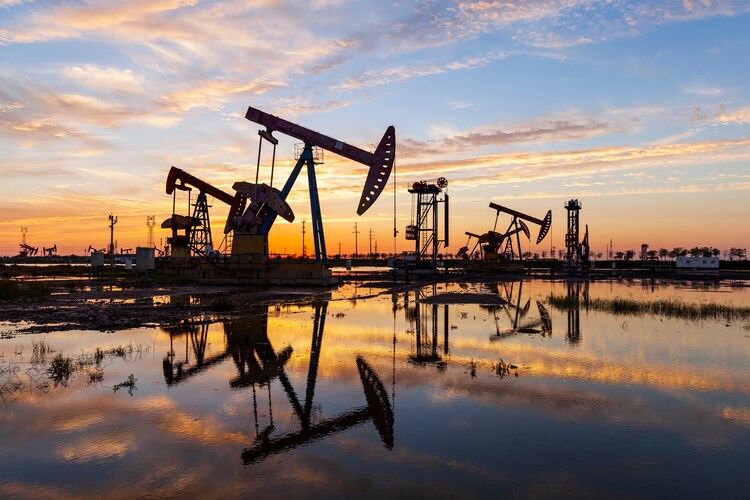
From Iraq to Canada, discover the five countries with the largest oil reserves across the globe
By
Supplying around 90 per cent of the fuel used in global transportation, oil powers everything from cars to ships, aircraft to trains. Although its main use is for fuel, oil can also be utilised for countless other reasons.
For example, the most commonly manufactured fibres are petroleum based, such as nylon, polyester and acrylic. Household goods, like cleaning products and domestic appliances, also contain oil. Medical equipment used today, such as heart valves and artificial limbs are constructed from petroleum, as well as pharmaceuticals like aspirins.
Of course, as climate concerns continue to intensify, cleaner alternatives emerge, but the dominance of oil as a component of everyday life is undeniable.
Enjoying this article? Check out our related reads…
Although oil is responsible for powering many aspects of the world, its supply is concentrated in a relatively small number of places. A limited group of countries controls the bulk of the planet’s proven reserves of oil, pumping this liquid through pipelines and transporting it in barrels to wherever it is needed.
Read on to find out the top five countries with the greatest oil reserves, in reverse order, using OPEC’s Annual Statistical Bulletin 2025.
5) Iraq – 145 billion barrels
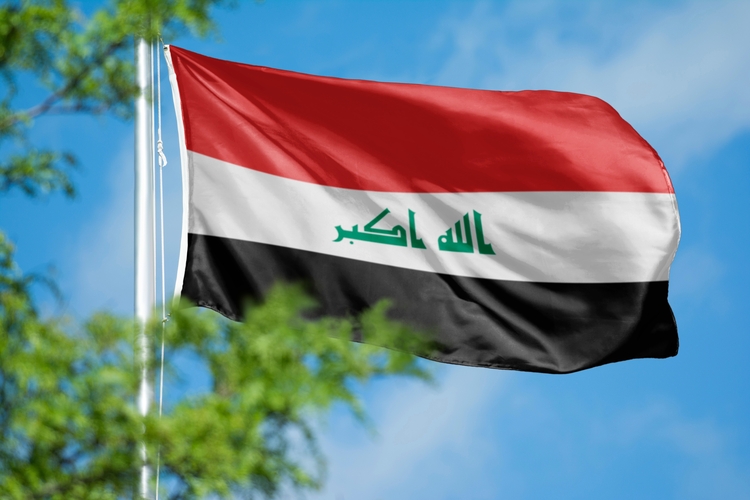
Iraq makes number five on the list, representing roughly eight to nine per cent of global oil reserves. Most of its oil is located in two main regions: southern Iraq (the Basra region) and northern Iraq (the Kirkuk region). Here, oil is concentrated in a number of small but very large oil fields, some of the biggest in the world.
Unlike Saudi Arabia, Iraq relies heavily on foreign oil companies to develop its fields. Major international companies have operated – and continue to work – in Iraq, including BP, Shell, CNPC and ExxonMobil.
Oil accounts for around 93 per cent of government revenue, and makes up the vast majority of export earnings. Consequently, this heavy reliance means the nation’s economic stability is closely tied to global oil prices.
4) Canada – 163 billion barrels
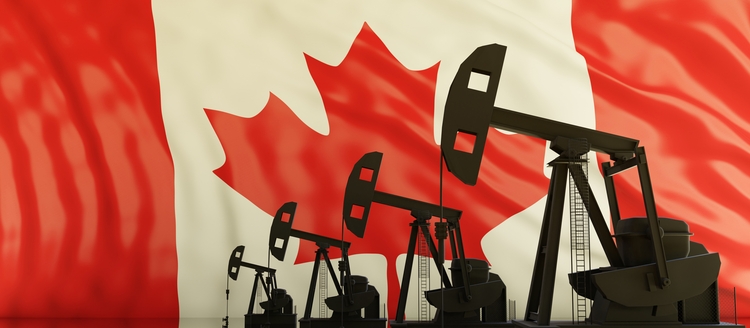
Canada holds roughly 10 per cent of all global proven oil reserves. Unlike the Middle East, where oil flows easily from wells, Canada’s oil is thick and sticky, and trapped in sand and clay. It is made from oil sands – a mixture of sand, clay, water and heavy, tar-like petroleum called bitumen.
At room temperature, bitumen behaves like peanut butter or cold molasses and will not flow naturally. As such, oil must be mined or heated underground before it can be pumped.
Almost all of Canada’s oil is concentrated in Alberta in three giant deposits: the Athabasca oil sands, Cold Lake oil sands and Peace River oil sands. Together, these regions cover about 142,000 square kilometres – roughly the same size as England.
In 2024, the Trans Mountain pipeline expansion opened a direct route from Alberta to the Pacific coast, allowing Canadian oil to be shipped to Asia. Since it opened, exports to China have also surged.
3) Iran – 207 billion barrels
Iran has roughly 12 per cent of global oil reserves and about 24 per cent of the Middle East’s reserves. Unlike Canada’s oil sands, Iran’s oil is mostly conventional crude trapped in giant geological reservoirs.
Most of Iran’s oil is located in the southwest of the country, particularly in Khuzestan Province, near the Iraqi border and the Persian Gulf. Key producing regions include Khuzestan Basin, Zagros Fold Belt and Persian Gulf offshore fields.
Each day, Iran produces roughly three to four million barrels a day, much of which flows through Kharg Island – a tiny, five-mile-long stretch of land nestled within the waters of the northern Persian Gulf. The island has made headlines in recent days as a potential target for Israeli or American attack. However, some analysts believe it is unlikely such an attack would occur.
2) Saudi Arabia – 267 billion barrels
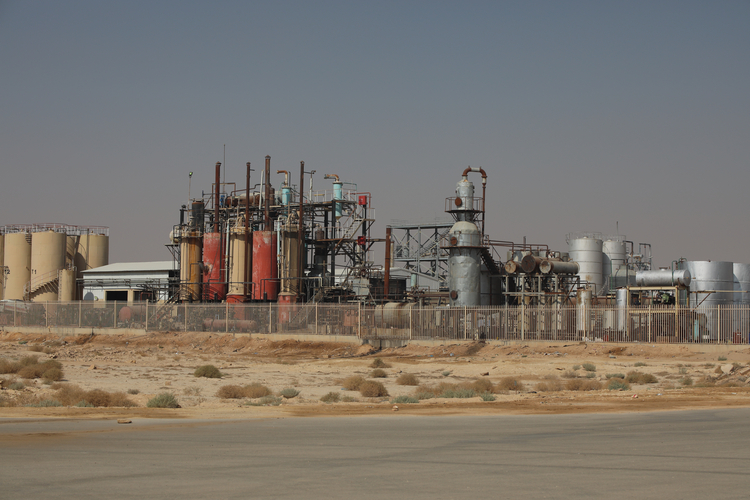
Saudi Arabia has some of the largest and most accessible oil reserves on Earth, representing around 17 per cent of proven global oil reserves. Most Saudi oil lies in the Eastern Province, close to the Persian Gulf.
The nation’s reserves are unusual because they are concentrated in a few, extremely large ‘supergiant’ fields rather than many small fields. Examples include Ghawar – the largest conventional oil field on Earth – as well as Safaniya and Zuluf.
Saudi Arabia’s oil industry is dominated by Saudi Aramco, the national oil company. The company manages the country’s oil resources and production capacity, which is currently around 12 million barrels per day of maximum sustainable output.
Oil is central to the Saudi economy – so much so that the nation is attempting to diversify its economy through its Vision 2030 economic strategy, including investment in renewable energy and non-oil industries.
1) Venezuela – 303 billion barrels

At number one is Venezuela, which holds the title of having the largest proven oil reserves in the world. Despite such an enormous resource base, it produces less than one per cent of the global oil supply.
This makes Venezuela a paradox in global energy: holding huge reserves but with relatively low production. Several factors explain its dramatic decline in oil production – from underinvestment and political instability to international sanctions and technical challenges of refining the oil.
Most Venezuelan oil lies in a massive geological formation called the Orinoco Oil Belt, a stretch of land covering roughly 55,000 square kilometres in central Venezuela. Here, the oil is extremely thick and viscous – like Canadian oil – which means it must be diluted with lighter petroleum products or refined before export. As such, this makes extraction much more expensive and technically complex than conventional oil production.