• Skip to main content
  • Skip to secondary menu
  • Skip to primary sidebar
  • Skip to footer
Geographical

Geographical

Official magazine of the Royal Geographical Society (with IBG)

  • Geographical Home
  • News
  • Features
  • Opinion
    • Climatewatch
    • Front Lines
  • Podcast
  • Travel
    • Discovering Britain
    • Passport
  • Culture
    • Book reviews
  • Quizzes
    • Crosswords
  • Choose Geography
    • University directory
    • Masters courses
    • Course guides
      • Climate change
      • Environmental science
      • Human geography
      • Physical geography
    • University pages
      • Aberystwyth University
      • Brunel University
      • Cardiff University
      • University of Chester
      • Edge Hill University
      • The University of Edinburgh
      • Newcastle University
      • Nottingham Trent University
      • Oxford Brookes University
      • The University of Plymouth
      • Queen Mary University of London
    • Geography careers
      • Charity/non-profit
      • Education & research
      • Environment
      • Finance & consulting
      • Government and Local Government
    • Applications and advice
  • Magazine
    • Issue previews
    • Subscribe
    • Manage My Subscription
    • Special Editions
    • Geographical Archive
    • Advertise with us
  • Subscribe
    • Direct Debit Changes

Hormuz closure could trigger global super-spreader event

22 July 2026
3 minutes

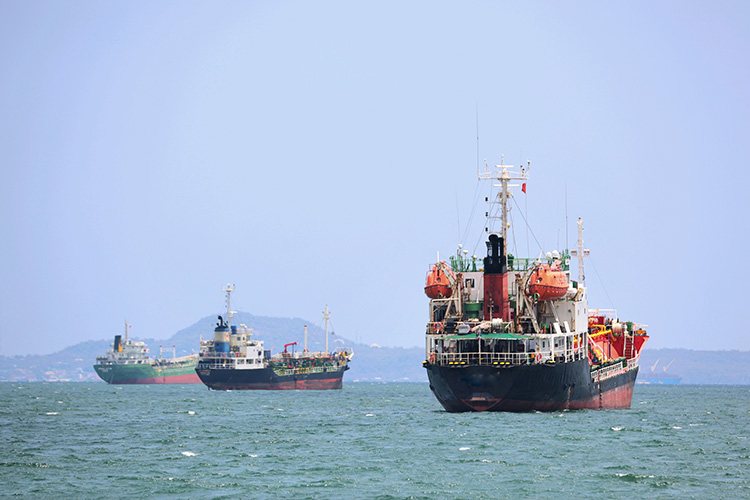
Boats waiting in the Persian Gulf. Image: Shutterstock

Scientists at the Woods Hole Oceanographic Institution warn thousands of stranded vessels could cause the spread of invasive marine life worldwide


An estimated 1,500 commercial vessels are currently anchored in the Persian Gulf amid a complete breakdown in diplomatic talks between the US and Iran. With many of the ships stranded since the Strait of Hormuz closed four months ago, scientists are now warning that conditions could be leading to a global marine bioinvasion ‘super-spreader’ event.

Most cargo boats spend less than two days in port, but the longer they remain stationary, the more they tend to accumulate communities of marine organisms – algae, barnacles, mussels and other invertebrates that can colonise and multiply on ship hulls. It often takes just 10 days for organisms living on static surfaces to reach a rapid growth phase. A new report, led by researchers at Woods Hole Oceanographic Institution (WHOI), says that when these vessels finally return to their normal trade routes, any marine species they’ve amassed could be transported around the world. 


Enjoying this article? Check out our related reads…

  • Why are whales stranding along Scotland’s coast?
  • Which countries are most dependent on oil flowing through the Strait of Hormuz?
  • Controversy over tropical ozone hole
  • Geo Explainer: The Great Blue Hole Belize
  • Tim Marshall on why blocking the Strait of Hormuz makes food more expensive

Modern shipping has long been recognised as one of the primary pathways for marine invasive species to spread. There have been previous incidents where ships have been laid-up – such as when the Ever Given ran aground in the Suez Canal in 2021, bringing traffic to a halt for six days. Research has linked the European invasion of the Australasian barnacle Austrominius modestus to the Second World War, when New Zealand ships spent extended layovers in English ports. But the scale and duration of the recent vessel lay-up is unlike anything previously documented, creating what the researchers call an ‘unprecedented’ global biosecurity challenge.

‘Marine invasive species have profound ecological and economic impacts on coastlines across the globe and are extremely difficult, if not impossible, to eradicate once they become established,’ says Carolyn Tepolt, a biologist at WHOI. ‘This disruption to global shipping has many repercussions and has also more quietly created ideal conditions to spread warm-water species to new ports.’

Phytoplankton blooms and sediment in the Persian Gulf. Image: NASA

Focusing on a ‘worst-case scenario’, the researchers highlight how conditions in the gulf – where harmful algal blooms have become a recurrent and escalating issue – have likely fostered stress-tolerant marine life adapted to high salinity, temperatures, and pollution. These organisms are more likely to survive transport and establish in new regions, where they can act as vectors for non-indigenous parasites and pathogens. 

While the International Maritime Organization recommends that vessels that have been anchored for more than 18 days undertake immediate action to manage biofouling, there are concerns that vessels – and crews – that have been stranded for so long will defer necessary maintenance until their next port of call. 

To avert a pending ecological crisis, the authors are calling for a coordinated global response that encompasses pre-departure estimates of biofouling, the identification of first ports of call, and heightened surveillance at high-risk ports. 
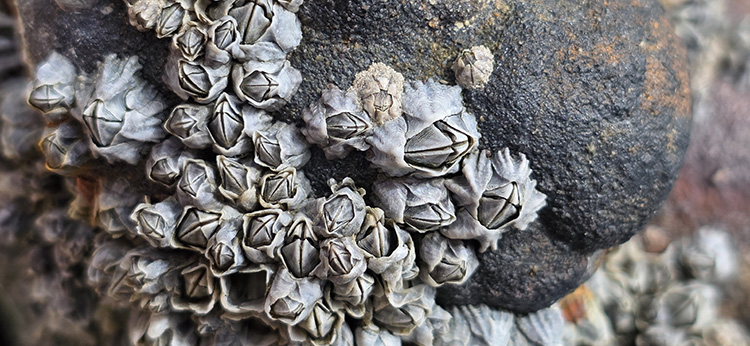
The range of the Australasian barnacle, Austrominius modestus, has spread from Denmark to Portugal. Image: Barry Stewart

Themes News

Protected by Copyscape

Primary Sidebar

SUBSCRIBE

GEOGRAPHICAL WEEKLY LOGO FREE - Sign up to get context, clarity and perspective in a noisy world, every Friday

Popular Now

Hand in ballot box

Brazil’s presidential election heads to runoff in late October

California coast

Kelvin waves: the ocean phenomenon raising sea levels on the US West…

Chinook salmon in water

Why Alaska’s Chinook salmon collapse threatens Yukon River communities

Wind turbines in field

Ministry of Defence objects to at least four wind farms

Barcelona, Spain - October 31st 2022 -

Barcelona’s new ‘Netflix-style’ algorithm hoped to combat overtourism

Footer

  • Facebook
  • Instagram
  • LinkedIn
  • Reddit
  • TikTok
  • Twitter
  • YouTube

Geographical print magazine cover

Published in the UK since 1935, Geographical is the official magazine of the Royal Geographical Society (with IBG).

Informative, authoritative and educational, this site’s content covers a wide range of subject areas, including geography, culture, wildlife and exploration, illustrated with superb photography.

Click Here for SUBSCRIPTION details

Want to access Geographical on your tablet or smartphone? Press the Apple, Android or PC/Mac image below to download the app for your device

Footer Apple Footer Android Footer Mac-PC

More from Geographical

  • Subscriptions
  • Get our Newsletter
  • About Us
  • Contact Us
  • Advertise with us
  • Privacy policy
  • Terms & Conditions

Copyright © 2026 · Site by Syon Media