The Strait of Hormuz continues to face disruption as tensions once again build between Washington and Tehran, with sizeable impacts for nations reliant on Middle Eastern oil
By
In mid-June, a ceasefire in the US and Israeli war with Iran led to commercial shipping increasing in the Strait of Hormuz. For a region that used to have one-fifth of all global oil supplies flowing through it, the chance to rebuild the shipping industry’s strength came as a sizeable relief. At the height of the blockade, traffic fell from about 100 vessels a day to roughly six, and more than 1,500 vessels were left waiting to pass through at any one point.
However, in the last few days, shipping has once again stalled after the US and Iran exchanged strikes in the region, halting the transport of goods including oil.
Iran has reportedly rejected efforts by both France and Oman to remove mines from the strait and safeguard international trade, as well as a suggestion by the UN’s International Maritime Organisation (IMO) to open a new shipping lane off the coast of Oman.
Enjoying this article? Check out our related reads…
According to a UN report released on Tuesday, 65 of 75 vulnerable economies are net oil importers, exposing nearly one billion people to increased fuel prices and adding more than $20billion to annual import bills as disruption only continues.
‘These shocks will be felt for many months, with developing countries bearing the heaviest impacts. I call on all parties to honour the ceasefire and redouble efforts,’ said UN Secretary-General António Guterres.
Clearly, some nations will be more impacted than others due to disruption to the strait’s oil-carrying capabilities. Here, we look at the top five countries most reliant on Middle Eastern oil, and how they are faring under the issues that the Strait of Hormuz is facing. To clarify, these nations are ranked in reverse order, with the percentage referring to the share of their oil imports from the Middle East.
5) Kenya – 77 per cent
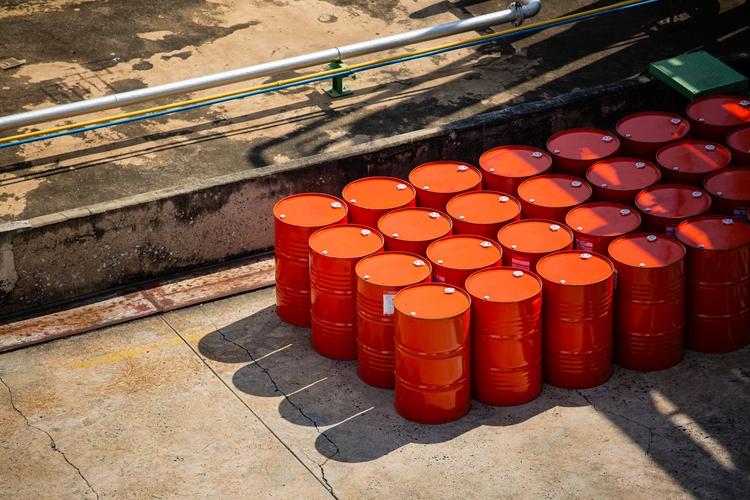
Kenya is the largest economy in eastern Africa and one of the most reliant nations on Middle Eastern oil, largely due to its growing demand in the buildings and transport sectors. Still, the nation is trying to limit its dependence through energy efficiency measures, electrification of its transport system and promoting biofuels such as sustainable aviation fuels.
On the ground in Kenya, retail fuel prices have already increased – with higher fuel costs meaning higher food, goods and service prices. In addition, the global shipping backlog means Kenyan businesses may face delays or loss of cargo if carriers decide to halt or reroute ships.
The ripple effects extend outwards from Kenya, though. Continued disruption to the strait could slow re-exports (Kenya exports Gulf fuel to its neighbours) and complicate supply chains.
4) Japan – 77 per cent
Japan has almost no domestic energy resources, despite being the world’s fourth-largest economy. It produces only around 15 per cent of the energy it consumes domestically, leaving it dependent on imports across all fuel types.
Consequently, Japanese refineries rely heavily on Gulf oil – especially since these refineries are built to process medium and heavy sour crude, the type of oil that the Gulf produces.
The UAE accounts for roughly 44 per cent of Japan’s crude imports, followed by Saudi Arabia (40 per cent), Kuwait (7 per cent), and Qatar (4 per cent).
Japan’s dependency on fossil fuels has also increased following the 2011 Fukushima disaster, where closures of reactor fleets forced utilities to replace nuclear power with an alternative.
3) Pakistan – 78 per cent
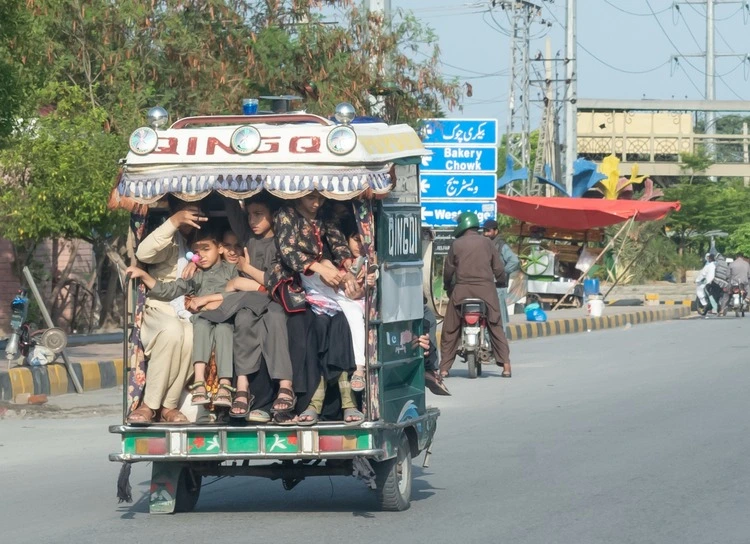
Pakistan imports the majority of its petroleum and petroleum products from Middle Eastern countries – mainly from the UAE, Saudi Arabia and Qatar.
Due to the disruptions in the Strait of Hormuz, fuel prices have risen in Pakistan, making transport and electricity generation more expensive.
Moving away from Middle Eastern oil would be difficult for the nation, which has long-standing diplomatic and economic ties with Gulf countries. These Gulf territories provide not only oil but also financial assistance to Pakistan. As such, departing from these partners could strain relationships. In addition, if Pakistan chose to import Russian or Iranian oil, that could complicate its relationship with the US.
The nation could choose to expand its hydroelectric projects to encourage domestic energy exploration, if disruption to the Strait of Hormuz continues.
2) Madagascar – 89 per cent
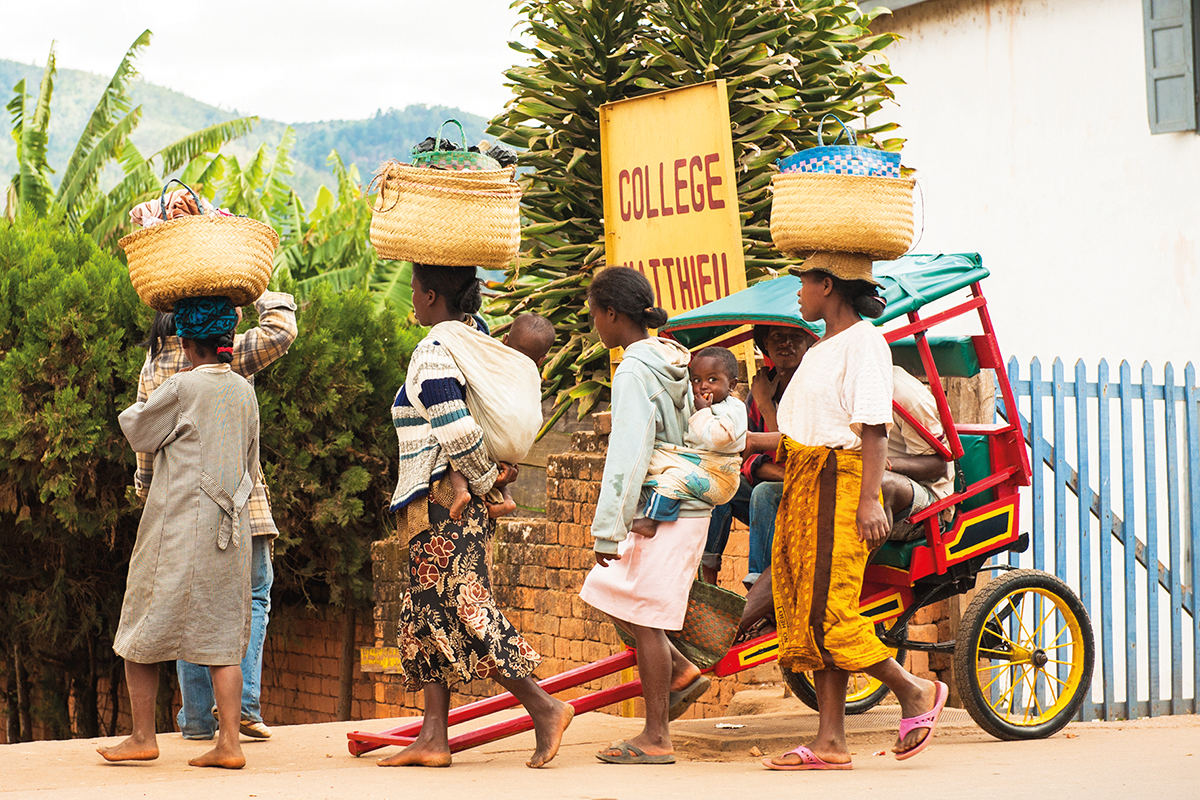
As the world’s fifth-poorest country, Madagascar has been left reeling following fuel shortages, which have in turn increased the cost of living. Before the war, a gas cylinder for cooking cost 4,000 ariary, but it now costs 10,000 (around £1.80 a day).
Back in April, Madagascar declared a two-week nationwide state of energy emergency after fuel shortages caused by the Strait of Hormuz blockades.
The island relies on oil – particularly from Oman – to produce most of its electricity.
Already, fuel prices have surged in the nation: jet fuel has risen in price by a staggering 74 per cent since the war began. This has complicated the efforts of an aviation charity, Mission Aviation Fellowship, responsible for ensuring that Madagascar’s most remote communities remain afloat.
1) Eritrea – 91 per cent
At number one is Eritrea, which is the most dependent nation on Middle Eastern oil. Rising oil import bills for African countries could lead to higher domestic inflation, as currencies weaken and costs for transport, food and oil goods increase.
Analysis from Zero Carbon Analytics found that Eritrea was among the top ten African countries most vulnerable if oil prices remain elevated. With a high dependence on imported fuel, and limited foreign currency reserves, it is likely Eritrea will quickly run out of money to pay for more expensive fuel.
To create more resilience to global fossil fuel shocks, African countries like Eritrea could accelerate electrification and use renewables like wind and solar.