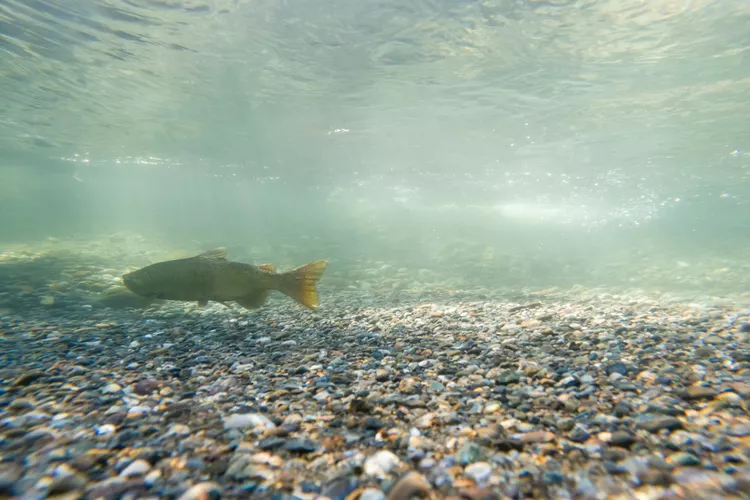
Chinook salmon have sustained communities along Alaska’s Yukon River for millennia. Tom Parfitt reports on a collapse that’s threatening both livelihoods and culture
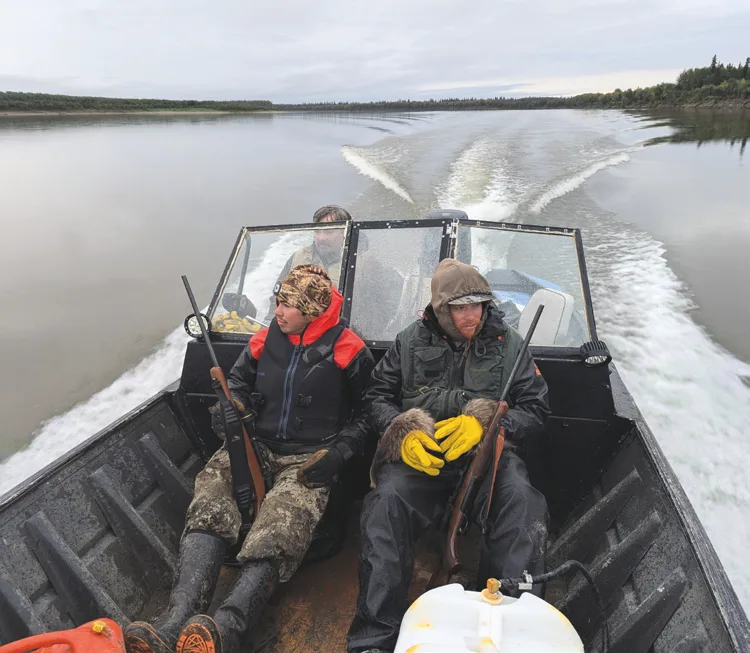
Deep in the boreal forest of interior Alaska, Westley Henry inspects the banks of the Koyukon River as he moves against the current in his aluminium Alweld boat, powered by a 90-horsepower outboard. A hundred metres away, a female moose and its calf nose out of a willow thicket. Further on, a beaver slides into the water.
‘This is where our camp used to be, on this bend,’ says Henry, 52, pointing to a mud slope backed by conifers and birch. ‘Grandma Bessie would sit up there on the bank cutting fish. Our people always lived by the river. It gave them everything they had — berries, meat, fish, everything.’

Back in the day, Henry and the other young members of his family got the processing of salmon down to 21 seconds a fish, separating each one into two fillets joined at the tail.
‘Once, there were fish camps all along here,’ says Henry, easing the Alweld’s throttle forward as he heads north, about eight kilometres from the remote Koyukon village of Huslia, itself reached only by bush plane from Fairbanks. ‘Eight or ten years ago, there were still a few left. Now there are none.’
The reason is a catastrophic fall in the number of salmon in the Yukon River and its tributaries, coupled with a recent and controversial ban on catching the Chinook that remain. Together, these have left many Alaska Natives struggling to feed their families.
It’s a crisis that threatens not only the diet of the 2,300 or so Native Koyukon people who inhabit a string of villages along the Yukon and Koyukon rivers, but the fabric of their existence. And that fact is inflaming a debate about whether, and how, the situation can be rescued.
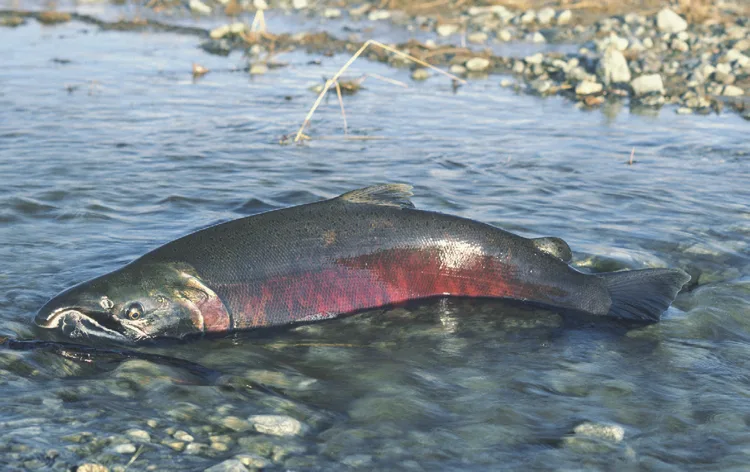
The Alaskan interior is often referred to as ‘hungry country’, in contrast to the bountiful resources on the coast. Historically, salmon was a principal source of nourishment, eaten fresh or dried and smoked for winter for the native peoples living along the Yukon and its tributaries. Today, around 12,000 people live in the region and more than 80 per cent are Indigenous. Teething babies chewed on strips to ease sore gums, while dried salmon tails were hung around children’s necks to ward off evil spirits. In his childhood, remembers Butch Yaska, 91, a Huslia elder, people netted kings (Chinook) as long as he was tall. ‘We would get enough salmon in ten days to last the whole winter,’ he says. ‘There are very few kings now and they’re much smaller.’
All types of salmon are declining in the Yukon River basin: Chinook, smaller pinks or humpies, cohos or silvers, sockeyes or reds, and chum salmon, traditionally used to feed the dog teams for which Huslia is famous.
‘When I was young, I used to cut about 2,000 fish a summer, mostly chum for the dogs,’ says Wilson Sam, 86, a legendary former musher who competed in the Yukon Quest. Today, active team owners such as Henry rely on expensive frozen beef and chicken brought in by barge. Human food delivered by plane to the village store is even pricier, and many Koyukon continue to shoot moose, caribou and other animals for their tables.
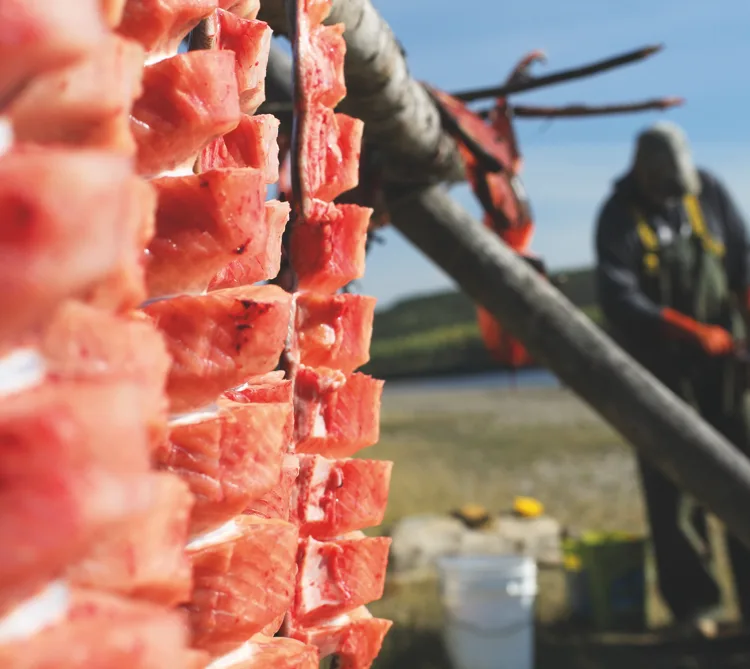
But the practice of gill-netting and processing fish at riverside camps for weeks or months every summer is all but gone, and with it the social rites that tied families and communities together. For generations of Koyukon youth, fish camp was a place of hard work and laughter, of hunting and bonding with siblings, of first loves and first adventures. Skills were learned and elders told stories by the fire as rack upon rack of fish cured in makeshift smokehouses.
Today, the odd tattered piece of tarpaulin or wooden frame slumping into the forest by the Koyukon River is the only physical signs of a way of life dissolving into memory. Stocks of salmon, particularly Chinook, began declining in the Yukon River basin in the 1990s and reached record lows by the 2020s, when numbers dropped dramatically. In 2024, Alaska and Canada agreed to a seven-year moratorium on Chinook fishing in the Yukon and its tributaries, covering one full lifecycle of the fish. The aim is to help the population recover, but for interior villages it has been a painful blow. Restrictions also apply to fishing for other salmon species.
Erik Schoen, a fisheries scientist at the University of Alaska Fairbanks, describes the status quo as a ‘humanitarian crisis’ for Native people in Alaska and Canada.
‘People in the Yukon River basin have been connected to salmon for over 12,000 years,’ he says. ‘So to go for a whole generation and not be able to teach your kids how you fish for salmon… It’s not just about protein in the freezer. It’s not just about food. It’s a big cultural loss for Indigenous communities. And it affects mental health.’
Jazmyn Vent, 25, a Koyukon activist from Huslia, believes the loss of salmon culture contributes to problems including alcohol and drug abuse, diabetes and suicide. ‘It’s impacting every aspect of our lives and not in a good way whatsoever.’
Experts point to several causes for the decline: industrial fishing in the Bering Sea; hatchery fish competing with wild salmon for food; warming oceans and rivers; a parasite associated with warmer water that damages salmon flesh; and the effects of mining gravel and sand beds along the rivers for gold, platinum and other minerals.
There are also concerns that commercial fisheries around the Alaska Peninsula and Aleutian Islands are intercepting chum that would otherwise return to western Alaskan rivers such as the Yukon. For Native communities, offshore trawler fishing, mostly for pollock, is particularly contentious. After Yukon salmon hatch in the gravel of the river and its tributaries, they migrate to sea, where they grow for several years before returning upstream to spawn and die in their natal streams.
Trawlers in the Bering Sea are allowed an accidental by-catch of Chinook salmon, including fish that originated in the Yukon. This represents less than one per cent of their overall catch, but many Alaskans believe the sheer scale of the industry means its impact remains significant.
Many residents of the interior see it as deeply unjust that commercial vessels are permitted to catch thousands of salmon incidentally while people living along the rivers can be prosecuted for catching fish around which their livelihoods and culture were built.
‘A lot of our advocacy is about salmon bycatch,’ says Vent, who works for the Yukon River Inter-Tribal Fish Commission, which campaigns to conserve and restore fish stocks and protect the traditional way of life associated with them.
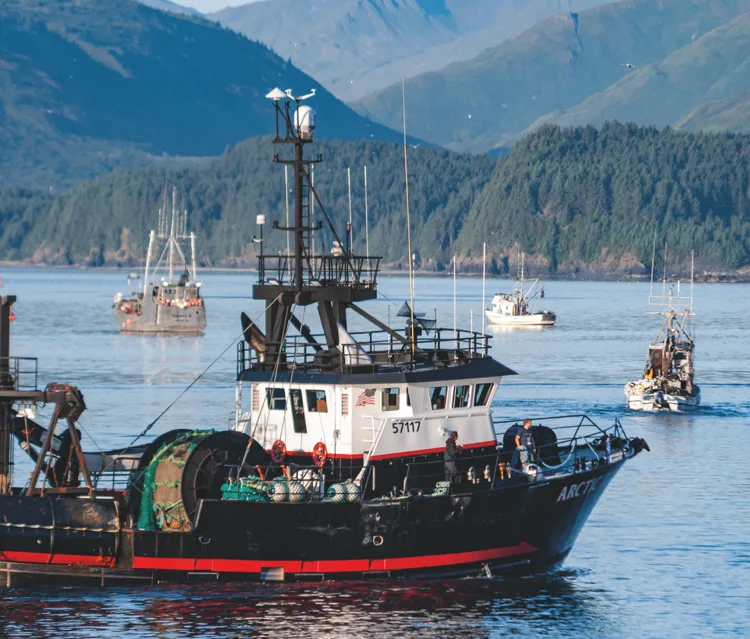
A group of scientists, Indigenous leaders and policy experts, including Schoen, has proposed that the pollock industry surrender part of its Chinook bycatch allowance so that villages such as Huslia could receive a limited harvest. Schoen describes the idea as a way of highlighting ‘the unfairness of how king salmon mortality in the ocean is seen as acceptable and not a threat to the population, whereas any fishing mortality in the river is seen as too much’.
Supporters of the moratorium say it will give Chinook populations time to recover for future generations. Meanwhile, another threat is looming over rivers farther north.
In October 2025, President Trump approved plans to advance the proposed Ambler Road, a 340-kilometre access route linking mineral deposits in Alaska’s interior with the Dalton Highway. The road would cross wilderness north of Huslia, intersect the migration route of the Western Arctic caribou herds and cross thousands of streams.
Environmentalists and Koyukon activists fear the project could affect both terrestrial wildlife and salmon habitat. ‘I’m worried about contaminants from the dust that can get into the water systems and then move downstream,’ says Kevin Fraley, a fisheries ecologist at the Wildlife Conservation Society in Fairbanks. ‘And you also have the risk of a big spill at one of the bridge crossings.’
Salmon may also struggle to pass through road culverts if they become blocked with sticks and sediment.
In Huslia, a scattering of single-storey houses and cabins sits on a high, sandy bank of the Koyukon, hemmed in by forest. Life here is tough for the 300 or so residents, and people are accustomed to hardship. The cost and difficulty of getting goods to the village make self-reliance essential, and opinion on the Ambler Road is divided. Some residents fear environmental damage; others believe it could bring jobs and reduce freight costs if transport links edge closer to the village.
Some fishing continues for permitted species. Behind his house, Floyd Vent Sr watches as his wife, Joyce, cuts sheefish, whitefish and pike on a wooden table smeared with scales. Non-salmon fish can still be caught using methods that reduce the likelihood of accidentally taking salmon.
A reasonable number of salmon were still moving through the river five to seven years ago, says Vent Sr, but there were ominous signs. One hot summer, hundreds lay dead on the river bars and nothing touched them.
‘No crows, no seagulls, no bears eating them up like normal,’ he says. ‘They just rotted.’
Vent Sr sees some logic in the moratorium. ‘We can’t clean out the salmon. Everyone wants them right up to the mouth of the Yukon.’
There are some encouraging signs. Sheefish have been plentiful in recent years and Huslia fishers landed some huge pike last season. Fraley says NGOs have also carried out restoration work across the Yukon drainage to improve habitat for juvenile salmon and increase their chances of survival.
Interior villages receive donations of sockeye caught in Bristol Bay and flown in — an uncomfortable reversal for communities that once depended on their own abundant salmon runs. None, residents say, has the rich, oily taste of the kings that the Koyukon cherish.
What can be done?
‘It’s pretty hard to say now. Global warming, the trawlers in the ocean…’ Vent Sr trails off. ‘I just wish we could get our fish back. A lot of elders are getting older and older and they haven’t been eating fish. That’s a big loss to us. That’s part of our diet there. Part of our life. Has been forever.’
This story was supported by the Pulitzer Center.