The combination of extreme climate events, sea-level rising and land subsidence could create larger floods in coastal cities in the future
By
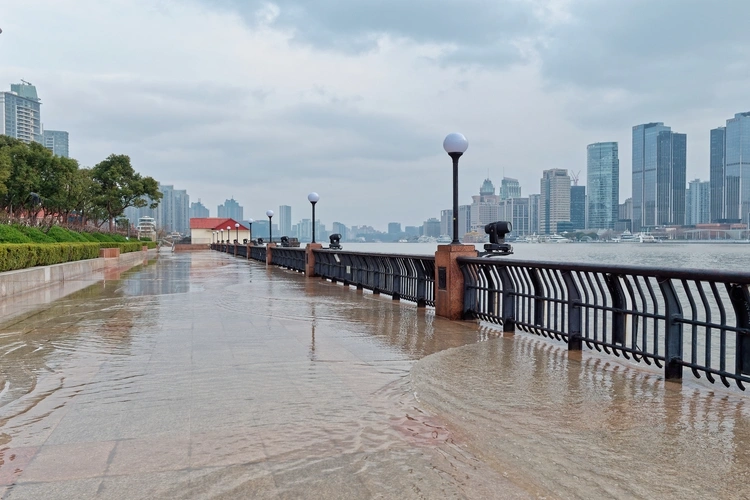
Low-lying deltas are home to some of the world’s fastest-growing cities. However, they’re becoming increasingly vulnerable to flooding caused by storms. Floods are motivated by combinations of tide, storm surge, wave, river flows and rain, and extreme flooding happens when multiple sources happen at the same time. For example, having a high river flow as well as heavy rain.
New research reveals how the combination of extreme climate events, sea-level rising and land subsidence could create larger and deeper floods in coastal cities in the future. The research was published in the journal One Earth and is the first comprehensive analysis of flooding in a delta city.
Enjoying this article? Check out our related reads…
The study – carried out by researchers from the University of East Anglia (UEA), Shanghai Normal University and the University of Southampton – focused on Shanghai, which is under threat from flooding caused by large typhoons and storms producing storm surge and waves. When these events occur simultaneously with other causes of flooding, they create catastrophic floods, as seen in 1997 with Typhoon Winnie.
Using an atmosphere, ocean, and coast model (AOCM) of the Shanghai region, the team took ten historic typhoon events that produced significant floods and simulated how they will change over the next 75 years – until 2100 – with different amounts of climate change and land subsidence.
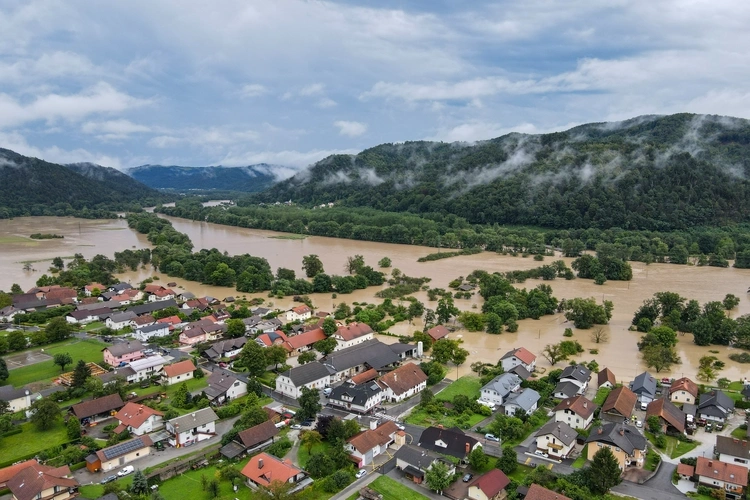
The study analysed different causes of flooding in Shanghai and found that if considering climate, sea-level rise and land subsidence, by 2100 the floods of Shanghai could expand in size by up to 80 per cent and be much deeper.
To avoid a disaster, the authors say a major adaptation effort is required. This would include raising defences and constructing mobile flood barriers, like those seen at the Thames Barrier in London. The researchers say that the danger is not fully acknowledged. Shanghai and other deltaic cities must be equipped with a layered line of defence, rather than just a single defence mechanism.
However, there is also a risk of ‘catastrophic failure’ of defences due to the rising water levels. This failure is especially prevalent due to the combination of subsidence, sea-level rise and higher surges during typhoons, as seen during Hurricane Katrina, in New Orleans, 2005.

Lead UK author, Professor Robert Nicholls, of the Tyndall Centre for Climate Change Research at UEA and University of Southampton, said: ‘These findings have wider implications for all coastal cities and especially those built on deltas like Shanghai.’ Professor Nicholls added, ‘Such analyses are critical to anticipate and support the significant adaptation needs in these cities.’
‘The response to this challenge will almost certainly be raising of defences as Shanghai and most delta cities are already defended. However, rising water levels, especially due to the combination of subsidence, sea-level rise and higher surges during typhoons raise the prospect of catastrophic failure and large, deep floods if the defences fail,’ said lead author Professor Min Zhang of Shanghai Normal University.
Which countries have the worst flooding?
The countries with the overall highest flood risk are China (394.8 million individuals at risk, or 27.5 per cent), India (389.8 million individuals at risk, or 27.7 per cent), Bangladesh (94.4 million individuals at risk, or 57.5 per cent), Indonesia (75.7 million individuals at risk or 27 per cent) and finally, Pakistan (71.8 million individuals at risk or 31.1 per cent).
The 1931 floods in China are often called the deadliest floods in history. The floods affected the Yangtze River, Yellow River (Huang He) and Huai River. Caused by torrential rainfall and snowmelt, the floodwaters submerged massive areas equivalent to the size of England and half of Scotland. The floods affected the lives of 52 million people and killed as many as two million from drowning, famine and disease, making it not only the biggest flood, but also the most devastating.