WWF objects to MSC certification of Antarctic krill fishery and urges establishment of network of Marine Protected Area in Southern Ocean
By
WWF has lodged an objection with the Marine Stewardship Council (MSC) calling for an immediate review of the certification of the Antarctic krill fishery until precautionary fisheries management measures are agreed.
The organisation argues that the Antarctic krill fishery is causing localised depletions of krill in the Antarctic Peninsula and Scotia Sea region, impacting on other key species that depend on krill for survival such as humpback whales. Recent studies have shown that reduced krill availability can lead to fewer pregnancies – and increased risks of viability – for humpback whales.
Enjoying this article? Check out our related reads…
The Antarctic and Southern Ocean Coalition (ASOC) also submitted an objection to the recertification, citing serious concerns about growing industrial fishing pressure and dramatic climate-driven impacts on the ecosystem.
‘Our objection is about ensuring that the environmental impacts of the krill fishery have been accurately assessed. In this case, we don’t think that the assessment fully analysed the unique realities and risks of a fishery that operates in one of the most climate-sensitive ecosystems on Earth,’ said executive director at ASOC Claire Christian.
‘MSC claims that its label only applies to fisheries with high environmental standards. This case highlights a clear mismatch between the certification and the contemporary reality of the Antarctic krill fishery,’ Christian continued.
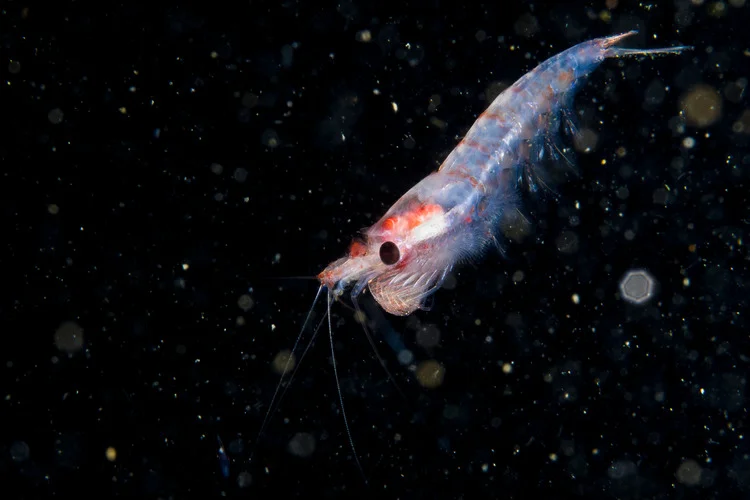
The Antarctic Peninsula is one of the fastest warming regions on Earth, and the location of a large-scale industrial krill fishery. Antarctic krill are a keystone species, forming the foundation of life in the Southern Ocean, providing the bedrock of the ocean’s food system for animals such as seals, penguins, whales and seabirds.
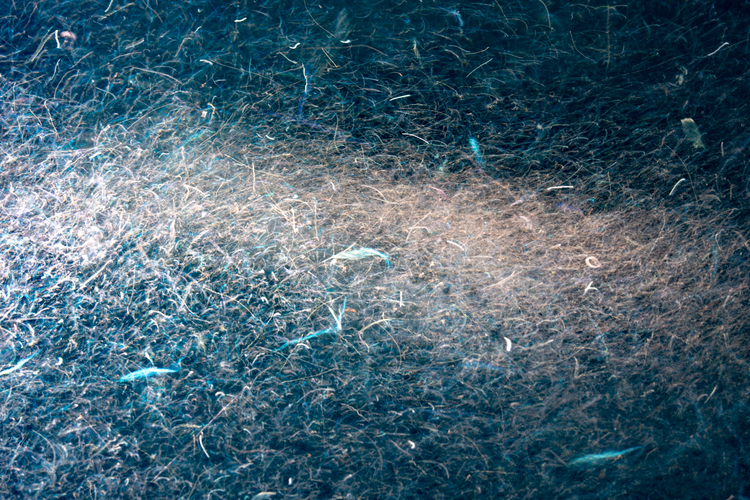
However, climate change is projected to drive major fluctuations in krill abundance. As such, WWF warns harvesting must be more carefully managed. There is growing evidence that fishing operations concentrated in small areas are having a major impact on reliant species.
Despite this, at the annual meeting of the Commission for the Conservation of Antarctic Marine Living Resources (CCAMLR) in October last year, there was no agreement on short- or long-term improvements to the krill fishery or designating a new marine-protected area in the Antarctic Peninsula region.
To ensure safe and sustainable fishing of this vital species, WWF is calling for CCAMLR to update the krill fisheries management and establish a marine-protected area in the Antarctic Peninsula.
Changes to management would include spreading out the spatial concentration of fishing vessels to reduce competition with krill predators such as whales;
define a highly precautionary approach to catch limits, that incorporates climate change forecasting; strengthen data collection to close gaps on krill and krill predator and tighten bycatch mitigation measures to regulate setting of nets within a defined distance of actively foraging wildlife.
Why are krill so important?
In the world’s oceans, there are more than 85 species of krill with a collective biomass of more than 500 million tonnes. Since the 1970s, though, krill populations have been declining sharply, by around 80 per cent.
Krill help the climate by consuming both phytoplankton and algae at the water’s surface. Once full, they sink deep into the cold water and release carbon as faeces on the seafloor. Throughout their lifetime, they repeat this process, sequestering carbon like a conveyor belt. Each year, they remove an estimated 23 million tonnes of carbon in the Southern Ocean – the equivalent of the carbon produced by about 35 million gas-powered cars.
As well as mitigating climate change, krill are also the primary food source for the wealth of wildlife in Antarctica. They provide 96 per cent of calories for seabirds and mammals in the Antarctic Peninsula alone.