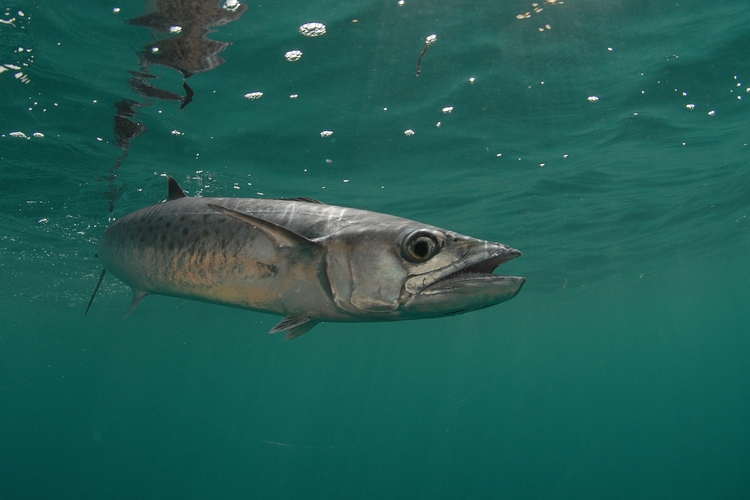
As Waitrose cease to sell mackerel due to concerns about overfishing, we look toward the state of fisheries nationwide
By
This week, Waitrose announced that it would cease to source fresh, chilled or frozen mackerel by 29 April due to concerns about overfishing. The supermarket chain said it was the first UK supermarket to suspend mackerel sales, adding it would only start restocking the fish ‘once it meets our high sourcing standards’.
In September, the International Council for the Exploration of the Seas (ICES) recommended that catches should be cut by 70 per cent to allow mackerel fish to reproduce. Back in December, the UK, Norway, the Faroe Islands and Iceland agreed to cut mackerel catches by 48 per cent – but Waitrose said this was not enough.
Enjoying this article? Check out our related reads…
Clearly, mackerel fisheries are being overfished in the UK – and other fish stocks are also critically low or being overexploited. According to analysis conducted by Oceana, one in six of all UK stocks is in a critical condition, yet still being fished beyond safe limits, risking total collapse. Overall, populations of fish such as cod, herring and mackerel are still being ‘grossly mismanaged’ by politicans, the study reveals.
British fish stocks have been subject to growing pressure for decades, but during the Brexit campaign some politicians promised leaving the EU would allow the UK to take control. The reality, according to ocean experts, is much bleaker: in the five years since leaving the EU, politicians have set catch limits too high, allowing trawlers to plunder stocks.
Only 41 per cent of the UK’s commercial fish populations have been found to be healthy, with many others –such asskates – so historically depleted that they have disappeared and no longer appear in statistics.
In total, five of the UK’s top ten fish stocks – North sea cod, Southern North Sea crab, North Sea herring, North-east Atlantic blue whiting and North-east Atlantic mackerel are all overexploited.
The North Sea cod is now at such low levels that the International Council for the Exploration of the Sea (ICES) advised a zero catch quota to safeguard the future of the cod fishery. Still, the fish remains overexploited.
Out of anywhere in the UK, the Irish Sea is the worst affected region – with four out of ten of its stocks overfished, up from a quarter just five years ago. In the Celtic Sea, quotas for cod in 2024 were set higher than the estimated number of adult fish left.

In contrast, the West of Scotland remains the healthiest region with 62 per cent of stocks assessed as healthy and only 12 per cent overfished.
Despite fish being generally overexploited, recovery is possible. Healthy stocks – such as those of western Channel sole and North Sea plaice – have recovered under catch limits set in line with scientific advice. This shows that sustainable management is viable, and benefits both the environment and the economy.
However, crucially, the UK currently has no overarching recovery plan or legally binding timeframe to end overfishing.
‘The Department for Environment, Food and Rural Affairs (DEFRA) are working with the fishing industry to promote British seafood and manage stocks sustainably – and has announced a brand new £360m fisheries and coastal growth fund to drive growth in the sector,’ said a DEFRA spokesperson.
‘We are committed to restoring our stocks to sustainable levels and have made significant progress over the past five years, while continuing to support the long-term viability of our domestic fishing industry.’