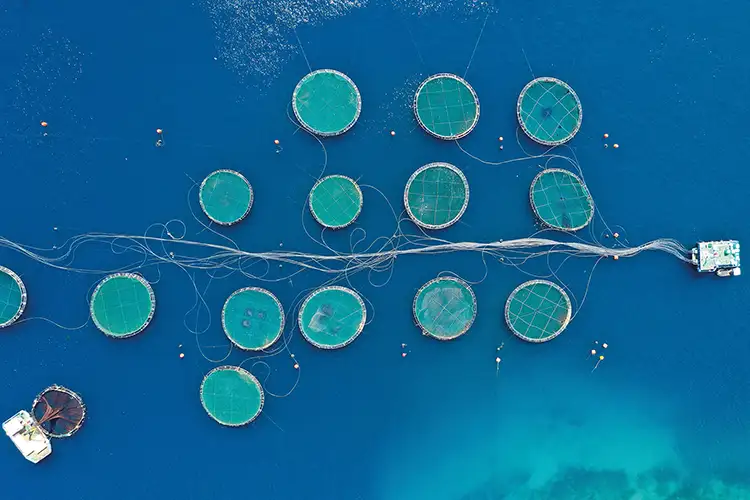
As demand for aquatic food soars, the world’s fish stock are approaching their limits. Aquaculture is stepping in, but ocean ecosystems are feeling the strain
By
The good news is that, for six decades, fish and other aquatic food have played a key role in moving towards the achievement of the UN Sustainable Development Goals, contributing more than ever to food security, improved nutrition and poverty eradication. The UN Food and Agriculture Organisation (UNFAO) says global consumption of aquatic foods (excluding algae) has increased at an average annual rate of three per cent since 1961 – almost twice that of annual world population growth. Global per capita consumption of aquatic food is expected to rise by a further 15 per cent by the end of the decade, reaching an average of 21.4 kilograms per person per year by 2030.
While the total production of aquatic animals in 2020 was 30 per cent higher than the 2000s average and more than 60 per cent above the 1990s, this increase hasn’t come from wild fishing. The catch from capture fisheries has barely changed, hovering around 90 million tonnes since the 1990s. According to Tony Long, chief executive of Global Fishing Watch, this reflects a hard limit: ‘Wild stocks are at their limit of exploitation. The global fishing industry plays a critical role in feeding the world, but it can also pose serious environmental risks when not managed responsibly. Unsustainable fishing practices can deplete fish populations, damage delicate marine habitats and disrupt the ecological balance of our oceans.’
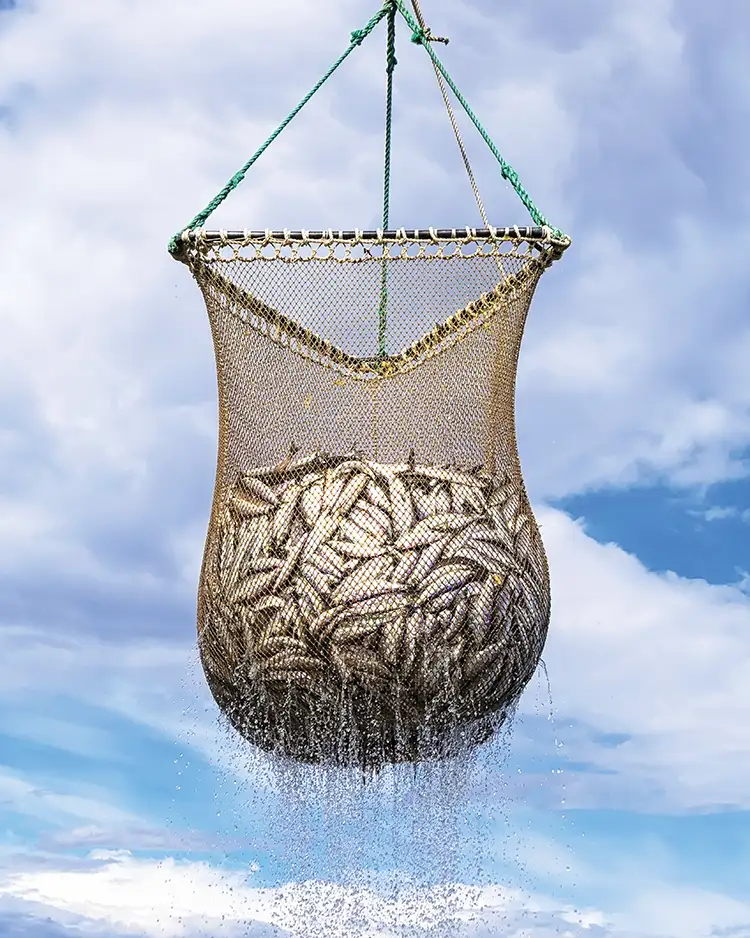
In 1974, 90 per cent of global fish stocks were within biologically sustainable levels. By 2021, the figure had fallen to 62.3 per cent, and the share of stocks being fished at unsustainable levels has nearly quadrupled. ‘Expansion from the wild-capture sector in its current form is not a viable long-term option,’ says Robin Davies of WWF International. Instead, the growth in fish consumption has increasingly been met by aquaculture, which increased from 111 million tonnes in the 1990s to 185 million tonnes in 2022.
Per capita consumption varies widely across regions. In Africa and Latin America, average consumption is around ten kilos/person/year, while in Asia it nears 25 kilos/person/year. China is by far the world’s top consumer, accounting for almost 60 million tonnes – more than 36 per cent of global consumption in 2021, according to the UNFAO. Other top consumers include India, Indonesia, the USA, Japan and Bangladesh. In all, just ten countries account for 70 per cent of the world’s aquatic animal food consumption. Asia accounts for 84 per cent of fishers and fish farmers, while the continent operates 2.68 million vessels – around two-thirds of the global fleet. Globally, around 21 per cent of those involved in fisheries are women.
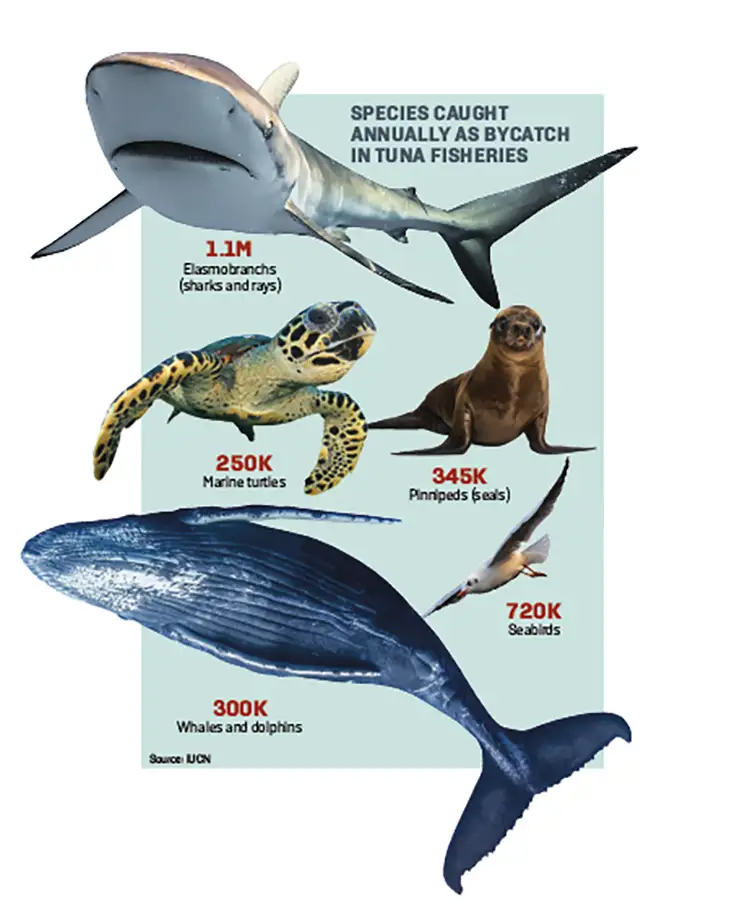
Overfishing isn’t the only threat to marine stocks, says Manuel Barange, UNFAO assistant director-general and director of the Fisheries and Aquaculture Division. ‘Aquatic food systems today face several challenges,’ he says. ‘Rising temperatures, ocean acidification and shifting freshwater flows are altering species distributions, disrupting habitats and reducing the overall productivity of aquatic ecosystems. These climate-driven pressures are compounded by land and sea-use change, wastewater discharge, agricultural runoff, and pollution from both terrestrial and aquatic sources. These degrade ecosystems and threaten the long-term sustainability of fisheries.’ In addition, he adds dryly, ‘fishing itself is an extractive activity – it can have environmental impacts’.
In an attempt to balance the critical dependency humans have on marine resources with ecosystem protection, the UNFAO is pushing for what it calls a ‘Blue Transformation’, with the ambitious goal of bringing 100 per cent of fisheries under effective management worldwide. ‘Too often, ocean sustainability is framed as a choice between feeding people and protecting the ocean,’ says Barange. ‘With over 700 million people suffering from hunger and nearly three billion unable to afford a healthy diet, sustainable aquatic food systems are essential.’
Improving the health of the world’s oceans was the focus of a major conference in Nice, France, this year, which sought to secure higher protection for overfished marine areas. Nearly 200 countries – but not the USA – attended. A key aim was to ratify a High Seas Treaty to establish a legal requirement to put 30 per cent of the ocean into protected areas and compel nations to contribute at least US$72 billion to fund the effort. By the end of the conference, 51 nations had ratified the treaty. With 60 required for ratification, the threshold is expected to be reached by year-end.
Action is needed. ‘Overfishing is a serious but uneven challenge,’ says Barange. ‘Fishing can impact the environment but the extent depends on local context, including the type of gear used, habitat sensitivity and the strength of governance.’ While the UNFAO says 93 per cent of stocks in the northeast Pacific are sustainably fished, the Mediterranean remains the most overfished sea on the planet. Vast swathes of African waters – and the high seas just beyond African Exclusive Economic Zones – are under intense pressure from foreign, distant-water fleets. Only 47 per cent of stocks in the eastern central Atlantic are sustainably fished. In low-income countries, says Barange, ‘fisheries are central to food security and nutrition, employment and poverty reduction – particularly through small-scale and artisanal operations’. Yet with limited institutional capacity, fragmented governance and major data gaps, ‘these areas face steeper trade-offs and tighter constraints’.
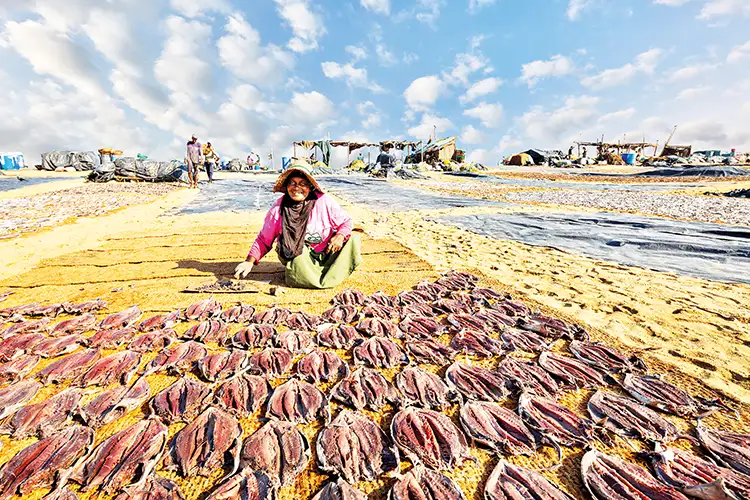
Deep-sea species, such as highly migratory sharks, remain highly vulnerable – often caught as bycatch in tuna fisheries. ‘Globally, it is estimated that 1.1 million elasmobranchs [sharks and rays], 720,000 seabirds, 345,000 pinnipeds, 300,000 cetaceans and 250,000 marine turtles are caught as bycatch each year,’ says Davies. Many of these species are endangered and protected, while some – such as the vaquita, eastern Pacific leatherback turtle and Māui dolphin – are on the brink of extinction, according to the IUCN.
Scrutiny has focused on bottom trawling – described as efficient by the fishing industry but apocalyptic by campaigners, who point to the indiscriminate way it scoops up species. ‘Bottom trawling, longlining – with lines stretching up to 40 kilometres and bristling with hundreds of baited hooks – and drifting gillnets are all notoriously unselective techniques,’ says Long. ‘Methods like bottom trawling not only destroy seafloor ecosystems but also disturb sediment that stores carbon, potentially accelerating climate change.’
Trawling accounts for 40 per cent of global fisheries production and, when poorly managed, can devastate marine ecosystems. ‘Four million fishing vessels ply the ocean, and many are equipped with technologies that make it easier to locate and catch fish,’ says Davies. ‘That reality, combined with insufficient fisheries management and enforcement, has maxed out some stocks and depleted others.’
The practice was highlighted in Oceans, a film presented by Sir David Attenborough, which showed the devastation caused by heavy, toothed metal sleds dredging the seabed. Ahead of the Nice conference, Sir David said he was ‘appalled’ by the damage caused by certain fishing methods and hoped leaders attending would ‘realise how much the oceans matter to all of us’.