Tristan Kennedy considers how photography can help us recognise the effects of a changing climate
Autumn has come early to the woods where I live in northern Italy. I’m writing this at the start of September, and looking out of my window I can already see speckles of orange and yellow leaves among the sea of green. In the vineyard next door, the grape picking started several weeks early. Meanwhile, my neighbour on the other side has grown such a bumper crop of tomatoes over the summer that he can’t give them away fast enough.
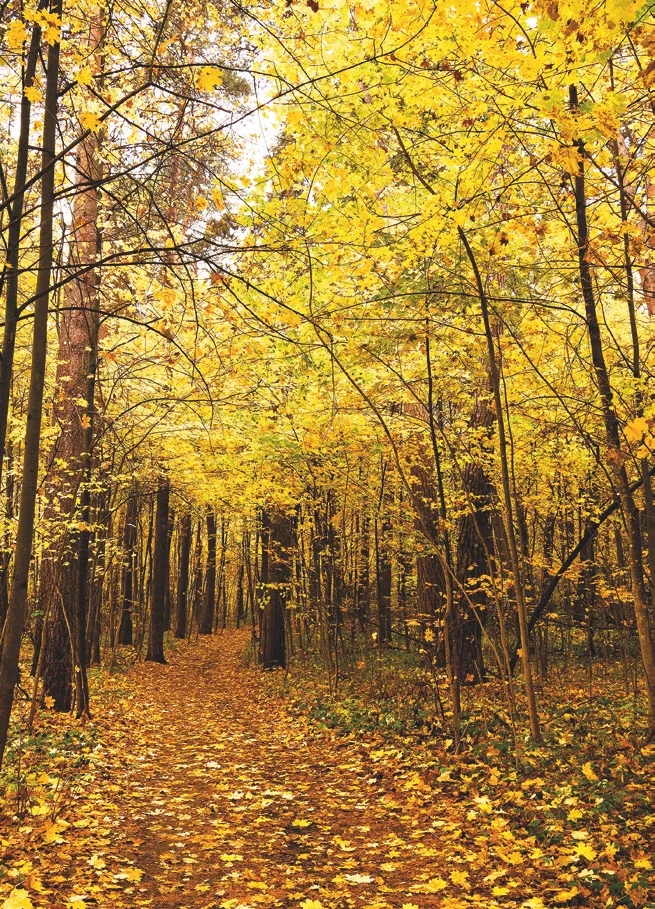
As a keen photographer, autumn is one of my favourite times of year. With the sun sinking lower in the sky, the golden hour seems to last longer, and the patchwork colours of the trees provide a backdrop that automatically makes any shot look more interesting. But as much as I love shooting in autumn — and as much as I’m appreciating my neighbour’s tomatoes — it’s hard to greet the early arrival of this year’s season with anything other than dismay. The underlying reason for autumn’s premature appearance is, of course, climate change. The summer of 2026 was one of the hottest ever recorded across much of Western Europe, and the hottest ever in the UK, according to the Met Office.
Enjoying this article? Check out our related reads…
Fast-ripening Chardonnay might not sound like the worst thing in the world, but grapes become too sweet if they’re left on the vine when it’s hot. Forests go yellow prematurely because the trees are stressed and struggling to cope with unseasonably warm temperatures. And although my neighbour had enough water to keep his tomatoes healthy in the heat, there are plenty of farmers around Europe who’ve watched their crops wither this summer — or, worse still, burn to a crisp in the wildfires that have swept across large swathes of the continent.
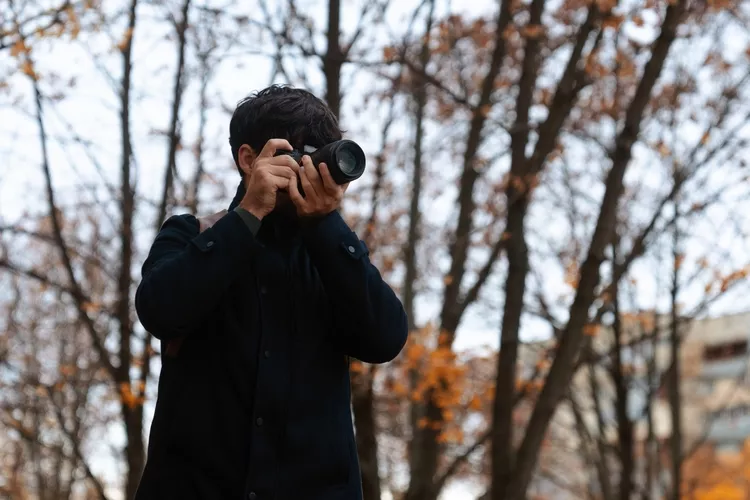
Compared with the genuine catastrophes caused by the climate crisis, focusing on photography, or whinging that the light and the leaves won’t quite line up this year, might seem trivial. But the close observation that the art form encourages means nature photographers are often among the first to flag up when something is wrong. Historically, the camera has also played a pivotal role in research into the climate crisis.
In 1997, the US Geological Survey (USGS) launched the Repeat Photo Project, identifying the exact coordinates and angles from which archive photos of Glacier National Park in Montana were shot between 1887 and 1943, then returning to those same locations at the same times of year to take similar photos. Today, these ‘photographic pairs’ are an important resource for scientists, students and policymakers, providing one of the clearest illustrations of the shocking extent of glacial melt over the past 150 years. And glacial melt is an issue that’s only going to become more problematic — as demonstrated by this summer’s highest-profile climate-related disaster, the horrific flash floods in Nepal and Tibet.
The interesting thing about the USGS effort is that it didn’t require crazily expensive cameras or technologically advanced gear. In fact, since the official project wound down in 2019, amateurs have stepped in to continue its work. Today, projects such as the Glacier RePhoto Project, launched in 2012 by Hassan Basagic, have created crowdsourced libraries of thousands of paired photos showing the continuing decline of ice in the world’s mountain ranges. Many of these photos are taken by amateurs using relatively inexpensive DSLR cameras or even phones.
Similarly, nature photography at home doesn’t have to involve splashing out on loads of expensive gear. Don’t get me wrong: a nice camera — particularly one with good lenses — can definitely make a difference to your photos. But what you do with it is just as important as the kit itself. As the great Henri Cartier-Bresson said, photographs are made not with the camera, but ‘with the head, the eye and the heart’.
There are some other bits of gear worth considering if you’re planning to take photos in autumn. A lot of nature photography is about waiting, so it’s worth equipping yourself to spend hours comfortably shooting outside. A warm jacket and a decent pair of hiking boots or approach shoes are a must. Trails can get muddy at this time of year, so it’s best if your footwear has a waterproof membrane and decent-sized lugs on the sole. A vacuum flask is always nice to have, especially if you’re planning to catch the best of the light at dawn or dusk. And, of course, you’ll want a backpack or crossbody bag to carry all this around in — ideally one with a padded section to keep your camera and spare lenses well protected.
Of course, when I head out into the woods this autumn, I’m not going to be shooting anything as important as paired photos of glaciers. But over the years, I’ve noticed that the act of taking photos has helped to make me a closer observer of the world around me. I might not be as sensitive to small changes as my neighbours, with their grapes and tomatoes, but it has raised my awareness of the issues at stake. I might not be contributing to important archives, providing resources for scientists or supplying information to global policymakers — but I have been educating myself. And sometimes, the first step towards understanding a changing landscape is learning to notice that it has changed.
Three items that will enhance your photo expeditions
The essential: AKU Adapta Light GTX — £195

If you’re heading out into the woods this autumn, when trails are likely to be wet and muddy, a good pair of waterproof hiking boots or walking shoes is essential. AKU’s Adapta Light GTX splits the difference between the two. With a mid-high ankle, they look like boots, but their weight is more like a pair of shoes, with each one tipping the scales at just 530 grams. The upper combines suede, ripstop nylon and Air8000 mesh, and there’s a Vibram sole with big lugs for added grip on wet trails. Meanwhile the Gore-Tex membrane provides more than enough waterproofing for the British weather — even in winter. Although these are built in Italy, they’re tested on ‘wet rock descents in the Lakes and Snowdonia [and] sustained rain on exposed Cairngorm ridges’, according to AKU. aku.co.uk
The luxury: Leica SL3-S with Vario-Elmarit-SL 28-70mm f/2.8 ASPH Lens Kit — £5,500
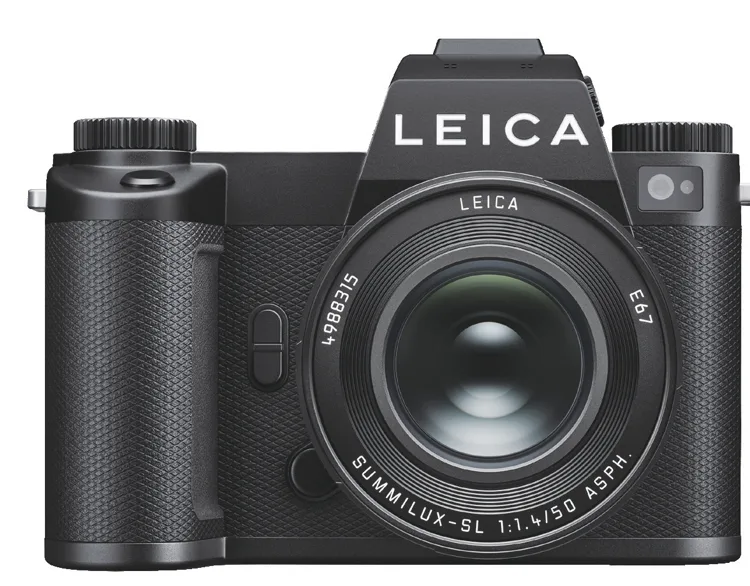
A camera is kind of an essential if you’re going to be taking photos, but this mirrorless model from Leica tips over into the ‘luxury’ bracket not just because of the price, but because of its build quality. Made in Germany, it boasts a full-frame, 24-megapixel sensor, rapid autofocus and a burst rate of up to 30fps, so it’s a pro-level bit of kit. The reason it works particularly well for autumnal photography is that unlike Leica’s famous M range, it’s weather sealed. But it still produces the gorgeously deep colours that the brand is best known for. The accompanying 28-70mm f/2.8 zoom lens in this kit option is super versatile — wide enough for landscapes, but with sufficient reach for portraits and details. The constant f/2.8 aperture is useful when the light starts to fade too. At £5,500, this isn’t an impulse purchase. But if you’re looking for a classy camera, you won’t get better than a Leica. leica-camera.com
The surprisingly useful: Ray Mears Leaf Cutter Rucksack — £285
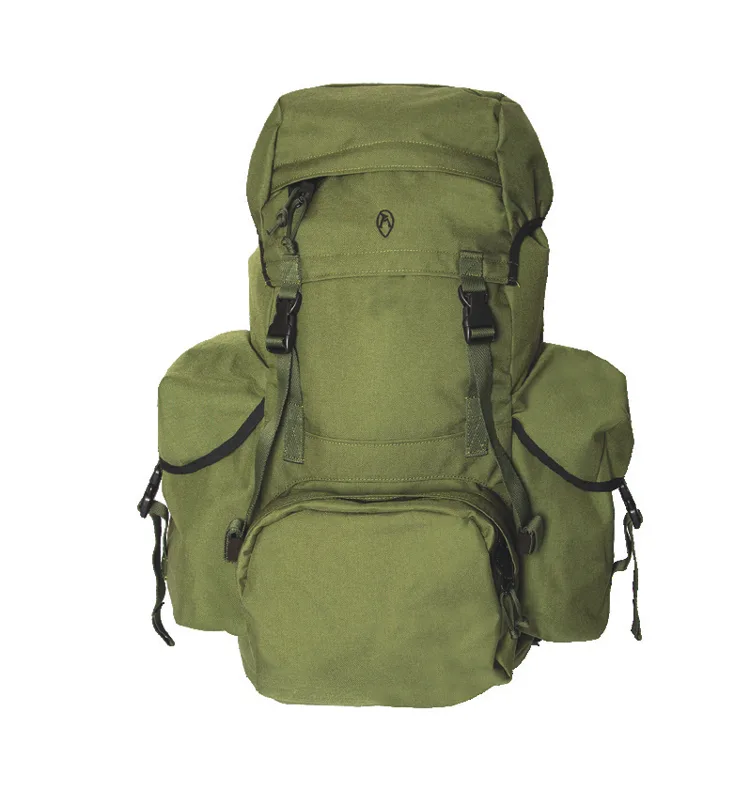
Camera kit isn’t famous for being light, and serious photographers will tell you that a comfy backpack is worth its weight in gold. Designed by bushcraft expert Ray Mears and made in Britain by Scottish Mountain Gear, the Leaf Cutter rucksack is built for spending long weekends outside. Its comfortable straps, waist and chest bands are designed for long days carrying heavy loads. Despite the fact that the back panel is just 50 centimetres tall, the carry capacity of this is huge, with a 58-litre main compartment and two 10-litre side pockets. That gives you more than enough space to stash your camera in protective padding, along with spare lenses, batteries and other accessories, and still have enough room for a fleece, waterproof jacket, snacks and whatever else you might need. Impressively, for a bag this size, it only weighs 1.86 kilograms when empty. It might not be camera-specific, but this versatile backpack would suit most outdoor photography enthusiasts. raymears.com