
• Skip to main content
  • Skip to secondary menu
  • Skip to primary sidebar
  • Skip to footer
Geographical

Geographical

Official magazine of the Royal Geographical Society (with IBG)

  • Geographical Home
  • News
  • Features
  • Opinion
    • Climatewatch
    • Front Lines
  • Podcast
  • Travel
    • Discovering Britain
    • Passport
  • Culture
    • Book reviews
  • Quizzes
    • Crosswords
  • Choose Geography
    • University directory
    • Masters courses
    • Course guides
      • Climate change
      • Environmental science
      • Human geography
      • Physical geography
    • University pages
      • Aberystwyth University
      • Brunel University
      • Cardiff University
      • University of Chester
      • Edge Hill University
      • The University of Edinburgh
      • Newcastle University
      • Nottingham Trent University
      • Oxford Brookes University
      • The University of Plymouth
      • Queen Mary University of London
    • Geography careers
      • Charity/non-profit
      • Education & research
      • Environment
      • Finance & consulting
      • Government and Local Government
    • Applications and advice
  • Magazine
    • Issue previews
    • Subscribe
    • Manage My Subscription
    • Special Editions
    • Geographical Archive
    • Advertise with us
  • Subscribe
    • Direct Debit Changes

Microplastics may cause biological harm, new study finds

15 October 2026
2 minutes

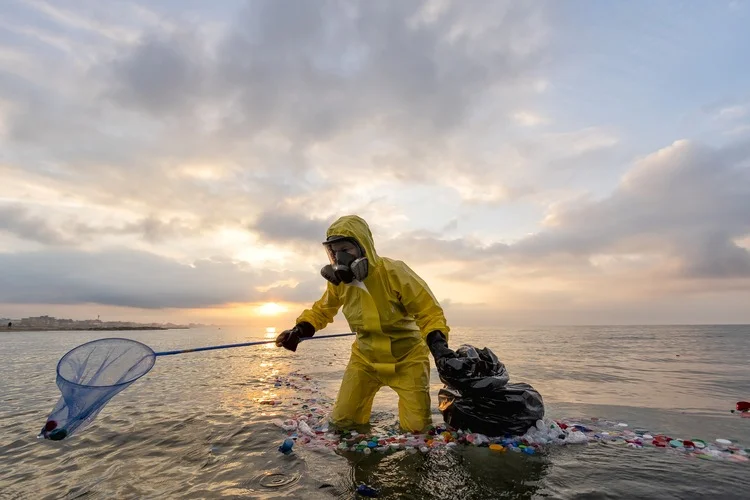
Biologist cleans ocean sea from plastic and caps wearing suit and gas mask due to dirty polluted water.
Microplastics have been found across the globe, from the Arctic to Antarctica. Image: Fabrizio Maffei/Shutterstock

Researchers found that microplastics and nanoplastics can react with water to produce ‘highly reactive molecules’


By Victoria Heath

A study by researchers from Columbia University and the University of California, Berkeley found that microplastics and nanoplastics could cause biological harm.

‘As plastic fragments into smaller and smaller particles, its surface area increases enormously,’ said Columbia professor of chemistry and biomedical engineering Wei Min.


Check out our related reads…

  • Airborne microplastics proven to contribute to climate change, study finds
  • How microplastics pose health risks in more ways than one
  • Wildlife Special Edition
  • The toxic impact of microplastics in the human body
  • The dirty truth about acrylic and microplastics

Then, microplastics change the water that surrounds them, generating high-energy, reactive radicals that very likely contribute to biological damage that we see in animals and potentially in humans as a result of microplastic exposure.’

Published in Nature journal, the study highlights how such mechanisms are noteworthy for human health, as human blood is around 50 per cent water. The new research suggests how microplastics entering the bloodstream or cells could remain chemically active in the water-rich environment.
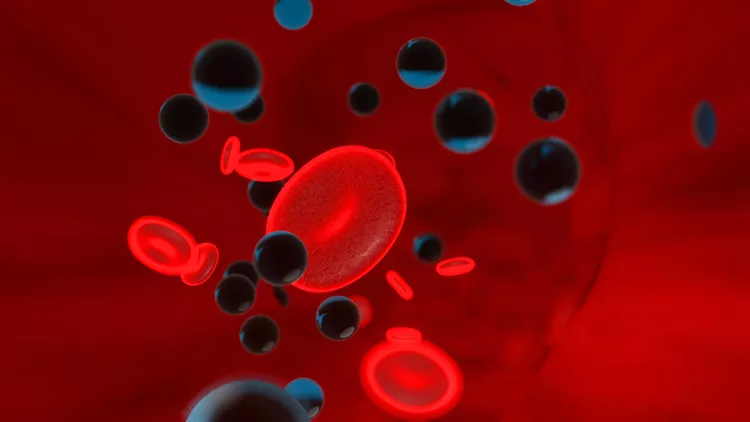
3D Illustration of toxic particles floating in a vessel like an artery or vein in the blood stream.
Microplastics can react with water found in human blood to produce ‘highly reactive molecules’. Image: Shutterstock

The same researchers also led a 2024 study that found, on average, a litre of bottled water contained around 240,000 detectable plastic fragments, 10 to 100 times more than previously estimated.

Subsequent research in other journals has found links between microplastic and nanoplastic exposure and heart attacks, strokes, dementia and brain tumours.

A 2019 study found that, on average, some adults could potentially be consuming between 39,000 and 52,000 microplastic particles a year.

Microplastics, explained

Microplastics are defined as any fragment of plastic between one nanometre and five millimetres wide. One nanometre is around a fraction of the width of a human hair, while five millimetres is about the width of a wedding band.

‘There is no part of the globe that does not have microplastics, from the Arctic to the Antarctic, and everything in between,’ said director of the Centre for Green Chemistry and Green Engineering Paul Anastas.

One estimate suggests that 2.7 million tonnes of microplastics leached into the environment in 2020 alone, a figure expected to double by 2040.

Research suggests nanoplastics – less than one micrometre across – could pass through human skin, but most microplastics enter the human body through ingestion and inhalation. They have been found in blood, saliva, livers, kidneys and placentas.

Studies have shown that in marine wildlife, cell cultures and animal models, microplastics can cause DNA damage and changes in gene activity – known risks for developing cancer.
Themes News Microplastics Plastic Plastic pollution

Protected by Copyscape

Primary Sidebar

SUBSCRIBE

GEOGRAPHICAL WEEKLY LOGO FREE - Sign up to get context, clarity and perspective in a noisy world, every Friday

Popular Now

A family from Samre, in south-western Tigray, walked for two days to reach a camp for displaced people in Mekelle (file photo).

Conflict in northern Ethiopia pushing health systems to brink, WHO chief warns

A close-up shot of a large, hairy brown tarantula walking on a white surface.

More than 3,000 tarantulas concealed in socks seized at Peru Airport

Antarctica iceberg

CCAMLR fails to establish a new marine protected area in Antarctica for…

Honduras flag

When land rights offer little protection in Honduras

Two team members looking across Komarnica Canyon

How RGS grants are supporting a new generation of women explorers

Footer

  • Facebook
  • Instagram
  • LinkedIn
  • Reddit
  • TikTok
  • Twitter
  • YouTube

Geographical print magazine cover

Published in the UK since 1935, Geographical is the official magazine of the Royal Geographical Society (with IBG).

Informative, authoritative and educational, this site’s content covers a wide range of subject areas, including geography, culture, wildlife and exploration, illustrated with superb photography.

Click Here for SUBSCRIPTION details

Want to access Geographical on your tablet or smartphone? Press the Apple, Android or PC/Mac image below to download the app for your device

Footer Apple Footer Android Footer Mac-PC

More from Geographical

  • Subscriptions
  • Get our Newsletter
  • About Us
  • Contact Us
  • Advertise with us
  • Privacy policy
  • Terms & Conditions

Copyright © 2026 · Site by Syon Media