
Scientists find that microplastics amplify the greenhouse effect
By
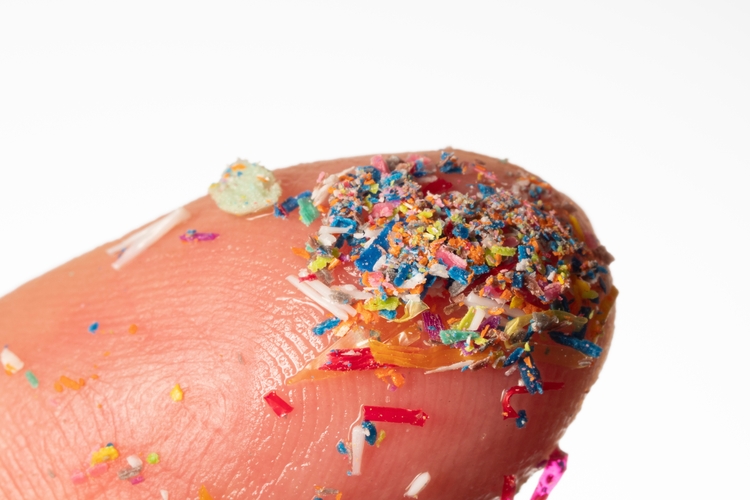
Coloured microplastics in the air are contributing to global warming by trapping heat, a new study published in Nature Climate Change has found. The study was led in collaboration with researchers at Fudan University in China, finding that plastic has the same atmospheric warming effect as aerosols, including carbon.
Plastic becomes airborne due to everyday friction and environmental weathering, which breaks it down into small pieces – usually from 1 μm to 5 mm in size. These are swept up by wind and water spray, and since they do not biodegrade, they fragment continuously until they are no longer visible to the human eye. Despite their small size, they pose a large threat to the planet.
Enjoying this article? Check out our related reads…
The study finds that the impact of airborne microplastics expands the ‘family of aerosols’ considered contributors to the enhanced greenhouse effect. Lead co-author of the study Drew Shindell said ‘this makes [microplastics] a particularly good target for climate action’.
The darker hues of microplastics give the debris its warming power, able to absorb roughly 16 per cent as much heat as black carbon.
Older climate models previously indicated that airborne microplastics were negligible contributors to warming under the assumption that they were colourless particles. Colourless atmospheric aerosols, such as water droplets in clouds, actually cool the planet by reflecting sunlight away from Earth. Conversely, microplastics are a catastrophic contaminant with approximately the same warming effect as running 200 coal-fired power plants annually, according to Shindell.
‘Targeting microplastics is not going to solve our climate problem by any means,’ Shindell said, ‘but to limit microplastics would be a nice contribution to getting the world’s carbon dioxide down.’
From the data collected in this study, researchers were able to predict where in the atmosphere airborne microplastics exist and are most heavily concentrated globally. Their findings showed that, unlike black carbon, which concentrates largely over land, airborne microplastics congregate over a region of the ocean called the North Pacific Subtropical Gyre. This is a massive system of ocean currents that plays a pivotal role in regulating global climate. It is here where the Great Pacific Garbage Patch is found, plastic debris polluting the sea and as the study shows, the air. When waves break over this plastic heap, sea spray launches microplastics into the air. The gyre itself is thus a big source of atmospheric microplastics.
According to Shindell, microplastics are not currently the biggest climate-related threat. He hopes his study – which focused on airborne microplastics closest to Earth’s surface – will inspire other teams to measure microplastics throughout the lower atmosphere for a more complete picture of their effects on warming.
Associated effects of microplastic pollution
Airborne microplastics may also carry other contaminants, as found in another study published in International Journal of Environmental Research and Public Health conducted in Poland. Chemicals found in fossil fuels, exhaust, and road wear are transported and absorbed by the porous characteristics of microplastics that enhance their effect on urban health.
While there is clear evidence that people inhale these particles, there is not yet sufficient evidence to quantify their long-term health effects. The lead author of this study, Kinga Jarosz, called for greater precautionary monitoring and further toxicological research, particularly in densely populated urban areas where microplastic exposure is likely to be greatest.

Plastic pollution is, after all, projected to surge over the next decade. Without significant action like reducing plastic use and waste and improving plastic waste management and recycling, plastic leakage into the environment could increase by 50 per cent from 2020 levels, to 30 million tonnes by 2040, according to the Organisation for Economic Co-operation and Development.
Shindell believes his research could motivate international action, such as countries signing the UN Plastics Treaty, which calls for an end to plastic pollution.
‘We have so much work to do to get down to something like a Paris Agreement,’ Shindell said. ‘We really need every single thing at our disposal.’


