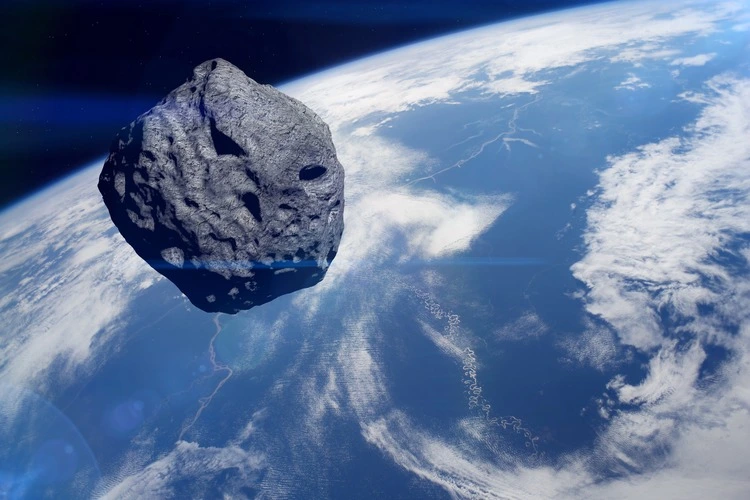
The last detected small asteroid was spotted a week ago, monitored by the new tool five hours before entering the atmosphere above the Indian Ocean
By
A new tool developed by the European Space Agency’s (ESA) NEO Coordination Centre is able to forecast where fragments of an incoming imminent asteroid will fall.
Enjoying this article? Check out our related reads…
Also known as imminent impactors, these small asteroids are often discovered a few hours before impact and are constantly monitored by the ESA’s Meerkat system. The last recorded imminent impactor – the 2.6-foot-long ‘2026 RW1’ – was discovered on 6 September around five hours before entering the atmosphere above the Indian Ocean, marking the 13th time scientists have ever discovered an asteroid before impact.
The new tool allows scientists to see where these asteroid fragments will land, without direct observations of fireballs or over areas not covered by all-sky cameras.
Many asteroids can be found orbiting the Sun between Mars and Jupiter within the main asteroid belt. The largest is around 530 kilometres long in diameter (329 miles), but there are some bodies as small as 33 feet (10 metres) across. In total, the mass of all asteroids is less than Earth’s Moon.

Some potentially hazardous asteroids can make near-Earth appearances. This year, a plane-sized asteroid – known as 2003 LN6 – passed within 1.42 million kilometres (880,000 miles) away, zooming past at a speed of more than 14,000 kilometres per hour (8,768 miles per hour).
On April 13 2029, the asteroid Apophis will safely pass close to Earth. coming around 32,000 kilometres (20,000 miles) from the planet’s surface – closer than the distance of many satellites.
In the past, large asteroids have crashed into Earth, leaving wide craters such as Arizona’s Barringer Crater. It is around 1.2 kilometres (0.75 miles) wide and 180 metres (600 feet) deep. Back in 2013, a house-sized asteroid exploded over Chelyabinsk in Russia, releasing the energy equivalent to around 440,000 tonnes of TNT. The impact injured hundreds of people and damaged some buildings.
The most notable is perhaps the Chicxulub Crater off the coast of the Yucatan Peninsula is Mexico, measuring 180 kilometres (112 miles) wide and 900 metres (3,000 feet) deep. Scientists believe it provides evidence of a large asteroid impact on Earth around 65 million years ago, leading to the extinction of the dinosaurs and more than 70 per cent of living species at the time.