

• Skip to main content
  • Skip to secondary menu
  • Skip to primary sidebar
  • Skip to footer
Geographical

Geographical

Official magazine of the Royal Geographical Society (with IBG)

  • Geographical Home
  • News
  • Features
  • Opinion
    • Climatewatch
    • Front Lines
  • Podcast
  • Travel
    • Discovering Britain
    • Passport
  • Culture
    • Book reviews
  • Quizzes
    • Crosswords
  • Choose Geography
    • University directory
    • Masters courses
    • Course guides
      • Climate change
      • Environmental science
      • Human geography
      • Physical geography
    • University pages
      • Aberystwyth University
      • Brunel University
      • Cardiff University
      • University of Chester
      • Edge Hill University
      • The University of Edinburgh
      • Newcastle University
      • Nottingham Trent University
      • Oxford Brookes University
      • The University of Plymouth
      • Queen Mary University of London
    • Geography careers
      • Charity/non-profit
      • Education & research
      • Environment
      • Finance & consulting
      • Government and Local Government
    • Applications and advice
  • Magazine
    • Issue previews
    • Subscribe
    • Manage My Subscription
    • Special Editions
    • Geographical Archive
    • Advertise with us
  • Subscribe
    • Direct Debit Changes

Almost 750,000 Gen Z-ers regularly birdwatch, new research finds

1 May 2026
3 minutes

A birdwatcher
Since 2018, the popularity of birdwatching has surged. Image: Shutterstock

Significant 10-fold increase in 16 to 29-year-olds regularly birdwatching since 2018, and numbers are still on the rise


By Victoria Heath

Almost 750,000 Gen Z-ers (16 to 29-year-olds) across Great Britain now regularly enjoying birdwatching – an uptick of 1,088 per cent since 2018. Now, birdwatching is one of Gen-Z’s fastest growing hobbies, second only to jewellery making, new research published by the RSPB has found.

More widely, there has been a 47 per cent increase across the past eight years in numbers across Great Britain who regularly birdwatch, equating to more than four million people. There has also been a 216 per cent increase in the number of Millennials and a 66 per cent increase in Gen X birdwatchers.


Enjoying this article? Check out our related reads…

  • Equipment matters: The joys of birdwatching
  • Where will the Taliban’s refugee exodus go?
  • In the future, termites might have a big impact on our climate
  • Global wildlife numbers plummet by 73 per cent in 50 years
  • Baby monkeys spark hope for conservation efforts in Vietnam

These new findings come ahead of International Dawn Chorus Day, which takes place on the first Sunday in May. This marks the moment each spring when early morning bird song reaches its peak.

‘As a GP, I talk to many of my patients about what can happen when we go outside, into our gardens, local green spaces, parks or nature reserves,’ said president of the RSPB, Amir Khan. ‘It helps lift our mood, actively stimulating serotonin, a brain chemical which makes us feel happier. Hearing birdsong, especially during the dawn chorus when they’re at their loudest and most beautiful, can produce more serotonin and make us feel good.’
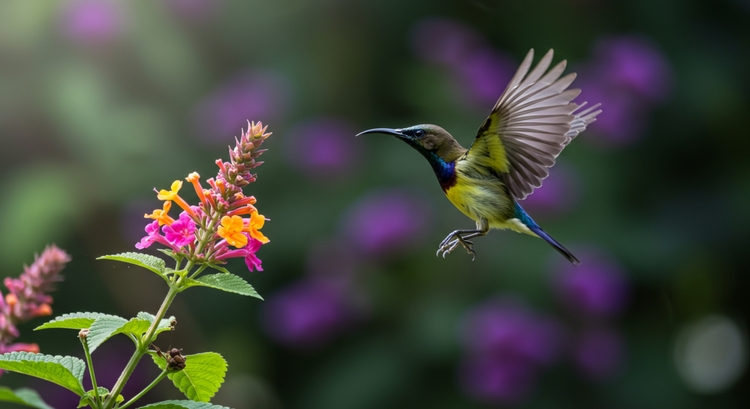
Hummingbird near flower
Birdwatching is now the second-most popular hobby in the UK after jewellery making. Image: Shutterstock

Bird song is not only pleasurable to listen to, but comes with tangible benefits to mental and physical health, according to research. The reasons why humans find birdsong so appealing are multifaceted: hearing birdsong can signal life is already present in an area, implying safety. Secondly, experts say birdsong can give us a break from other cognitive challenges in the environment, allowing us to replenish energy levels.

Interacting with nature also reduces depressive symptoms, enhances creative abilities and may even slow age-related cognitive decline.

This International Dawn Chorus Day, the RSPB is encouraging people to set their alarms 45 minutes before dawn and step outside or open a window to soak up the sounds of birdsong.

‘Most of us are asleep when the dawn chorus happens, but it’s truly a sound worth waking up for,’ said wildlife expert at the RSPB, Molly Brown. ‘There’s no right way to experience it, whether you listen from your bedroom window, walk along a riverbank or through a woodland, or visit a nature reserve. The most important thing is that you’re ready to hear it around 45 minutes before dawn, when the air is still and the light is low.’

Themes News

Protected by Copyscape

Primary Sidebar

SUMMER SALE

GEOGRAPHICAL WEEKLY LOGO FREE - Sign up to get context, clarity and perspective in a noisy world, every Friday

Popular Now

Where to watch next year’s ‘Eclipse of the Century’

Where to watch next year’s ‘Eclipse of the Century’

Plastic pellets

‘Environmental disaster’ as one billion plastic pellets enter River Tyne

The Kelvin River in Glasgow has the highest recorded concentration of toxic TFA of any river in the UK

Forever chemicals and the toxic legacy of CFC replacements

flags

QUIZ: Flags of the World – Hard

Svalbard, Arctic landscape

Trump administration ends support for Arctic environment report

Footer

  • Facebook
  • Instagram
  • LinkedIn
  • Reddit
  • TikTok
  • Twitter
  • YouTube

Geographical print magazine cover

Published in the UK since 1935, Geographical is the official magazine of the Royal Geographical Society (with IBG).

Informative, authoritative and educational, this site’s content covers a wide range of subject areas, including geography, culture, wildlife and exploration, illustrated with superb photography.

Click Here for SUBSCRIPTION details

Want to access Geographical on your tablet or smartphone? Press the Apple, Android or PC/Mac image below to download the app for your device

Footer Apple Footer Android Footer Mac-PC

More from Geographical

  • Subscriptions
  • Get our Newsletter
  • About Us
  • Contact Us
  • Advertise with us
  • Privacy policy
  • Terms & Conditions

Copyright © 2026 · Site by Syon Media