
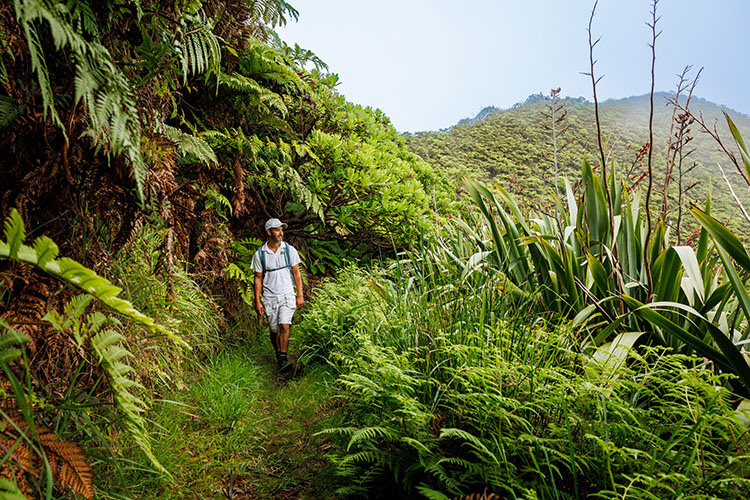
From cliffside trails to a vast marine sanctuary, this far-flung Atlantic island is an adventure playground with a remarkable history
Sponsored post
Sitting nearly halfway between Africa and Brazil, the island of St Helena is one of the most remote places on the planet. Until as recently as 2017, the only way to reach it was a five-day voyage from Cape Town on the RMS St Helena – an arduous journey that kept all but the most adventurous travellers at bay.
Today, St Helena is home to a close-knit community of around 4,000 people, known locally as ‘Saints’. While the island is slowly opening up to visitors, it remains best-known for its former residents – political prisoners exiled to this natural fortress through the 19th and 20th centuries. Most famously, it served as the final home for Napoleon Bonaparte, who was sent here to live out his last years in the middle of the ocean, thousands of kilometres from the empire he once ruled.
Yet it’s the same rugged and isolated landscape that once made St Helena an inescapable prison now serves as its greatest draw for travellers seeking adventure.

For hikers, the island’s famous ‘Post Box Walks’ are the ultimate way to see the landscape. This network of 25 trails – so named because each ends with a small post box containing a visitor book and a unique ink stamp – covers everything from lush cloud forests to jagged coastal cliffs. Here are three to get you started:
- The Heart-Shaped Waterfall (1.5 kilometres): A shorter, easier stroll that leads you through a shaded valley to the base of a 90-metre cascade. The water pours over a naturally heart-shaped rock face, making it one of the island’s most photographed natural wonders.
- Lot’s Wife Ponds (5 kilometres): A more challenging 3.5-hour trek along the southern coast. After a bit of a scramble and a rope-assisted descent, you’re rewarded with large, crystal-clear natural tide pools. They are perfect for a swim, with waves crashing against the protective basalt wall just metres away.
- The Barn (10.5 kilometres): For the more experienced hiker, this 4-hour return trip crosses the Deadwood Plain to reach a massive volcanic bluff. The trail offers spectacular, dizzying views of the coastline and the airport, with the final summit providing a wild, windswept perspective of the Atlantic.
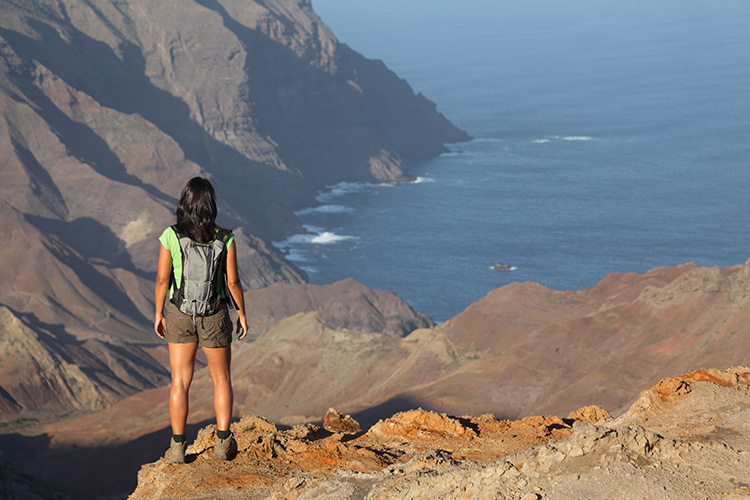
If the Post Box Walks aren’t enough to fill your boots, there is plenty more to keep you moving. For runners, there’s the World’s Most Remote Marathon – which will be held for the first time in March 2027 – but the island offers a wealth of other land-based adventures. You can take 4×4 off-road tours to reach the most untouched corners or climb the 699 near-vertical steps of Jacob’s Ladder for a bird’s-eye view of Jamestown.
For those who prefer two wheels, mountain biking is a fantastic way to navigate the rugged terrain. You can join a guided tour with E-connect, run by Martin Henry, who is well-known on the island not just for his e-bike adventures, but also for his role as Minister for Health and Social Care.
Then there are the views, which shift dramatically from every corner of the island. When my colleague, writer and diver Mark Russell, visited St Helena in 2017, he described the landscape as a series of microclimates where the scenery and weather feel ‘extreme from one mile to the next’.
A journey from the cliff-lined streets of the capital, Jamestown, to Sandy Bay on the opposite side of the island, will see you pass through wind-swept moorland, varicoloured volcanic soils, sub-tropical jungle, temperate green pastures (that Darwin remarked upon as being very similar to Wales), and a landscape so grey and barren that it looks like footage from the lunar landings.

At a glance…
When to go: St Helena is a year-round destination, with temperatures typically hovering between 20°C and 27°C. Plus, while the island is more than 7,000 kilometres from the UK, the local time is GMT – meaning no jet lag for UK travellers.
The terrain: The island’s jagged peaks offer dramatic elevations with an advantage: you’re starting at sea level. At 820 metres, the highest point is lower than Scafell Pike, so you get steep, panoramic views without any of the issues that come with high-altitude hiking.
Getting there: The era of the five–day mail ship is over. Since the airport opened in 2017, visitors can now take a weekly flight from Johannesburg or a seasonal flight from Cape Town. It’s still quite a journey to reach this South Atlantic outpost, but the final approach over the cliffs is one of the most spectacular landings in aviation.


