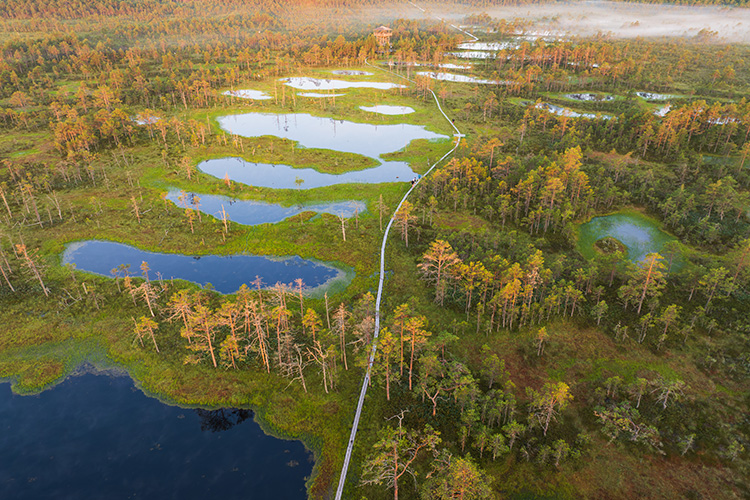
RESTORE has purchased the heavily degraded Emblehope Estate from the Royal Kennel Club to launch its landmark landscape restoration project
England’s largest landscape restoration project under single ownership is officially underway following the acquisition of the 3,035-hectare Emblehope Estate in Northumberland. Purchased from the Royal Kennel Club by environmental group RESTORE, the vast upland property is set to become one of the UK’s most ambitious hubs for climate resilience, community benefit, and biodiversity recovery.
The multi-million-pound purchase makes Emblehope the largest contiguous landholding in England under single ownership dedicated entirely to restoring the natural world.
Enjoying this article? Check out our related reads…
‘What has long been missing from the English uplands is a large-scale site dedicated primarily to the most ambitious forms of nature restoration,’ said Benedict Macdonald, Founder and Director of RESTORE. ‘Whilst many upland estates benefit from nature as a side-product of commercial activity, Emblehope is destined to become a biosphere-level reserve where nature itself is the driver.’

Over the next thirty years, the project will focus on reviving natural ecological processes across the rugged Northumberland landscape. Plans include rewetting roughly 800 hectares of degraded peatland, restoring lost and degraded botany, and implementing low-intensity grazing systems to boost habitat variety. Hydrological modelling indicates that blocking old drainage ditches will transform the land into a giant sponge capable of storing an additional 100,000 cubic meters of water, significantly curbing downstream flash floods and mitigating climate change impacts.
Restoration at Emblehope will be funded through 30×30 RESTORE Units. Developed with 30×30 UK, a national campaign to protect 30 per cent of land and sea for nature by 2030, this system allows sponsors to directly fund measurable and verified ecological recovery on the ground.
Natural England has welcomed the initiative. Tony Juniper, Chair of Natural England, noted that the project builds on vital foundational work to heal the headwaters of the North Tyne and create thriving wetland conditions.

As ecological health improves, conservationists hope the reserve will naturally welcome back native wildlife, including curlews, golden eagles, and common cranes. Ultimately, the project aspires to achieve UNESCO Biosphere Reserve status, serving as a critical missing link between Kielder Forest, Northumberland National Park, and neighbouring conservation areas.
While there are already large habitat restoration initiatives in the UK, such as Scotland’s 60,000-hectare Cairngorms Connect or the farmer-led Evenlode Landscape Recovery project, these existing efforts typically rely on complex partnerships spread across multiple separate landowners, rather than a single unified estate.