Around 650,000 square kilometres of winter sea ice in West Antarctica did not freeze over this year, researchers say
By
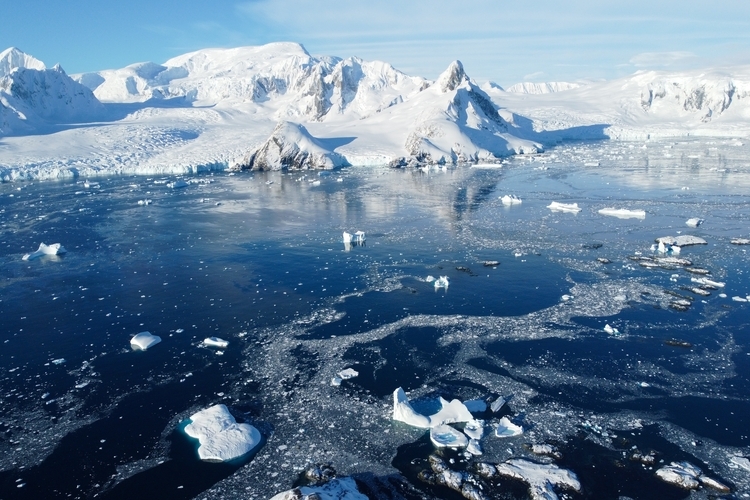
The Bellinghausen Sea – a region on the west side of Antarctica – is missing a large chunk of winter sea ice equivalent in size to France, scientists have discovered.
Enjoying this article? Check out our related reads…
Satellite images reveal that the area is largely ice-free this year, but it is normally covered in ice by June. A heatwave across the continent’s peninsula last week saw temperatures peak at 15.4C – more than 20C above average. Scientists believe the heatwave was made worse by a lack of sea ice, as this would usually help to cool warmer air entering the region from the north.
‘It is concerning, absolutely,’ said sea ice researcher at the University of Tasmania, Dr Will Hobbs.
‘We will probably see a little bit [of ice] form this year in August and September. Some of that will be ice moving in from elsewhere, but I don’t think we’re going to see a whole lot from there anymore,’ Hobbs continued.
Hobbs said this is the third time in four years that sea ice had been extremely low in the region, with its disappearance likely linked to changes in the ocean.
The Bellinghausen Sea’s coastline made headlines back in 2022 after thousands of emperor penguin chicks died during a ‘catastrophic breeding failure’ across four colonies. Declines in sea ice in recent years have plunged the population of the species in the Western Antarctic by 22 per cent between 2018 and 2023, and projections suggest further decline or even extinction by the end of the century.

Because of dwindling numbers of emperor penguins, UN advisers pushed the species to ‘endangered’ on the IUCN list earlier this year.
According to a scientist at the British Antarctic Survey (BAS), Dr Peter Fretwell, the current loss of sea ice in the Bellinghausen Sea is ‘a serious problem for penguins, especially emperors’.
‘Sea ice is forming too late and breaking up too early. It leads to reduced breeding success and longer trips to moulting grounds.’
What impacts does a lack of sea ice have?
The size of Mexico and the United States combined, Antarctica holds around 90 per cent of all freshwater on the planet. If it were a country, it would be the second-largest.
It is experiencing profound sea ice loss across its entire ice sheet – by 2020, the rate of ice loss in Antarctica had increased sixfold over 30 years.
If the ice sheet completely melted, it would have the potential to submerge entire coastal cities and states. A sea level rise of just a few feet would entirely displace the 230 million people who live within close proximity of a high tide line today.
Still, the rate of melting is having effects already – especially on marine life like krill, whose populations are eaten by species from small fish to large cetaceans. These krill are losing their nurseries and feeding grounds as sea ice melts, reducing their chances of surviving until adulthood. Consequently, this is having ripple effects on the species which consume them.
There remains some uncertainty about the other effects of a warming Arctic, but one fact is certain: reducing greenhouse gas emissions will be the key to protecting the region.