
• Skip to main content
  • Skip to secondary menu
  • Skip to primary sidebar
  • Skip to footer
Geographical

Geographical

Official magazine of the Royal Geographical Society (with IBG)

  • Home
  • Briefing
  • Science & Environment
  • Climate
    • Climatewatch
  • Wildlife
  • Culture
  • Geopolitics
    • Geopolitical hotspots
  • Study Geography
    • University directory
    • Masters courses
    • Course guides
      • Climate change
      • Environmental science
      • Human geography
      • Physical geography
    • University pages
      • Aberystwyth University
      • Brunel University
      • Cardiff University
      • University of Chester
      • Edge Hill University
      • The University of Edinburgh
      • Newcastle University
      • Nottingham Trent University
      • Oxford Brookes University
      • The University of Plymouth
      • Queen Mary University of London
    • Geography careers
      • Charity/non-profit
      • Education & research
      • Environment
      • Finance & consulting
      • Government and Local Government
    • Applications and advice
  • Quizzes
  • Magazine
    • Issue previews
    • Subscribe
    • Manage My Subscription
    • Special Editions
    • Podcasts
    • Geographical Archive
    • Book reviews
    • Crosswords
    • Advertise with us
  • Subscribe
    • Direct Debit Changes

Antarctica is melting much faster than scientists expected, new study finds

12 May 2026
3 minutes

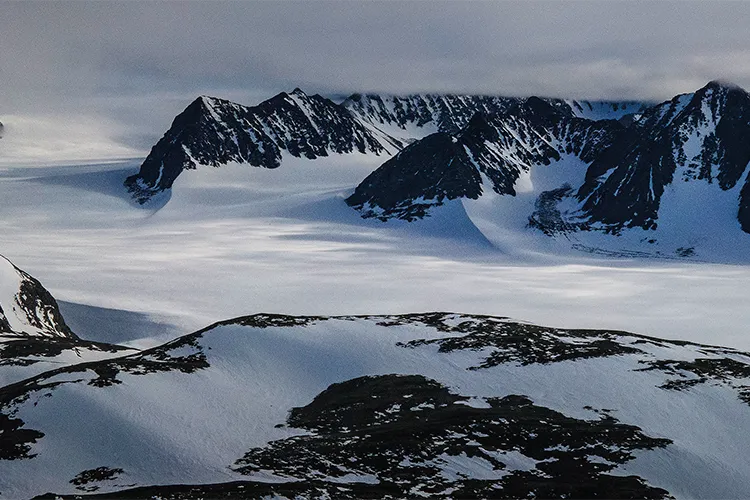
Connell Glacier converges with Union Glacier
Previously, scientists thought these ice shelves were more resistant to changing ocean temperatures. Image: Shutterstock

Warmer ocean temperatures are causing melting in Antarctica’s ice shelves, posing an overlooked threat to global coastlines


By Khadeejah Masud

Warming oceans are melting Antarctica’s ice shelves from beneath, accelerating global sea level rise much faster than anticipated, a new study has revealed. Ice shelves are large extensions of glaciers, responsible for stabilising sea levels as they slow the flow of ice into the sea.

Researchers from the iC3 Polar Research Hub in Norway found that these thick ice shelves in East Antarctica – previously thought to be more resistant to changing ocean temperatures – are actually more sensitive to even the smallest changes.

Structural grooves have been found at the base of the Fimbulisen Ice Shelf, located in East Antarctica, creating channels that trap warmer water. This induces the melting effect and causes local sea levels to rise. 


Enjoying this article? Check out our related reads…

  • London-sized iceberg breaks off Antarctic ice shelf
  • Eight essential books for geographers
  • Review: Home Waters by David Bowers
  • Arctic nations are squaring up to exploit the region’s rich natural resources
  • Inside the Terror – life on board Sir John Franklin’s lost ships

The study conducted by co-researchers Tore Hatterman and Quin Zhou suggests that this exposes flaws in our current climate modelling systems.

‘Modest inflows of warmer deep water can have a large effect when the ice shelf base is channelled,’ Zhou said.

Currently, ‘climate models do not capture this effect’, Hatterman continued, calling for more realistic consideration of physical factors in global policy-making. Capturing small-scale features of the ice shelves like this help tackle what the The Intergovernmental Panel on Climate Change (IPCC) describes as a ‘major uncertainty’ in regards to the future of sea level rise. 
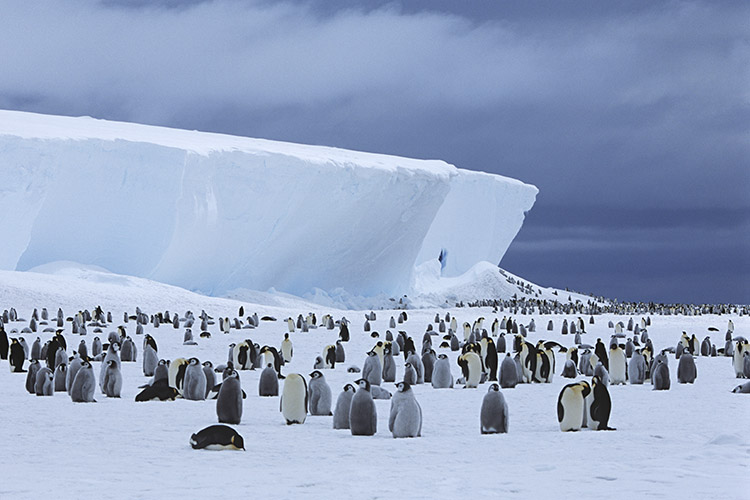
Emperor Penguins in Antarctica
Antarctica is home to 235 animal species, with the ice shelf providing a vital habitat to many. Image: Shutterstock

At a global level, this study on melting encourages credible sea level projections, needed for coastal planning and effective mitigation. Around the world, approximately 29 per cent of the total global population (over two 2 billion people) live within 50 kilometers of a coastline according to records between 2018 and 2024. With the information from this study, policy makers can prepare for extreme scenarios such as sea level rise.   

In this new study, researchers also found that the channelling effect caused uneven thinning in the deeper part of the ice shelf. By combining a map of the underside of the ice shelf with a high-resolution model of the ocean cavity beneath Fimbulisen, they found that the shelf may be unable to hold back the glaciers feeding it. 

The study also drew on earlier field observations from the region, highlighting the value of adapting long-term measurements to current changes in the area. 

Why is the ice shelf so important?

The increasing precarity of ice shelf stability is set to affect ocean circulation and marine ecosystems around Antarctica. Changes in the delivery of meltwater will inevitably impact local wildlife in the Weddell Sea, such as ice algae and bacteria that grow on the underside of the ice. Melting directly multiplies ice algae populations, which will accelerate the thinning of Antarctica’s thickest ice shelves.

Furthermore, unique species of anemone, polychaete worms and amphipods utilise ice shelves almost as their sea floors. In a similar way to glow worms hanging from dark caves, a bizarre form of anemone discovered in 2010 dubbed ‘the egg roll’ digs into the ice, unlike anemones found in less hostile waters. Clearly, the underside of Antarctic ice shelves are teeming with life. The effects of melting may have an unprecedented effect on such organisms. 

Ultimately, ice shelves may be only one factor in rising sea levels, but understanding how they respond to climate change is essential for predicting future sea-level rise.
Themes Briefing

Protected by Copyscape

Primary Sidebar

SPRING SALE

GEOGRAPHICAL WEEKLY LOGO FREE - Sign up to get context, clarity and perspective in a noisy world, every Friday

Popular Now

Crashing waves on rough sea

Trump administration to dismantle 900 deep-sea monitoring instruments

The village doctor visits a sick old woman and gives her an injection.

The diseases that are resurging across the world

UK houses in a row

Millions of UK homes under threat of sinking due to climate change,…

Northern gannets

More than 10,000 seabirds and 1,000 whales & dolphins killed in UK…

QUIZ: Capital Cities – Pacific

QUIZ: Capital Cities – Pacific

Footer

  • Facebook
  • Instagram
  • LinkedIn
  • Reddit
  • TikTok
  • Twitter
  • YouTube

Geographical print magazine cover

Published in the UK since 1935, Geographical is the official magazine of the Royal Geographical Society (with IBG).

Informative, authoritative and educational, this site’s content covers a wide range of subject areas, including geography, culture, wildlife and exploration, illustrated with superb photography.

Click Here for SUBSCRIPTION details

Want to access Geographical on your tablet or smartphone? Press the Apple, Android or PC/Mac image below to download the app for your device

Footer Apple Footer Android Footer Mac-PC

More from Geographical

  • Subscriptions
  • Get our Newsletter
  • About Us
  • Contact Us
  • Advertise with us
  • Privacy policy
  • Terms & Conditions

Copyright © 2026 · Site by Syon Media